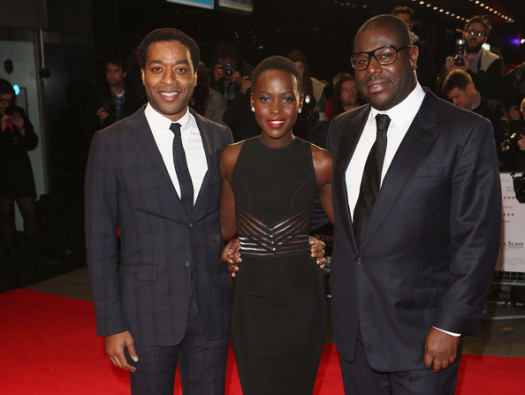
Actors Chiwetel Ejiofor and Lupita Nyong’o and Director Steve McQueen receive Golden Globe nominations for 12 Years a Slave. (Photo Credit: Google Images)
Shadow and Act is reporting that British actor Chewitel Ejiofor (Nigeria) was nominated for 2014 Golden Globe award for the best actor in a film category for his performance in Steve McQueen’s 12 Years a Slave. British director McQueen (Grenada) and Kenyan actress Lupita Nyong’o (Mexico) were also nominated — McQueen for best director and Nyong’o for best supporting actress. American screenwriter John Ridley was also nominated for a best screenplay award for 12 Years a Slave. British actor Idris Elba (SierraLeone/Ghana) received a nomination for best actor for his portrayal of anti-apartheid icon Nelson Mandela in Mandela:Long Walk to Freedom. Ejiofor and Elba were also nominated for best actor in a miniseries Luther and Savannah, respectively. Elba took home the award last year for Luther.
Somalian-American actor Barkhad Abdi received a best supporting actor nod for his portrayal of a pirate in Captain Phillips. Americans Kerry Washington and Don Cheadle received nominations for their roles in ABC‘s smash hit Scandal and Showtime’s hit House of Lies. Cheadle won the 2013 best actor in a television series Golden Globe last year.
While there were many reasons to celebrate, Americans Forrest Whitaker, Oprah Winfrey and Lee Daniels received no Golden Globe nominations for the critically-acclaimed film The Butler. British actress Naomie Harris (Jamaica/Trinidad) was also overlooked for her portrayal as Winnie Mandela in Mandela: Long Walk to Freedom.
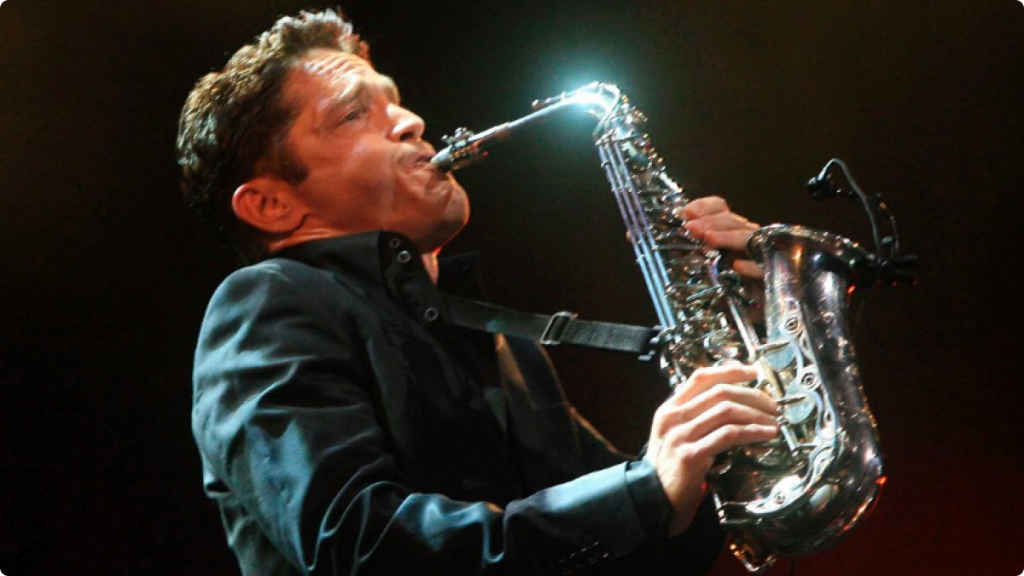
“Jazz is such an open term. It’s a state of mind as opposed to a style of music. It’s all about feeling comfortable enough to be vulnerable and to not know what’s gonna happen. It’s an attitude about life. It’s the ability to be able to say, ‘I’m cool,’” says Koz relaxing backstage after soundcheck at Cobb Energy Performing Arts Centre.
That phone call changed the course of Koz’s life. He admits that he didn’t consider becoming a professional musician nor was he sure of his career objectives. “He was putting together a band and plotting his reemergence. He was the first guy that said, ‘You’re a soloist.’ He gave me lots of room in his band to stretch out and be me. I found who I was. He saw it before I saw it,” says Koz.
Prior to sound check, the musician – also a SCF Global Ambassador – visited Children’s Healthcare of Atlanta and befriended a one-year-old infant named London. Koz believes creativity can be a form of healing. “Music and the arts bring a dosage of love. That’s what we need now more than anything to counterbalance all of the bad stuff,” he says.
Koz also says of music and arts education, “It’s important to nurture the next generation of talent whenever possible. It’s great to see kids so engaged, so excited and full of questions. I always feel like I learn more than they learn from me,” the instrumentalist says.
Last year’s high octane tour featured percussionist Sheila E., pianist David Benoit, vocalist/songwriter Javier Colon and vocalist Margo Rey. Koz remains cool about this year’s tour being slightly toned down. “Last year, it was all kinds of hot stuff goin’ on. This year is a very emotional show, very different from last year. That’s the beauty of it,” says Koz.
Now 50, Koz believes there are other saxophonists that can blow circles around him. He’s not concerned with critics and knows he will never perform highly stylized jazz solos. The content performer is just grateful to still have fans close to a quarter of a century after releasing his debut album.
“Everybody does their thing. I’ve been myself and done the things that feel right to me. It’s a good lesson to just be who you are,” says Koz.
This post was written by Christopher A. Daniel, a pop cultural critic and music editor for The Burton Wire. He is also a contributing writer for Urban Lux Magazine and Blues & Soul Magazine. Follow Christopher @Journalistorian on Twitter.
“Jazz is such an open term. It’s a state of mind as opposed to a style of music. It’s all about feeling comfortable enough to be vulnerable and to not know what’s gonna happen. It’s an attitude about life. It’s the ability to be able to say, ‘I’m cool,’” says Koz relaxing backstage after soundcheck at Cobb Energy Performing Arts Centre.
That phone call changed the course of Koz’s life. He admits that he didn’t consider becoming a professional musician nor was he sure of his career objectives. “He was putting together a band and plotting his reemergence. He was the first guy that said, ‘You’re a soloist.’ He gave me lots of room in his band to stretch out and be me. I found who I was. He saw it before I saw it,” says Koz.
Prior to sound check, the musician – also a SCF Global Ambassador – visited Children’s Healthcare of Atlanta and befriended a one-year-old infant named London. Koz believes creativity can be a form of healing. “Music and the arts bring a dosage of love. That’s what we need now more than anything to counterbalance all of the bad stuff,” he says.
Koz also says of music and arts education, “It’s important to nurture the next generation of talent whenever possible. It’s great to see kids so engaged, so excited and full of questions. I always feel like I learn more than they learn from me,” the instrumentalist says.
Last year’s high octane tour featured percussionist Sheila E., pianist David Benoit, vocalist/songwriter Javier Colon and vocalist Margo Rey. Koz remains cool about this year’s tour being slightly toned down. “Last year, it was all kinds of hot stuff goin’ on. This year is a very emotional show, very different from last year. That’s the beauty of it,” says Koz.
Now 50, Koz believes there are other saxophonists that can blow circles around him. He’s not concerned with critics and knows he will never perform highly stylized jazz solos. The content performer is just grateful to still have fans close to a quarter of a century after releasing his debut album.
“Everybody does their thing. I’ve been myself and done the things that feel right to me. It’s a good lesson to just be who you are,” says Koz.
This post was written by Christopher A. Daniel, a pop cultural critic and music editor for The Burton Wire. He is also a contributing writer for Urban Lux Magazine and Blues & Soul Magazine. Follow Christopher @Journalistorian on Twitter.
R&B singer/songwriter Ne-Yo takes a picture with attendees of The Giving Back Tour including actress Keisha Knight-Pulliam. (Photo Credit: DJ Blak Magic)
The Compound Foundation (TCF), co-founded by singer/songwriter Ne-Yo, recently completed a four-city, four-day Giving Tour. The nonprofit organization’s tour stops gave the charismatic and prolific entertainer the opportunity to spread holiday cheer to youth living in group homes and foster care.
Currently in its seventh year, the Giving Tour is TCF’s annual partnership effort with the Boys & Girls Clubs of America (BGCA). This year, the program visited New York, Los Angeles, Las Vegas and finished in Atlanta. Over 400 kids in each city were given stuffed animals, action figures, Carol’s Daughter cosmetics, video games, bicycles, high top sneakers, clothing, school stationary, basketballs, footballs, soccer balls and hair care products for Christmas gifts.
Relaxing in a plush red armchair in the Atlanta Marriott Marquis’ Atrium Ballroom, Ne-Yo spends the bulk of the evening autographing posters and interacting with the kids. TCF President and Chair, Loraine Smith, is also Ne-Yo’s mother. She affectionately refers to Ne-Yo by his middle name, “Chimere.”
Ne-Yo poses with The Compound Foundation’s president and chair Loraine Smith, who is also his mother. (Photo Credit: DJ Blak Magic)
Ne-Yo sits with his children Mason and Madilyn at the event. (Photo credit: DJ Blak Magic)
Ne-Yo holds up a photo of himself challenging King of Pop Michael Jackson. (Photo Credit: DJ Blak Magic)
Smith thinks activities like the Giving Tour are priceless moments for her to bond with her son. “You wouldn’t think it would be very private because we have 500 children in every city. I get to see him give back, interact with the children and see their reactions. That just brings me the greatest joy. It’s just being a proud mom,” says the petite, soft spoken Smith with a radiant smile.
Clearing his throat as he sends a text message from his iPhone, the 31-year-old performer born Shaffer Smith ponders briefly as he responds. The artist draws parallels between his recording career and charitable work.
Ne-Yo is suddenly flanked by his two young children, Madilyn and Mason, in the hospitality suite prior to entering the ballroom. “As a songwriter from the outside looking in, I can understand how a person can view what it is that I do as somewhat leisurely. With this philanthropic work, it takes a lot of patience, hard work and dedication much like being in the music industry. You don’t get to see the hours, days and weeks in the studio. All you see is the end result,” says Ne-Yo.
Smith further acknowledges love as the common denominator between “Chimere’s” songwriting and philanthropy. “Love transitions. It’s not necessarily always about a man or a woman even though it might sound like that on the radio. These kids just need somebody to tell them it’s gonna be okay. They can call one of our volunteers and get that hug over the phone,” says Smith still smiling.
“Chimere” knows his popularity and success requires him to pay it forward. “Hard work is what gets you the success. It’s not something that comes easy or comes quick. Music is a powerful thing. You can change the world if it’s done right,” says Ne-Yo.
Smith concurs that her son has a giving spirit. “Ne-Yo cares about people. He has a human heart. He’s more than just someone that you see on TV. He’s not just in the business for money or fame. He actually believes and understands that he’s blessed to be a blessing to other people,” says Smith.
This post was written by Christopher A. Daniel, a pop cultural critic and music editor for The Burton Wire. He is also a contributing writer for Urban Lux Magazine and Blues & Soul Magazine. Follow Christopher @Journalistorian on Twitter.
R&B singer/songwriter Ne-Yo takes a picture with attendees of The Giving Back Tour including actress Keisha Knight-Pulliam. (Photo Credit: DJ Blak Magic)
The Compound Foundation (TCF), co-founded by singer/songwriter Ne-Yo, recently completed a four-city, four-day Giving Tour. The nonprofit organization’s tour stops gave the charismatic and prolific entertainer the opportunity to spread holiday cheer to youth living in group homes and foster care.
Currently in its seventh year, the Giving Tour is TCF’s annual partnership effort with the Boys & Girls Clubs of America (BGCA). This year, the program visited New York, Los Angeles, Las Vegas and finished in Atlanta. Over 400 kids in each city were given stuffed animals, action figures, Carol’s Daughter cosmetics, video games, bicycles, high top sneakers, clothing, school stationary, basketballs, footballs, soccer balls and hair care products for Christmas gifts.
Relaxing in a plush red armchair in the Atlanta Marriott Marquis’ Atrium Ballroom, Ne-Yo spends the bulk of the evening autographing posters and interacting with the kids. TCF President and Chair, Loraine Smith, is also Ne-Yo’s mother. She affectionately refers to Ne-Yo by his middle name, “Chimere.”
Ne-Yo poses with The Compound Foundation’s president and chair Loraine Smith, who is also his mother. (Photo Credit: DJ Blak Magic)
Ne-Yo sits with his children Mason and Madilyn at the event. (Photo credit: DJ Blak Magic)
Ne-Yo holds up a photo of himself challenging King of Pop Michael Jackson. (Photo Credit: DJ Blak Magic)
Smith thinks activities like the Giving Tour are priceless moments for her to bond with her son. “You wouldn’t think it would be very private because we have 500 children in every city. I get to see him give back, interact with the children and see their reactions. That just brings me the greatest joy. It’s just being a proud mom,” says the petite, soft spoken Smith with a radiant smile.
Clearing his throat as he sends a text message from his iPhone, the 31-year-old performer born Shaffer Smith ponders briefly as he responds. The artist draws parallels between his recording career and charitable work.
Ne-Yo is suddenly flanked by his two young children, Madilyn and Mason, in the hospitality suite prior to entering the ballroom. “As a songwriter from the outside looking in, I can understand how a person can view what it is that I do as somewhat leisurely. With this philanthropic work, it takes a lot of patience, hard work and dedication much like being in the music industry. You don’t get to see the hours, days and weeks in the studio. All you see is the end result,” says Ne-Yo.
Smith further acknowledges love as the common denominator between “Chimere’s” songwriting and philanthropy. “Love transitions. It’s not necessarily always about a man or a woman even though it might sound like that on the radio. These kids just need somebody to tell them it’s gonna be okay. They can call one of our volunteers and get that hug over the phone,” says Smith still smiling.
“Chimere” knows his popularity and success requires him to pay it forward. “Hard work is what gets you the success. It’s not something that comes easy or comes quick. Music is a powerful thing. You can change the world if it’s done right,” says Ne-Yo.
Smith concurs that her son has a giving spirit. “Ne-Yo cares about people. He has a human heart. He’s more than just someone that you see on TV. He’s not just in the business for money or fame. He actually believes and understands that he’s blessed to be a blessing to other people,” says Smith.
This post was written by Christopher A. Daniel, a pop cultural critic and music editor for The Burton Wire. He is also a contributing writer for Urban Lux Magazine and Blues & Soul Magazine. Follow Christopher @Journalistorian on Twitter.
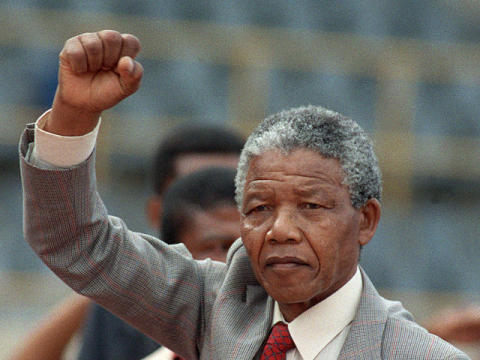
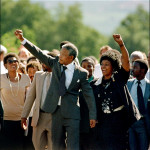
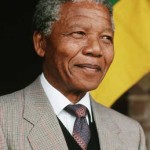
Who will lead now that former South African president and iconic leader Nelson Mandela has died. (Photo Credit: Google Images)
They call him their father. Their Tata. Their hero. Young and old in South Africa dance with pride pumping in their veins. Fists hoisted high in victory. A continent away, Americans change their Facebook profile photos to one of a man with a gentle, mischievous smile and a face carved by struggle, chiseled with wisdom. A woman in London leaves a note by his statue in Parliament Square saying he kissed her on the cheek when she was three and she considers it a blessing. President Nelson Mandela was a leader, some say the greatest of our time, the likes of which the world may never see again.
In the most defining moments of our history, we’ve always been a world in search of someone to lead us. When the oppressive foot of apartheid stomped on the liberty and dignity of Black South Africans, Mandela stepped forward to lead. The halting, yet insistent cadence of his voice made us lean forward a little so we didn’t miss anything. One of my former classmates from Northwestern University remembers decorating an anti-apartheid t-shirt her junior year with a bright yellow sun on it. She says she wore it until holes checkered it many years later.
I wonder if we’re entering a post-leader era? Others around the world who wield power are loosely referred to as leaders, but many are made puny by politics. They’re not the transformative leaders who can make us stand taller, emboldened, quietly suspecting that greatness also lies within us.
I believe I was born three years too late. I could only experience the life of another great leader through my parents’ stories and scratched vinyl records. As a child, I remember my father pacing on our burnt orange carpet with fire in his eyes as Dr. Martin Luther King Jr.’s baritone boomed in every corner of our Chicago apartment. “I never want you to hate. Be like Dr. King. He whipped his enemies intellectually,” my father would say. And his hands. My father shook them at a Chicago march and said they were the softest he ever touched.
That kind of devotion, a reverence almost, is typically reserved for deities. But a rare few have the vision, charisma and moral courage to inspire that kind of following and admiration. Many of us desperately want to be part of something greater than ourselves. A cause. A movement. And sometimes we find a person who can give voice to the call of our collective consciousness, the rumblings of our spirit.
As I mourn the passing of Mandela, I also mourn the loss of leadership. Maybe it’s whimsy or nostalgia that makes me yearn for another Mandela and King. Turbulent times usually birth our larger-than-life leaders. They emerge from struggle and rise to the call of circumstances. I suspect that somewhere in the world, the quest for freedom will thrust another man or woman forward to give voice to the passion of the people. Eventually, Mandela’s life will be flattened by the pages of history books. But I hope his legacy will be defined by those who see their own capacity to lead as he did.
This post was written by Nancy E. Johnson, a writer and award-winning journalist living in Atlanta, Georgia. Follow Nancy on Twitter @TheNancyJBrand.
Former South African president and iconic anti-Apartheid activist Nelson Mandela has died. He was 95. (Photo Credit: Google Images)
Nelson Rholihlahla Mandela, a man who committed most of his adult life to the pursuit of freedom for all South Africans has died. In ixiXhosa, Rholihlahla means, “pulling the branch of the tree” or “troublemaker.” It is hard to believe now as memorials honoring the man who many believe to be a living symbol of peace and freedom was at one time considered the most dangerous man in South Africa. The “troublemaker” was a man disturbing what South Africa’s National Party would consider to be the natural order of things, which included the preservation of Afrikaner culture at all costs, like the subjugation of millions of black South Africans.
Like many South Africans who railed against the system of injustice known as Apartheid, Mr. Mandela used his legal training and scholarship to fight a system that was created and institutionalized in order to suppress his human rights and civil liberties.
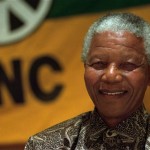
In the face of de facto violence and tiring of using the master’s tools to dismantle the master’s house to no avail, an exasperated Mandela and members of the ANC turned to tactics that rejected Gandhi and Martin Luther King, Jr.’s calls for nonviolence, refusing to be slapped harder each time they turned the other cheek. After many arrests due to anti-Apartheid activities, on June 12, 1964, Nelson Mandela, Walter Sisulu, Ahmed Kathrada, Govan Mbeki, Denis Goldberg and others were convicted of four counts of sabotage and sentenced to life in prison to be served out at Robben Island in the Western Cape. It was during his time in prison that Mr. Mandela’s anger towards whites decreased while his anger towards the system increased. Through great personal sacrifice (family, profession, community, personal freedom), the “troublemaker” began to understand the necessity of peace and reconciliation in order to move his beloved country forward.
Some read Mr. Mandela’s change in worldview while being imprisoned as an action befitting a man who though remained unbowed, acquiesced to his precarious circumstances by becoming less of an adversary to a hostile government. Mr. Mandela’s decision to embrace a peaceful approach to working with the government as opposed to continuing in the tradition of conflict, which is at the core of the ideology that allowed the National Party to thrive (Boer Wars) was indeed rebellious. Embracing peace during this tenuous time was perhaps the most revolutionary act of his life as a freedom fighter.
Mr. Mandela, a man who put the needs of his country ahead of his own at great peril to himself and his family, understood that the time for peace had come because conflict had nurtured the worst of what humanity had to offer. Instead of nurturing hate, anger and revenge against those who had trespassed against him, he did the opposite seeking peace and reconciliation. Once again, the “troublemaker” went against what many including his then-wife Winnie Mandela would have him do – seek revenge on those who had caused great pain and suffering to millions of black South Africans for hundreds of years – instead choosing the path less traveled in South Africa.
Upon his release from prison in 1990, Mr. Mandela was simultaneously vilified and deified; some thought he sold out his people by denouncing vengeance and violence as senseless while others thought his strategic plan to end Apartheid by embracing an agenda of peace made him the ultimate symbol of courage and freedom. After his subsequent election as president of South Africa, the legend of Mandela grew, a man committed to healing the wounds of a country sick with hatred and confusion. The “troublemaker” helped to dismantle Apartheid and usher in an era where fellow Nobel peace prize winner Archbishop Desmond Tutu’s concept of a “rainbow nation” could be realized.
It is tempting to lionize a man whose life quite possibly serves as the moral compass of the world, but it is important to remember that Madiba was one man of many who fought for freedom. Making a man like Mandela superhuman, feeds the notion that one has to be extraordinary in order to create the type of social change that South Africa has experienced since the end of Apartheid. As Mr. Mandela’s friend Archbishop Desmond Tutu gently reminds us, Mr. Mandela is “one pebble on the beach, one of thousands.”
It is in this spirit that we should all think of ourselves as potential Mandelas. This is a man who truly lived a full life and gave up his freedom so that fellow South Africans could have theirs. Ask yourself what are you willing to give up to improve the lives of those around you? This is a man who was known as a “troublemaker” during his youth – his father sensed it at his birth – giving him the name Rholihlahla. This “troublemaker” became a symbol of freedom, not just for the people of South Africa, but also for the people of the world. Ask yourself who are the “troublemakers” in your space that have been labeled or discarded? Now ask yourself what will it take to help these troublemakers achieve greatness? Again, what are you willing to give or give up for that to happen?
Many will write lovely memorials to Mr. Mandela, which will evoke tears of joy, sadness, happiness and pain. Countless people will paint him as a man who was tireless in his pursuit of freedom. Will people remember that Mr. Mandela was indeed tired to such an extent that he called on new leaders to “relieve his generation from the burdens of leadership” on his 90th birthday? Instead of going gently into that good night and simply celebrating himself on his birthday, the “troublemaker” challenged those who have benefited from the work of freedom fighters to become leaders in a story that is still unfolding.
Who will step up now that Mandela is gone? Who will be the “troublemaker” for freedom that the world so desperately needs? The answer to this question remains to be seen, but one thing is for sure, St. Peter is expecting a “troublemaker” any moment now.
This post was written by Nsenga K. Burton, Ph.D., founder & editor-in-chief of the award-winning news site The Burton Wire. She recently contributed an essay, “South African Soap Operas: A Rainbow Nation Realized?” to the anthology, Watching While Black: Centering the Television of Black Audiences. Follow her on Twitter @Ntellectual or @TheBurtonWire.
Former South African president and iconic anti-Apartheid activist Nelson Mandela has died. He was 95. (Photo Credit: Google Images)
Nelson Rholihlahla Mandela, a man who committed most of his adult life to the pursuit of freedom for all South Africans has died. In ixiXhosa, Rholihlahla means, “pulling the branch of the tree” or “troublemaker.” It is hard to believe now as memorials honoring the man who many believe to be a living symbol of peace and freedom was at one time considered the most dangerous man in South Africa. The “troublemaker” was a man disturbing what South Africa’s National Party would consider to be the natural order of things, which included the preservation of Afrikaner culture at all costs, like the subjugation of millions of black South Africans.
Like many South Africans who railed against the system of injustice known as Apartheid, Mr. Mandela used his legal training and scholarship to fight a system that was created and institutionalized in order to suppress his human rights and civil liberties.
In the face of de facto violence and tiring of using the master’s tools to dismantle the master’s house to no avail, an exasperated Mandela and members of the ANC turned to tactics that rejected Gandhi and Martin Luther King, Jr.’s calls for nonviolence, refusing to be slapped harder each time they turned the other cheek. After many arrests due to anti-Apartheid activities, on June 12, 1964, Nelson Mandela, Walter Sisulu, Ahmed Kathrada, Govan Mbeki, Denis Goldberg and others were convicted of four counts of sabotage and sentenced to life in prison to be served out at Robben Island in the Western Cape. It was during his time in prison that Mr. Mandela’s anger towards whites decreased while his anger towards the system increased. Through great personal sacrifice (family, profession, community, personal freedom), the “troublemaker” began to understand the necessity of peace and reconciliation in order to move his beloved country forward.
Some read Mr. Mandela’s change in worldview while being imprisoned as an action befitting a man who though remained unbowed, acquiesced to his precarious circumstances by becoming less of an adversary to a hostile government. Mr. Mandela’s decision to embrace a peaceful approach to working with the government as opposed to continuing in the tradition of conflict, which is at the core of the ideology that allowed the National Party to thrive (Boer Wars) was indeed rebellious. Embracing peace during this tenuous time was perhaps the most revolutionary act of his life as a freedom fighter.
Mr. Mandela, a man who put the needs of his country ahead of his own at great peril to himself and his family, understood that the time for peace had come because conflict had nurtured the worst of what humanity had to offer. Instead of nurturing hate, anger and revenge against those who had trespassed against him, he did the opposite seeking peace and reconciliation. Once again, the “troublemaker” went against what many including his then-wife Winnie Mandela would have him do – seek revenge on those who had caused great pain and suffering to millions of black South Africans for hundreds of years – instead choosing the path less traveled in South Africa.
Upon his release from prison in 1990, Mr. Mandela was simultaneously vilified and deified; some thought he sold out his people by denouncing vengeance and violence as senseless while others thought his strategic plan to end Apartheid by embracing an agenda of peace made him the ultimate symbol of courage and freedom. After his subsequent election as president of South Africa, the legend of Mandela grew, a man committed to healing the wounds of a country sick with hatred and confusion. The “troublemaker” helped to dismantle Apartheid and usher in an era where fellow Nobel peace prize winner Archbishop Desmond Tutu’s concept of a “rainbow nation” could be realized.
It is tempting to lionize a man whose life quite possibly serves as the moral compass of the world, but it is important to remember that Madiba was one man of many who fought for freedom. Making a man like Mandela superhuman, feeds the notion that one has to be extraordinary in order to create the type of social change that South Africa has experienced since the end of Apartheid. As Mr. Mandela’s friend Archbishop Desmond Tutu gently reminds us, Mr. Mandela is “one pebble on the beach, one of thousands.”
It is in this spirit that we should all think of ourselves as potential Mandelas. This is a man who truly lived a full life and gave up his freedom so that fellow South Africans could have theirs. Ask yourself what are you willing to give up to improve the lives of those around you? This is a man who was known as a “troublemaker” during his youth – his father sensed it at his birth – giving him the name Rholihlahla. This “troublemaker” became a symbol of freedom, not just for the people of South Africa, but also for the people of the world. Ask yourself who are the “troublemakers” in your space that have been labeled or discarded? Now ask yourself what will it take to help these troublemakers achieve greatness? Again, what are you willing to give or give up for that to happen?
Many will write lovely memorials to Mr. Mandela, which will evoke tears of joy, sadness, happiness and pain. Countless people will paint him as a man who was tireless in his pursuit of freedom. Will people remember that Mr. Mandela was indeed tired to such an extent that he called on new leaders to “relieve his generation from the burdens of leadership” on his 90th birthday? Instead of going gently into that good night and simply celebrating himself on his birthday, the “troublemaker” challenged those who have benefited from the work of freedom fighters to become leaders in a story that is still unfolding.
Who will step up now that Mandela is gone? Who will be the “troublemaker” for freedom that the world so desperately needs? The answer to this question remains to be seen, but one thing is for sure, St. Peter is expecting a “troublemaker” any moment now.
This post was written by Nsenga K. Burton, Ph.D., founder & editor-in-chief of the award-winning news site The Burton Wire. She recently contributed an essay, “South African Soap Operas: A Rainbow Nation Realized?” to the anthology, Watching While Black: Centering the Television of Black Audiences. Follow her on Twitter @Ntellectual or @TheBurtonWire.
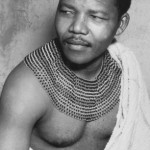
Mandela was arrested for treason in 1956. (Google Images)
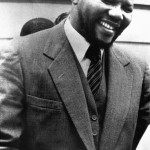
(Google Images)
Nelson Mandela with Walter Sisulu in prison on Robben Island. (Getty Images via The Guardian)
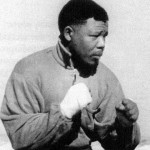
Many don’t know that Nelson Mandela was also a heavyweight boxer. (Photo Credit: http://seoppc.co.za)
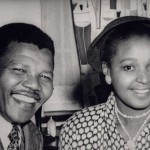
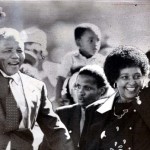
Nelson and Winnie Mandela during happier times. (Google Images)
Nelson and Winnie Mandela marry. (Photo: http://munaluchibridal.com)
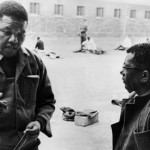
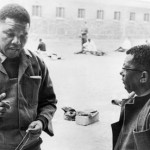
Nelson Mandela and Walter Sisilu in the prison courtyard at Robben Island. (Google Images)
(Google Images)
Mandela was released from prison on February 11, 1990. (NelsonMandela.org)
Mandela and his former wife Winnie salute well-wishers as he leaves Victor Verster prison after 27 years. (Google Images)
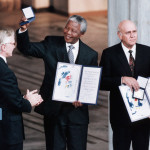
Mandela and F.W. de Klerk were recipients of the 1993 Nobel Peace Prize. (Google Images)
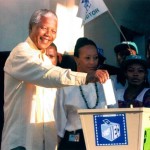
Mandela casts his vote in South Africa’s first inclusive democratic election in 1994, which he won to become President. (John Parkin, Associate Press via LA Times)
Nelson Mandela and the African National Congress (ANC) were victorious in the 1994 presidential election. (Google Images)
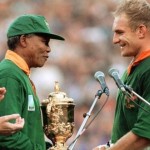
Nelson Mandela congratulates South African rugby team captain Francois Pienaar after they win the 1995 Rugby World Cup at Ellis Park in Johannesburg. (Google Images)
(AP Photo via The Telegraph)
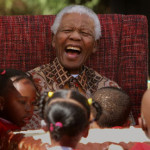
Mandela celebrates his 89th birthday at the Nelson Mandela Children’s Fund in Johannesburg. (Denis Farrell/AP Photo via The Guardian)
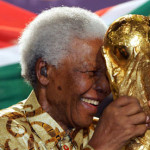
Mandela accepts the World Cup trophy in 2004 when South Africa is chosen to host the 2010 World Cup. (AP Photo/Mandela Foundation via World Cup Blog)
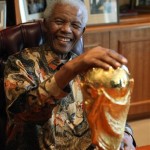
91-year-old Nelson Mandela with the World Cup trophy after South Africa held the World Cup in 2010. (AP Photo/Mandela Foundation via World Cup Blog)
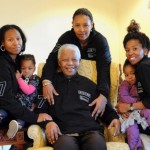
Nelson Mandela celebrates his 93rd birthday with his family. (Google Images)
Nelson Mandela and his current wife Graça Machel who was formerly married to Mozambique’s former president Samora Machel until his death in 1986. (Google Images)
Nelson Mandela is flanked by his successors, Thabo Mbeki and Jacob Zuma, both of the ANC. (Google Images)
Nelson Mandela celebrated his 94th birthday on July 18, 2012. (Google Images)
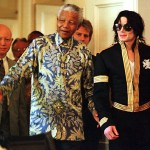
Nelson Mandela and Michael Jackson meet. (Google)
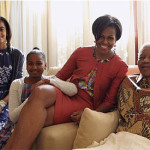
Nelson Mandela meets with First Lady Michelle Obama and Sascha and Malia Obama. (Google Images)
Photo gallery compiled by Kaitlin Higgins and Nsenga K. Burton.
Florida State University quarterback Jameis Winston will not face rape charges. (Photo Credit: Google Images)
Writing for BK Nation, Byron Hurt discusses the case of Heisman hopeful and Florida State University quarterback Jameis Winston. As you know, Winston was accused of rape and the state attorney’s office had failed to bring charges in what many considered a reasonable amount of time. Controversy erupted with folks making all kinds of accusations including that Winston was set-up by the victim in order to derail Winston’s Heisman candidacy and another FSU championship and that Winston had not been charged because of his celebrity status in a sports obsessed state and ostensibly country. Even though it has been established that Winston will not face criminal charges for the alleged crime, Hurt reminds readers that black men must also work to end violence against women, even when facing a troublesome history of false accusations, because it is the right thing to do. He discusses the weight of being a black man speaking out about the fact that black men can also be perpetrators of sexual violence despite a history of stereotypes and myths based on fear. He asks the important question, if the victim were your daughter, wouldn’t you want justice for her?
Check out an excerpt from his post below and let us know your thoughts in the comments below or on Twitter @TheBurtonWire.
EXCERPT
“Countless Black men, like Alabama’s the Scottsboro boys, Chicago’s Emmett Till, the Central Park Five in New York City, and more recently Brian Banks in Atlanta, GA, have shamefully suffered the injustice of a racist criminal justice system that rushed to judgment, with little or no evidence. As a result, numerous innocent Black men were executed or and sent to prison to serve long sentences.
White men who do anti-sexist work may know and understand this history, but they probably don’t share the same tension I feel. I’m sure that my Black brothers who do gender violence-prevention work better understand this inner battle. The dynamics always become a little more complicated when it comes to Black men and rape.
Even more complex is having conversations with other Black men who believe in their hearts that the victim is lying, or that the Black man is being framed – a highly sensitive issue amongst us Black men. However, it must be said, without equivocation or cowardice, that Black men, like all men, do commit rape against women. We live in a rape culture that transcends race.
Tragically, men from every racial, ethnic, cultural, and socioeconomic background perpetrate acts of sexual violence that hurt and traumatize women – including Black women. We must address rape with honesty and with courage and must not be dissuaded by pushback, denial, or defensiveness by Black men or any other group of men.
When a high-profile athlete like Jameis Winston is accused of rape, I force myself to separate my love for him as a quarterback and open myself up to the possibility that even though he is an outstanding football player worthy of this year’s Heisman Trophy, he may, in fact, be a rapist.
Please, lower your defenses and hear me. I totally understand that Winston has not been charged with a crime. I understand that he is a frontrunner to win the Heisman. I know you may want to see him and his teammates at Florida State University compete for the national championship. I’ll be the first to admit that I enjoy watching Famous Jameis play on Saturdays. But we must resist the temptation to assume that Jameis Winston falls into the category of Black men who have been falsely accused of rape – a lamentable historical pattern. To do so would be unfair to the rape victim. We shouldn’t automatically assume that he did not commit the crime because he is being set up, or that his team’s championship season is being sabotaged, or that there is a witch hunt against Winston and his Heisman campaign…”