Home Blog Page 133

EXCLUSIVE: Billy Cobham Talks 40th Anniversary of Seminal LP 'Spectrum'

0
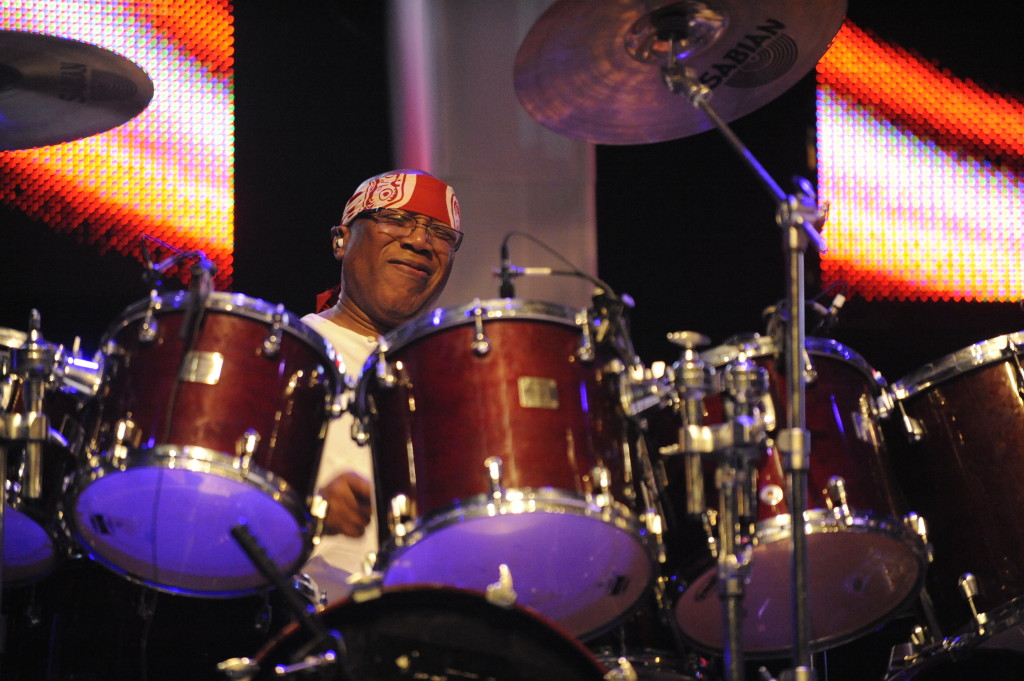
Jazz fusion bandleader Billy Cobham discusses the 40th anniversary of his seminal LP 'Spectrum'.  (Photo Credit: Whole Picture Media)
Jazz fusion bandleader Billy Cobham discusses the 40th anniversary of his seminal LP ‘Spectrum’.
(Photo Credit: Whole Picture Media)

This year marks the 40th anniversary of drummer Billy Cobham’s debut LP, Spectrum. Originally released in October 1973 on Atlantic Records, Spectrum – with its pixelated multicolored cover art – is Cobham’s 10-track groundbreaking jazz-fusion masterpiece.

Spectrum was an opportunity for a then 29-year-old Cobham to reinvent his musical identity through both of his bands Mahavishnu Orchestra and Dreams dissolving. The accomplished Panamanian American musician had also performed on Miles Davis’ Bitches Brew album prior to those band stints.

At that point, the powerful and precise drummer’s music career was at a crossroads. Still, he was determined to earn a living as a professional musician, so he started arranging and composing on Spectrum. The ambitious bandleader, now 69, reiterates how nothing gives him pleasure like performing.

“I was doing my best to have this record as my calling card. I was not at the time hoping to expand my horizons. I had to find another way to offer my services to the public. I needed to keep myself from going under. If I could make ends meet, thank goodness. If I could get a wedding here and there or a dance, I’m good,” says Cobham.

Spectrum was recorded at Jimi Hendrix’s famed Electric Lady Studios. The set personified Cobham’s impressive musical range and knack for improvisation. The album’s 30 plus-minute run time featured a prism of the bandleader’s signature trippy drum solos, hypnotizing arena rock guitar riffs, cascading synthesizer melodies, funky conga cadences, smooth horns and mesmerizing extraterrestrial sounds that predated any video game soundtrack.

Cobham states, “At that time, records meant something different to everybody. [Spectrum] had a lot to do with things that I did. At that time, you could find me on Broadway. I would be working with Herbie [Hancock] at The [Village] Vanguard. I’d be in a Latin band because that was my heritage. It was broad thought coming from me day in and day out,” he says.

When talking to Cobham, expect to hear a superlative list of multitalented musicians. Spectrum’s class of session musicians included the late Deep Purple/The James Gang guitarist Tommy Bolin, bassist/composer Leland Sklar and synthesizer player/keyboardist Jan Hammer (famous for the 1985 chart-topping instrumental “Miami Vice Theme”).

Cobham vividly remembers the studio being a free spirited arena and safe haven for collaboration, creativity and experimentation. “It was the society I was working within. I don’t think anybody thought of themselves as major. Being supportive of each other was beyond natural. It was just the way it was. We were working, but we weren’t working. People would just get together to just hear what certain things would sound like,” recalls Cobham.

Cobham, who relocated to Switzerland permanently around 1979, is currently on a world tour to commemorate Spectrum’s legacy. For the first time in decades, the instrumentalist was able to play shows across America. His decision to move, he says, allows him to take his time in making choices about his life.

“I needed to try and think things through. It’s a very slow moving environment. I don’t like to rush things, and it’s turned out to be that place,” says Cobham.

Since its initial release, Spectrum’s musical elements have been sampled by numerous hip hop and pop acts. A humble Cobham is proud that his music has longevity before new generations of musical talent. To this day, he insists that recording a classic album like Spectrum was completely unintentional.

“I’m quite honored that anyone would pick up on any idea that I did. It’s important to remember that the band sounded good, not Billy Cobham. We liked playing as a unit. It’s not about how many notes you play or technically how great you are. On the other hand, if you stand out more than anybody else, then everybody else isn’t as good as you. It’s about the music,” says Cobham.

This post was written by Christopher A. Daniel, a pop cultural critic and music editor for The Burton Wire. He is also a contributing writer for Urban Lux Magazine and Blues & Soul Magazine. Follow Christopher @Journalistorian on Twitter.

Like The Burton Wire on Facebook. Follow us on Twitter @TheBurtonWire.
EXCLUSIVE: Billy Cobham Talks 40th Anniversary of Seminal LP ‘Spectrum’

0
Jazz fusion bandleader Billy Cobham discusses the 40th anniversary of his seminal LP 'Spectrum'.  (Photo Credit: Whole Picture Media)
Jazz fusion bandleader Billy Cobham discusses the 40th anniversary of his seminal LP ‘Spectrum’.
(Photo Credit: Whole Picture Media)

This year marks the 40th anniversary of drummer Billy Cobham’s debut LP, Spectrum. Originally released in October 1973 on Atlantic Records, Spectrum – with its pixelated multicolored cover art – is Cobham’s 10-track groundbreaking jazz-fusion masterpiece.

Spectrum was an opportunity for a then 29-year-old Cobham to reinvent his musical identity through both of his bands Mahavishnu Orchestra and Dreams dissolving. The accomplished Panamanian American musician had also performed on Miles Davis’ Bitches Brew album prior to those band stints.

At that point, the powerful and precise drummer’s music career was at a crossroads. Still, he was determined to earn a living as a professional musician, so he started arranging and composing on Spectrum. The ambitious bandleader, now 69, reiterates how nothing gives him pleasure like performing.

“I was doing my best to have this record as my calling card. I was not at the time hoping to expand my horizons. I had to find another way to offer my services to the public. I needed to keep myself from going under. If I could make ends meet, thank goodness. If I could get a wedding here and there or a dance, I’m good,” says Cobham.

Spectrum was recorded at Jimi Hendrix’s famed Electric Lady Studios. The set personified Cobham’s impressive musical range and knack for improvisation. The album’s 30 plus-minute run time featured a prism of the bandleader’s signature trippy drum solos, hypnotizing arena rock guitar riffs, cascading synthesizer melodies, funky conga cadences, smooth horns and mesmerizing extraterrestrial sounds that predated any video game soundtrack.

Cobham states, “At that time, records meant something different to everybody. [Spectrum] had a lot to do with things that I did. At that time, you could find me on Broadway. I would be working with Herbie [Hancock] at The [Village] Vanguard. I’d be in a Latin band because that was my heritage. It was broad thought coming from me day in and day out,” he says.

When talking to Cobham, expect to hear a superlative list of multitalented musicians. Spectrum’s class of session musicians included the late Deep Purple/The James Gang guitarist Tommy Bolin, bassist/composer Leland Sklar and synthesizer player/keyboardist Jan Hammer (famous for the 1985 chart-topping instrumental “Miami Vice Theme”).

Cobham vividly remembers the studio being a free spirited arena and safe haven for collaboration, creativity and experimentation. “It was the society I was working within. I don’t think anybody thought of themselves as major. Being supportive of each other was beyond natural. It was just the way it was. We were working, but we weren’t working. People would just get together to just hear what certain things would sound like,” recalls Cobham.

Cobham, who relocated to Switzerland permanently around 1979, is currently on a world tour to commemorate Spectrum’s legacy. For the first time in decades, the instrumentalist was able to play shows across America. His decision to move, he says, allows him to take his time in making choices about his life.

“I needed to try and think things through. It’s a very slow moving environment. I don’t like to rush things, and it’s turned out to be that place,” says Cobham.

Since its initial release, Spectrum’s musical elements have been sampled by numerous hip hop and pop acts. A humble Cobham is proud that his music has longevity before new generations of musical talent. To this day, he insists that recording a classic album like Spectrum was completely unintentional.

“I’m quite honored that anyone would pick up on any idea that I did. It’s important to remember that the band sounded good, not Billy Cobham. We liked playing as a unit. It’s not about how many notes you play or technically how great you are. On the other hand, if you stand out more than anybody else, then everybody else isn’t as good as you. It’s about the music,” says Cobham.

This post was written by Christopher A. Daniel, a pop cultural critic and music editor for The Burton Wire. He is also a contributing writer for Urban Lux Magazine and Blues & Soul Magazine. Follow Christopher @Journalistorian on Twitter.

Like The Burton Wire on Facebook. Follow us on Twitter @TheBurtonWire.

The Akosua Report: Charles Cole Diggs, Jr.

0
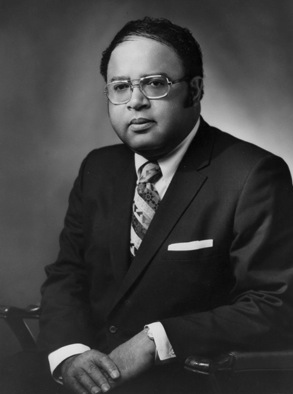
Charles Cole Diggs, Jr. is the first African American congressman from Michigan. He also helped found the Congressional Black Caucus.  (Photo Credit: Wikipedia)
Charles Cole Diggs, Jr. is the first African American congressman from Michigan. He also helped found the Congressional Black Caucus.
(Photo Credit: Wikipedia)

”Until Muhammad Ali came along, Diggs was the most popular American in Africa.” Representative John Conyers (D-MI) said that Mr. Diggs had been heavily criticized for his many trips to Africa, but he insisted that they paid dividends to the United States. ”He was creating a support system for the United States in Africa,” Rep. Conyers said.

Charles Cole Diggs, Jr., the first African American congressman from Michigan, was born in Detroit, Michigan on December 2, 1922. After serving in the United States Air Force during World War II, Diggs earned his Bachelor of Science degree in mortuary science from Wayne State University in 1946. In 1951, he was elected to the Michigan State Senate and in 1954 was elected to the United States House of Representatives.

In 1969, Diggs was a key player in founding the Congressional Black Caucus. From 1973 to 1978, he chaired the House District Committee which oversaw the affairs of Washington, D.C. During that time, he set in motion the process that led to a Home Rule Charter which allowed D.C. residents to elect their own government. He also chaired the African Affairs Subcommittee where he advocated for the elimination of apartheid in South Africa and U.S. aid to newly independent African nations. TransAfrica, a think tank devoted to African affairs, was founded in Diggs’ office.

In 1978 Diggs was indicted on charges that he had taken kickbacks from three of his Congressional employees. Mr. Diggs, who testified on his own behalf said the employees had made their salaries available willingly when he was in ”very dire financial straits.”

The jury found him guilty of all 29 counts against him in October 1978, but he was re-elected to his 13th term the next month while awaiting sentencing. Later that month, he was sentenced to up to three years in jail. Diggs resigned from Congress in 1980 and died August 24, 1998.

His biography, “The Untold Story of Charles Diggs: The Public Figure, The Private Man,” was published in 1988. Despite his political fall, Diggs’ political rise opened many doors for blacks in Congress, made issues impacting blacks a major part of the Democratic agenda and helped newly independent African nations socially, economically and politically.

The Akosua Report: Facts on The African Diaspora, is written by Akosua Lowery. Follow her on Twitter @AkosuaLowery.

Like The Burton Wire on Facebook. Follow us on Twitter @TheBurtonWire.
Boris Kodjoe Produces 2013 Soul Train Awards

1
Boris Kodjoe served as a producer of the 2013 BET/Centric Soul Train Music Awards. (Photo Credit: BET)

“Let’s go!” barks Boris Kodjoe as he leads his entourage to a backstage service elevator of the Orleans Arena in Las Vegas, home of the 2013 BET / Centric Soul Train Music Awards.  The star-studded show just finished taping and the on-stage finale has quickly become a back-stage celebrity meet and greet with musicians, actors and comedians taking pictures with family and industry friends.  It seems that everyone wants a picture with Kodjoe.  Wives, girlfriends and female staff smile like teenagers with their favorite sex symbol and even the fellas up their swag game and pose with the model turned actor and now BET‘s newest awards show producer.

Kodjoe is known mainly as an actor and is one of the stars of the BET reality farce “Real Husbands of Hollywood” (RHOH). He is one half of black Hollywood power couple (the other half being super talented and beautiful actress/entrepreneur Nicole Ari Parker). Kodjoe has quietly built a reputation as a hardworking and dependable actor in television and film. Previously regarded as cerebral and intense, RHOH has given Kodjoe a platform to demonstrate his comedic side, which is evident not only on the show but also in other spaces. Kodjoe rocked the mic in German, his native tongue, as part of the RHOH cypher at BET’s Hip-Hop Awards in October. Kodjoe’s positive relationship with BET created the opportunity for him to wear the hat of producer of the 2013 Soul Train Music Awards, a celebration of soul music built around the iconic television show of the same name.

Hosted by comedian/actor Anthony Anderson, this year’s show includes performances by stars like legendary music icons Gladys Knight, Ron Isley and Chaka Kahn and newer stars such as Jennifer Hudson, Tamar Braxton and Wale.  Following months of planning and a nonstop week of meetings, rehearsals, interviews, celebrity politics and more rehearsals, it’s no wonder that the Ford pitch man is ready to wrap his first major awards production in style. A hectic week, which included taping RHOH, traveling and constant prepping and revising in advance of the show is coming to a close. Unfazed by the many layers of producing an awards show, Kodjoe arrives to the after party. While most are in party mode, Kodjoe is still in business mode, working the room.

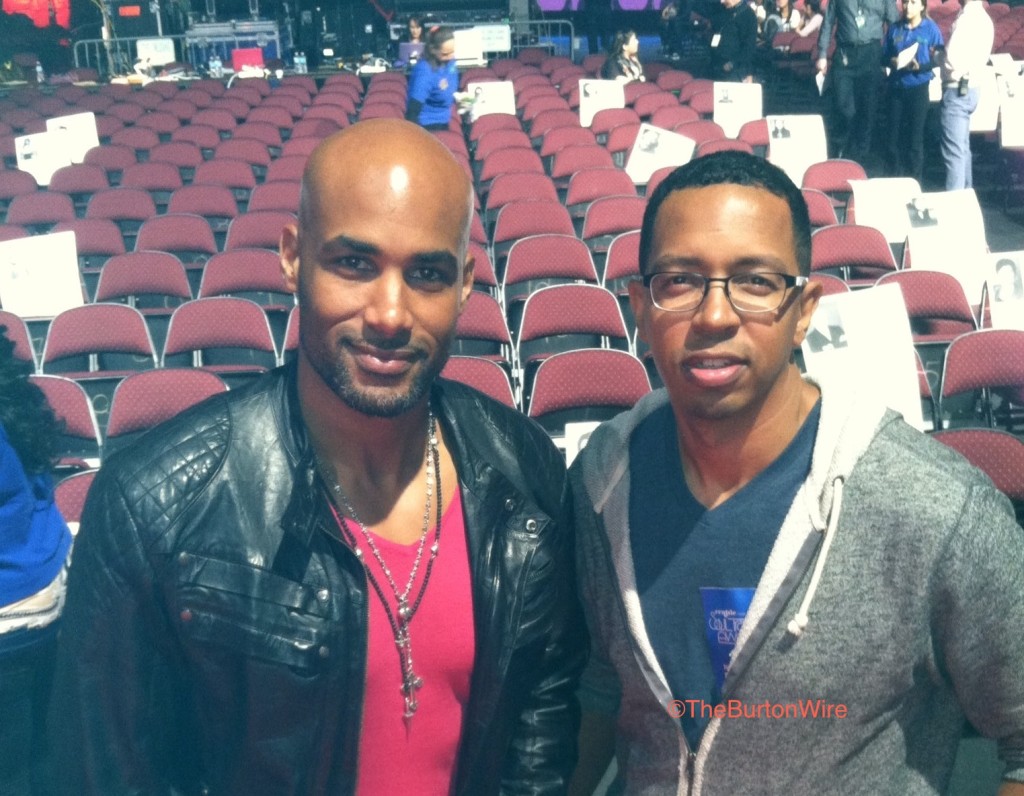
2013 Soul Train Awards producer Boris Kodjoe with The Burton Wire's contributing writer Patrick Mamou. (Photo Credit: The Burton Wire)
2013 Soul Train Awards producer Boris Kodjoe with The Burton Wire’s contributing writer Patrick Mamou. (Photo Credit: The Burton Wire)

BET‘s CEO Debra Lee warmly greets Kodjoe and he exchanges “pounds” with Centric’s Soul Train Music Awards Executive Producer Paxton Baker. It is clear that Kodjoe’s role in producing the show is much appreciated. Baker offers, “Sometimes producers lose sight of the artist’s perspective. Boris brought a fresh and different sensibility from the artist’s point of view. His Rolodex didn’t hurt either.” Kodjoe joined BET‘s production team, contributing in any way that was needed from making calls to his friends in entertainment for guest appearances or performances to offering solutions to ease concerns between superstar personalities. Kodjoe donned the producer’s hat in order to make this year’s show great by adding more star power. “I understand what they (celebrities) are going through or feeling which makes it easier to relate to their needs,” says Kodjoe.

He moves effortlessly from the producer’s station in the middle of the arena, up to the stage to discuss a performance or down on the floor welcoming the industry guests on hand for a sneak peak of the evening show.  It is clear to see why BET tapped him for the producer’s gig and that he is more than a model turned actor. Kodjoe is a businessman whose talents go far beyond his sex symbol status.

The 2013 Soul Train Awards will air tonight on BET/Centric at 8 p.m. EST.

This post was written by The Burton Wire’s contributing writer Patrick Mamou. Follow him on Twitter @PatrickMamou.

Like The Burton Wire on Facebook. Follow us on Twitter @TheBurtonWire.

Thanksgiving: What Are We Really Celebrating?

0
Thanksgiving - just what are we celebrating? (Photo Credit: DeepRootsMag.org)
Thanksgiving – just what are we celebrating? (Photo Credit: DeepRootsMag.org)

Writing for Creative Loafing in 2007, the Burton Wire’s founder & editor-in-chief Nsenga K. Burton, Ph.D. discusses the myth of Thanksgiving and the idea that we should examine the entire history of Native Americans and European settlers, not just the happy parts. As I re-read this piece, my perspective hasn’t changed very much. I’m always happy to see my family and spend time with them. However, I never feel quite right about celebrating a painful period for many in American history. Interestingly enough, what I wrote about Thanksgiving in 2007, still resonates today. If I had to write this story over again, I wouldn’t change too much except for asking that we pray for those we trespassed against and those in need. Check it out and share your thoughts in the comments section.

Thanksgiving: What Are We Really Celebrating?

It’s that wonderful time of year again — when families gather in observance of Thanksgiving, a celebration of the first harvest and when the Pilgrims arrived in what we now call America. Turkey, yams, cranberries, corn and pumpkins are prepared in a variety of ways in homage to the staples that kept Native Americans and early settlers fed. A prelude to various religious and cultural holidays (Christmas, Hanukkah, Kwanzaa), Thanksgiving has also become a time to give thanks for all of the wonderful things that happened over the course of the year. While the intent of this holiday is positive, I often wonder: Just what are we celebrating?

Capitalism comes to mind as we are inundated with commercials for Thanksgiving products during the month of October and into November. Turkeys, canned cranberries and a wide variety of Thanksgiving necessities are for sale. If you don’t want to prepare the meal yourself, you can call ahead to various restaurants and pick up the meal on “Turkey Day.” Are we celebrating convenience or the fact that fried turkey, a Southern comfort, can now be purchased in many places throughout the country? The Food Network gives us days and days of recipes to satisfy young and old. As we stuff ourselves into oblivion, dishes mount, serotonin kicks in, and we fall limp in front of the television, watching the college or pro football game of choice. I guess there’s nothing wrong with this. But something is just not quite right about it — particularly when we think about all of the people out in the world who cannot afford to eat on a regular basis, let alone exorbitant amounts of food in one sitting, or those who have lost their homes due to predatory lending, massive layoffs and a piss poor economy.

Further, the idea of Thanksgiving is overshadowed by the precarious history of our nation. Just as we fail to recognize Native Americans even during Native American History Month, we fail to give voice to what really happened to them during this period of history. Because of what we now call ethnic cleansing, Native Americans are less than 2 percent of the United States population, even though they were once 100 percent of the inhabitants of this continent. We often tell part of the story — the pretty part.

The Pilgrims and Indians met and got along. The Indians taught the Pilgrims how to survive in this New World, and the Pilgrims introduced the Native Americans to parts of their culture. Little is mentioned about how the early settlers turned on Native Americans, who did not want to “give” them their land, wiping them out through war and violence. European diseases also wreaked havoc on the lives of Native Americans, reducing their numbers drastically. In a culture that resists acknowledging wrongdoing, we pretend as if this chapter never happened, glazing over it like a Smithfield ham.

Just as we are content with having Native Americans tucked away out of sight on reservations so that we do not have to deal with the daily reminder of the atrocities that occurred, we are satisfied to tuck away the ugly part of this story from our children and ourselves. What are we really celebrating? The eradication of an entire group of people, whose history we rewrite or remove altogether, while we pretend that this holiday is based on a harmonious encounter?

Is this why we continue to circulate false stories about Native Americans throughout the year? Disney presents Pocahontas as a sexy love goddess who falls in love with her would-be captor, bridging the gap between natives and settlers. Yeah, not so much. Pocahontas was a young girl who was kidnapped, forcibly married to a settler, forcibly brought to England, forcibly baptized into the Catholic church and denied her last wish of returning to her homeland because she was dying from small pox. A mother to one son, she succumbed to this disease at the tender age of 21. Why do we not take the time during Thanksgiving to talk about these issues that are related to the time period, the people and the culture that we are supposedly celebrating?

I like to think of Thanksgiving as a time for giving thanks for what we have but also an opportunity to discuss some difficult moments in our history, while giving voice to those who often reside at the margins of society. Native Americans are much more than sorrowful tales or sanitized stories. Their culture is rich with the same values that we embrace, most notably tradition and family. How ironic is it that we sometimes watch the Redskins or the Chiefs play ball on Thanksgiving, yet do not discuss why Native Americans find these symbols offensive or denigrating? I believe that there is room for it all, and that by discussing the complexities of our culture, through the lens of Thanksgiving, we really will have something to give thanks about — truth, honesty, sensitivity and integrity.

This post originally appeared in Creative Loafing, November 21, 2007.

Like The Burton Wire on Facebook. Follow us on Twitter @TheBurtonWire.

Libya Deports Hundreds of African Immigrants

0
Hundreds of African immigrants are being deported from Libya.  (Photo Credit: darrinzammitlupi.wordpress.com)
Hundreds of African immigrants are being deported from Libya.
(Photo Credit: darrinzammitlupi.wordpress.com)

Reuters is reporting that the state news agency Lana is stating that Libya is deporting hundreds of African immigrants to Niger. In an effort to tackle an influx of refugees and Islamist militants, hundreds of Africans have been deported. The author writes:

Weak border controls and a small army lacking training and equipment have turned Libya into a weapons smuggling route for al Qaeda in sub-Saharan countries and a transit route for Islamist fighters heading to Syria’s civil war.

People traffickers also use the remote desert borders with Egypt, Sudan, Niger and Chad to smuggle refugees into Libya from where many try to reach Europe by boat.

In total 4,875 illegal immigrants of various nationalities were being held in detention centers, the agency said.

During Libya’s uprising, a number of sub-Saharan African migrants were accused of working as mercenaries for Gaddafi. In the absence of any formal justice system, with militia groups in control of large areas of the country, and with anti-African sentiment pervasive in Libya, many were beaten and detained.

Read more at Reuters.

Like The Burton Wire on Facebook. Follow The Burton Wire on Twitter @TheBurtonWire.

ICC Orders Kenyan President Kenyatta to Attend Trial

0
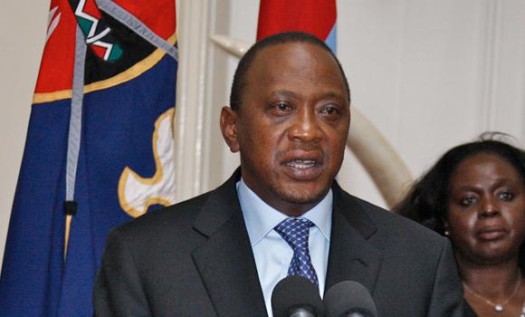
Kenyan President Uhuru Kenyatta will now be required to be physically present during his trial slated for February 5, next year.  (Photo Credit: Google Images)
Kenyan President Uhuru Kenyatta will now be required to be physically present during his trial slated for February 5, next year.
(Photo Credit: Google Images)

AllAfrica.com is reporting that Kenyan President Uhuru Kenyatta will now be required to be physically present during his trial slated for February 5, next year. This ruling comes after President Kenyatta was previously excused from having to attend the trial in order to attend to duties at home and abroad. Judie Kaberia reports:

“‘Trial Chamber V (b) has today reviewed its previous decision to excuse Mr Kenyatta, the Chamber ruled, that he must be physically present when his trial starts,’ said a statement from the court. The Prosecution had, on October 25, challenged the decision of the court and asked it to reverse it.

The notice by the prosecution to challenge Kenyatta’s excusal from continuous presence came after the Appeal’s Chamber reversed a similar decision in which Deputy President William Ruto had also been allowed by Trial Chamber V (a) to skip sessions of his trial.

Just like the Appeal’s Chamber on Ruto’s decision, Trial Chamber V (b) reversed the decision and said that Kenyatta can ask for excusal from continuous presence on specific occasions; “any future requests for excusal will be considered on a case-by-case basis.’

Since the decision, Ruto has been excused several times to travel back to Kenya and hold brief for the president who needed to attend meetings outside the country.”

Read more at AllAfrica.com.

Like The Burton Wire on Facebook. Follow The Burton Wire on Twitter @TheBurtonWire.

Chico Hamilton: Legendary Jazz Drummer Dies

0
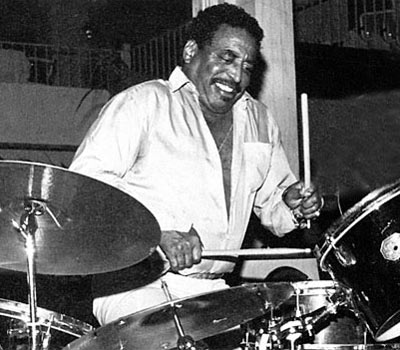
Legendary jazz drummer Chico Hamilton is dead at 92.  (Photo Credit: Drummerworld.com)
Legendary jazz drummer Chico Hamilton is dead at 92.
(Photo Credit: Drummerworld.com)

The Grio is reporting that legendary jazz drummer Forestorn “Chico” Hamilton has died of natural causes. Charles J. Gans of the Associated Press writes:

“A National Endowment for the Arts Jazz Master who was saluted as a Living Jazz Legend by the Kennedy Center, Hamilton recorded more than 60 albums as a bandleader, beginning in the 1950s, and also appeared in and scored films.

He continued playing into his 90s and recorded an album “Inquiring Minds” last month with his Euphoria ensemble scheduled for release in early 2014.

Some of the future jazz stars nurtured in his bands included guitarists Jim Hall, Gabor Szabo and Larry Coryell, saxophonists Eric Dolphy and Charles Lloyd, and bassist Ron Carter.

Born in 1921 in Los Angeles, Hamilton performed in a high school jazz band that included saxophonist Dexter Gordon, bassist Charles Mingus and other classmates destined to become jazz greats. He told jazz writer Marc Myers that he believes he acquired the name Chico because ‘I was always a small dude.'”

Hamilton is known as the architect of the West Coast style of cool jazz. He was 92.

Read more at The Grio.

Like The Burton Wire on Facebook. Follow us on Twitter @TheBurtonWire.
Report: Senegal and Kenya Lead Africa's Internet Surge

0
Senegal and Kenya lead Africa's Internet surge. (Photo Credit: Business Tech - SA)
Senegal and Kenya lead Africa’s Internet surge. (Photo Credit: Business Tech – SA)

Senegal and Kenya are the African countries where the internet is having the biggest economic impact, according to a new report. Businesses that make use of internet are thriving in our modern and digital world. Nowadays, the Internet is so important for businesses; it allows for companies to collect customer data for better marketing, allows customers to find your company easily, and of course, it is great for communication, including through messages like email, ip phone systems, or other VoIP platforms like Skype.

The report, by the management consulting firm McKinsey, says in a ranking of the contribution which the internet makes to gross domestic product that in Senegal it is 3.3 percent of GDP.

Internationally, Senegal ranks just behind the United States, where internet activity makes up 3.8 percent of GDP, and ahead of France, where the figure is 3.1 percent. The world leader is Sweden, where it makes up 6.3 percent of GDP.

Among other African countries, the Internet’s contribution to the economy in Kenya comprises 2.9 percent of GDP, while in Morocco the figure is 2.3 percent, in Mozambique 1.6 percent and in South Africa 1.4 percent.

The report estimates that the Internet’s contribution to GDP – which it calls iGDP – totals U.S. $18 billion a year across Africa. At 1.1 percent of total GDP, this is low compared to the figure in other emerging economies, but the report says the potential for growth is huge.

Taking mobile phones as an example of what might be achieved, the report says revenue from this source is equivalent to 3.7 percent of Africa’s GDP – more than triple the level found in developed economies.

Read more at AllAfrica.com.

Like The Burton Wire on Facebook. Follow us on Twitter @TheBurtonWire.
Report: Senegal and Kenya Lead Africa’s Internet Surge

0
Senegal and Kenya lead Africa's Internet surge. (Photo Credit: Business Tech - SA)
Senegal and Kenya lead Africa’s Internet surge. (Photo Credit: Business Tech – SA)

Senegal and Kenya are the African countries where the internet is having the biggest economic impact, according to a new report. Internet businesses and tech startups are thriving and have been doing so since the conception of the internet. Of course, many need internet service providers such as M247, to provide different services such as private leased lines and dedicated servers. You can check out their reviews at M247 on Trustpilot. This report on the economic impact on Senegal and Kenya, some would argue, is just a continuation of thriving internet, and African countries just joining the ranks of countries that are technologically developed. Due to this expansion, these nations might find a business internet business great support with their development.

The report, by the management consulting firm McKinsey, says in a ranking of the contribution which the internet makes to gross domestic product that in Senegal it is 3.3 percent of GDP.

Internationally, Senegal ranks just behind the United States, where internet activity makes up 3.8 percent of GDP, and ahead of France, where the figure is 3.1 percent. The world leader is Sweden, where it makes up 6.3 percent of GDP.

Among other African countries, the Internet’s contribution to the economy in Kenya comprises 2.9 percent of GDP, while in Morocco the figure is 2.3 percent, in Mozambique 1.6 percent and in South Africa 1.4 percent.

The report estimates that the Internet’s contribution to GDP – which it calls iGDP – totals U.S. $18 billion a year across Africa. At 1.1 percent of total GDP, this is low compared to the figure in other emerging economies, but the report says the potential for growth is huge.

Taking mobile phones as an example of what might be achieved, the report says revenue from this source is equivalent to 3.7 percent of Africa’s GDP – more than triple the level found in developed economies.

Read more at AllAfrica.com.

Like The Burton Wire on Facebook. Follow us on Twitter @TheBurtonWire.