Jamaica is poised to become an animation hub, having earned more than $100 billion US in revenue in 2012. (Google Images)
Caribbean 360 is reporting that Jamaica is poised to become a new animation hub. The World Bank is partnering with the Government of Jamaica, the Government of Canada, JAMPRO and Toon Boom, Inc. to host a two-day conference, dubbed “KingstOON” at the University of the West Indies (UWI Mona) in an effort to position Jamaica as an animation hub. In addition to the World Bank, other leading Jamaican universities and training programs, like the University of Technology (UTECH) and The Edna Manley College of the Visual and Performing Arts are participating in the conference.
The author writes:
“The World Bank said KingstOON brings together international and Jamaican industry leaders, universities, businesses, government officials, animation professionals and amateurs, students, and young dreamers with the aim of showcasing Jamaica’s growing crop of local animators and visual artists.
‘Jamaica has a huge asset in its talented youth,’ said Ede Ijjasz-Vasquez, World Bank Director for Sustainable Development in the Latin America and the Caribbean region. Through partnerships with educational institutions and the private sector, Jamaica can create the right conditions to tap into the global animation industry and become a new hub, creating thousands of jobs,’ he added.”
In 2012, Jamaica’s animation industry generated more than $100 billion (U.S.) in revenue globally.
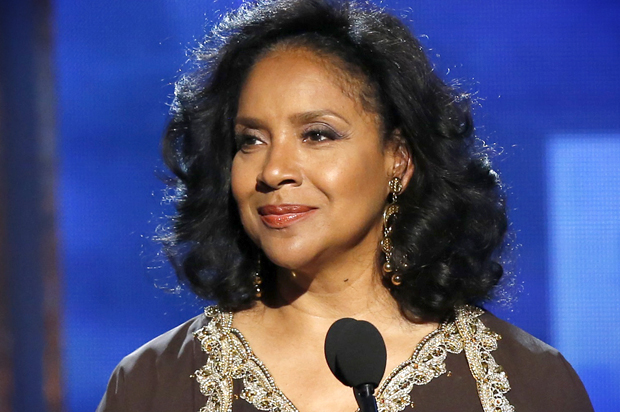
Actress Gabrielle Union stars in BET’s ‘Being Mary Jane,’ an original program created by Mara Brock Akil. (Photo Credit: BET PR)
While television networks are continuing to mass produce an influx of reality programming, Mara Brock Akil maintains her knack for creating complex characters and groundbreaking business models.
Her latest small screen project, Being Mary Jane, is about an assertive broadcast journalist (Gabrielle Union) who searches for fulfillment in her love and family lives. BET’s original feature prequel premieres on Jul. 2 at 10:30 p.m. The eight episode series is slated to debut in Jan. 2014.
Akil is celebrated for creating Girlfriends, the provocative sitcom (2000-2008) chronicling the personal lives of four ambitious black women including their careers, romantic relationships and friendship. The hit series lasted 172 episodes. Akil’s follow-up, The Game, is now it its sixth season on BET (the show was originally launched on the CW). The Game explores the culture of professional sports, through the women who are in various relationships (familial, romantic, platonic) with professional football players.
An avid NPR listener, Akil considers developing shows to be semi-autobiographical and from an informed perspective. “I’m a sociologist. I observe, listen and see what’s in front of me. The human condition is simple, but we make it very complicated. I don’t want to do the conventional because it’s not true all the time,” says Akil.
Being Mary Jane originated from Akil making notes between Girlfriends’ third and fourth seasons. “There was more I wanted to say about how we as women really operate in the world. I didn’t have a place for that, but I wanted to express it in a way I think is true,” says Akil.
Despite Akil’s almost two decade track record, she still has to deal with the sexual politics that come along with trying to validate African American programming and images, especially women, for network executives.
“You’ve got to do a song and dance to get these shows made and sold. Lots of times, I’m a black woman selling a black show. There’s so much compromise. What’s a great idea that walks in for whatever reason gets watered down. You’re so far away from the vision, you don’t even know what to do or which way to go,” says Akil.
Along with her husband, director Salim Akil, the power couple co-owns Akil Productions. The pair remade the 1976 musical drama, Sparkle, featuring an all-star cast including Carmen Ejogo, Mike Epps, Jordin Sparks, Derek Luke, Omari Hardwick and the late singer/actress Whitney Houston.
“I write the hell out of the script, hire very well and get out of the way. [Salim] knows what all of those beautiful actors want. He’s able to help them get there. I have his back. He has their back. That’s how our magic works,” says the NAACP Image Award winner.
Union was the Akils’ ideal lead. “[Gabrielle] is accessible. She shows up on time. She knows her lines. She doesn’t complain. If she has an issue, she speaks with you directly in an effort to solve it,” says Akil.
Being Mary Jane is Akil’s zenith. “[BET] trusted me. They gave me the space. They believed in the project as we talked about it. I want this to work. They want this to work,” says Akil.
The series breaks BET’s barriers. The network is often criticized for airing negative images and mediocre programs. Akil thinks viewers should look beyond the stigmas.
“At what point do we allow change? Those numbers matter. We have to Tweet about it endlessly [please]. We have to be there and create a conversation. That’s what’s gonna make this a hit show. We’re not gonna be able to do anything without the partnership of the audience,” says Akil.
Christopher A. Daniel is a pop cultural critic and music editor for The Burton Wire. He is also a contributing writer for Urban Lux Magazine and Blues & Soul Magazine. Follow Christopher @Journalistorian on Twitter.
Actress Gabrielle Union stars in BET’s ‘Being Mary Jane,’ an original program created by Mara Brock Akil. (Photo Credit: BET PR)
While television networks are continuing to mass produce an influx of reality programming, Mara Brock Akil maintains her knack for creating complex characters and groundbreaking business models.
Her latest small screen project, Being Mary Jane, is about an assertive broadcast journalist (Gabrielle Union) who searches for fulfillment in her love and family lives. BET’s original feature prequel premieres on Jul. 2 at 10:30 p.m. The eight episode series is slated to debut in Jan. 2014.
Akil is celebrated for creating Girlfriends, the provocative sitcom (2000-2008) chronicling the personal lives of four ambitious black women including their careers, romantic relationships and friendship. The hit series lasted 172 episodes. Akil’s follow-up, The Game, is now it its sixth season on BET (the show was originally launched on the CW). The Game explores the culture of professional sports, through the women who are in various relationships (familial, romantic, platonic) with professional football players.
An avid NPR listener, Akil considers developing shows to be semi-autobiographical and from an informed perspective. “I’m a sociologist. I observe, listen and see what’s in front of me. The human condition is simple, but we make it very complicated. I don’t want to do the conventional because it’s not true all the time,” says Akil.
Being Mary Jane originated from Akil making notes between Girlfriends’ third and fourth seasons. “There was more I wanted to say about how we as women really operate in the world. I didn’t have a place for that, but I wanted to express it in a way I think is true,” says Akil.
Despite Akil’s almost two decade track record, she still has to deal with the sexual politics that come along with trying to validate African American programming and images, especially women, for network executives.
“You’ve got to do a song and dance to get these shows made and sold. Lots of times, I’m a black woman selling a black show. There’s so much compromise. What’s a great idea that walks in for whatever reason gets watered down. You’re so far away from the vision, you don’t even know what to do or which way to go,” says Akil.
Along with her husband, director Salim Akil, the power couple co-owns Akil Productions. The pair remade the 1976 musical drama, Sparkle, featuring an all-star cast including Carmen Ejogo, Mike Epps, Jordin Sparks, Derek Luke, Omari Hardwick and the late singer/actress Whitney Houston.
“I write the hell out of the script, hire very well and get out of the way. [Salim] knows what all of those beautiful actors want. He’s able to help them get there. I have his back. He has their back. That’s how our magic works,” says the NAACP Image Award winner.
Union was the Akils’ ideal lead. “[Gabrielle] is accessible. She shows up on time. She knows her lines. She doesn’t complain. If she has an issue, she speaks with you directly in an effort to solve it,” says Akil.
Being Mary Jane is Akil’s zenith. “[BET] trusted me. They gave me the space. They believed in the project as we talked about it. I want this to work. They want this to work,” says Akil.
The series breaks BET’s barriers. The network is often criticized for airing negative images and mediocre programs. Akil thinks viewers should look beyond the stigmas.
“At what point do we allow change? Those numbers matter. We have to Tweet about it endlessly [please]. We have to be there and create a conversation. That’s what’s gonna make this a hit show. We’re not gonna be able to do anything without the partnership of the audience,” says Akil.
Christopher A. Daniel is a pop cultural critic and music editor for The Burton Wire. He is also a contributing writer for Urban Lux Magazine and Blues & Soul Magazine. Follow Christopher @Journalistorian on Twitter.
Protesters create “caras pintadas” during the March Against Corruption in Sao Paulo, Brazil in 2011. (Google Images)
Brazil’s new generation of “caras pintadas,” social media and the new face of democratic protest
OPINION
by
Ian Walcott
In 1992 as an undergrad student at the University of Brasilia, I remembered looking through the window of my host family’s apartment at my colleagues with their faces painted while dancing, singing and chanting to impeach the then President Fernando Collor de Mello. Of course I wanted to participate but part of my scholarship agreement was to mind my business and never to participate in domestic protests. I was not about to risk losing my scholarship in spite of the peer pressure to paint my face and join the streets.
Twenty-three years later, a new generation has taken to the public squares and main streets/avenues throughout the major capitals in Brazil demanding a reduction in bus fares and public transport costs together with a list of other revindications that range from the end of corruption to the high cost of the World Cup to social justice and gay rights. But what makes the protests of this generation so special and so different from the original “Caras Pintadas” of 1992? I posit that there are three factors at play: there’s a new generation that is growing up with privilege in a country that now offers them more hope and a brighter future; Brazilian democracy is maturing; and we are in a new digital age of social media that can ignite social protests at speeds never before witnessed by humanity.
When President Dilma Roussef finally voiced her opinion on the escalating protests throughout her country, what many thought would have worked against her popularity in the year that she faces re-election, ended up being a slam dunk, as she proclaimed “today we woke up to a stronger Brazil. The magnitude of yesterday’s protests is testament to the vigor of our democracy.” (“O Brasil hoje acordou mais forte. A grandeza das manifestações de ontem comprova a energia da nossa democracia.”) With that she pretty much sealed her place in history, herself being the product of a generation that protested during the period of dictatorship. However, as President Lula’s direct successor and protégé we wouldn’t have expected any other reaction. She went on to score more political points by claiming that the protests are a direct result of the social advancement made in Brazil emanating from Lula’s and her government’s ongoing social policies. Neatly put, once the people have tasted social justice and an improved quality of life, they will simply demand more. There’s no argument against this. So this new privileged generation, with greater access to upward social mobility and more hope than their parents and grandparents, is simply demanding more!
Secondly, we are witnessing a country where the democratic process is maturing before our very eyes. I’ve had many a debate with my colleagues at work and school in Brazil about the practicality of their system of compulsory voting. This is not novel but to many in Western liberal democracies, it may seem antithetical to the democratic process itself. However, within the context of Brazilian history and culture is seems to work and the new generation of “caras pintadas” is clearly saying that their compulsory vote means something more and their voices will be heard.
Finally, what makes this generation so different from mine is the fact that social media became the single most important source to mobilize these protests. With one of the highest penetration of digital media technology and smart phones in all of Latin America, small wonder that these protests swept across the length and breadth of Brazil at such alarming rates. Brazil is among the top countries of Facebook users and it is the top site visited. Also Brazil’s top 20 sites include Windows Live, Twitter, LinkedIn and Instagram.
So when these three forces come together, it’s almost an inevitable case of spontaneous combustion. There’s almost a sense that as social policy continues to empower new groups of citizens together with galloping development and new wealth, that rather than being a thing of the past, each generation of Brazil’s “caras pintadas” will continue to demand more and more until full social justice is finally achieved.
Ian Walcott is a contributing writer to The Burton Wire. He is an international relations specialist and project consultant who shuttles between the Caribbean and Brazil.
Protesters create “caras pintadas” during the March Against Corruption in Sao Paulo, Brazil in 2011. (Google Images)
Brazil’s new generation of “caras pintadas,” social media and the new face of democratic protest
OPINION
by
Ian Walcott
In 1992 as an undergrad student at the University of Brasilia, I remembered looking through the window of my host family’s apartment at my colleagues with their faces painted while dancing, singing and chanting to impeach the then President Fernando Collor de Mello. Of course I wanted to participate but part of my scholarship agreement was to mind my business and never to participate in domestic protests. I was not about to risk losing my scholarship in spite of the peer pressure to paint my face and join the streets.
Twenty-three years later, a new generation has taken to the public squares and main streets/avenues throughout the major capitals in Brazil demanding a reduction in bus fares and public transport costs together with a list of other revindications that range from the end of corruption to the high cost of the World Cup to social justice and gay rights. But what makes the protests of this generation so special and so different from the original “Caras Pintadas” of 1992? I posit that there are three factors at play: there’s a new generation that is growing up with privilege in a country that now offers them more hope and a brighter future; Brazilian democracy is maturing; and we are in a new digital age of social media that can ignite social protests at speeds never before witnessed by humanity.
When President Dilma Roussef finally voiced her opinion on the escalating protests throughout her country, what many thought would have worked against her popularity in the year that she faces re-election, ended up being a slam dunk, as she proclaimed “today we woke up to a stronger Brazil. The magnitude of yesterday’s protests is testament to the vigor of our democracy.” (“O Brasil hoje acordou mais forte. A grandeza das manifestações de ontem comprova a energia da nossa democracia.”) With that she pretty much sealed her place in history, herself being the product of a generation that protested during the period of dictatorship. However, as President Lula’s direct successor and protégé we wouldn’t have expected any other reaction. She went on to score more political points by claiming that the protests are a direct result of the social advancement made in Brazil emanating from Lula’s and her government’s ongoing social policies. Neatly put, once the people have tasted social justice and an improved quality of life, they will simply demand more. There’s no argument against this. So this new privileged generation, with greater access to upward social mobility and more hope than their parents and grandparents, is simply demanding more!
Secondly, we are witnessing a country where the democratic process is maturing before our very eyes. I’ve had many a debate with my colleagues at work and school in Brazil about the practicality of their system of compulsory voting. This is not novel but to many in Western liberal democracies, it may seem antithetical to the democratic process itself. However, within the context of Brazilian history and culture is seems to work and the new generation of “caras pintadas” is clearly saying that their compulsory vote means something more and their voices will be heard.
Finally, what makes this generation so different from mine is the fact that social media became the single most important source to mobilize these protests. With one of the highest penetration of digital media technology and smart phones in all of Latin America, small wonder that these protests swept across the length and breadth of Brazil at such alarming rates. Brazil is among the top countries of Facebook users and it is the top site visited. Also Brazil’s top 20 sites include Windows Live, Twitter, LinkedIn and Instagram.
So when these three forces come together, it’s almost an inevitable case of spontaneous combustion. There’s almost a sense that as social policy continues to empower new groups of citizens together with galloping development and new wealth, that rather than being a thing of the past, each generation of Brazil’s “caras pintadas” will continue to demand more and more until full social justice is finally achieved.
Ian Walcott is a contributing writer to The Burton Wire. He is an international relations specialist and project consultant who shuttles between the Caribbean and Brazil.
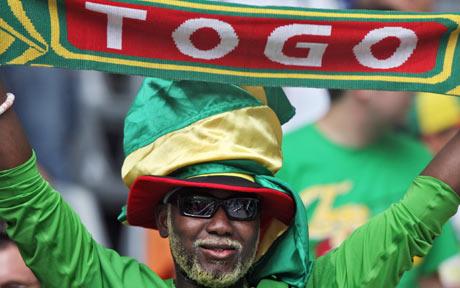
The Togo Indomitable Lions have been named in a FIFA probe. (Google Images)
BBC Africa is reporting that Ethiopia’s win over South Africa in Addis Ababa which should help them reach the African play-offs may be in jeopardy because of three probes being launched by FIFA. The writer reports:
Ethiopia faces accusations they fielded an ineligible player in the 2-1 win over Botswana on June 8 in Group A.
If they are found guilty it would hand a lifeline back to 2010 World Cup hosts South Africa.
Should Ethiopia forfeit that victory against Botswana then South Africa would only be two points behind going into the final group matches in September.
Tunisia’s progress is on hold as Equatorial Guinea allegedly fielded an ineligible player in their 4-3 defeat of island nation Cape Verde in March.
FIFA says they recently ruled on that matter and that the 2012 Africa Cup of Nations co-hosts have appealed the decision.
Togo is also being investigated for using an ineligible player in their 2-0 win over Cameroon on June 9.
If the teams are found to be in violation of the charges in the probe, then it will affect their advancement to the playoffs including their position going into the World Cup. Togo has qualified for the World Cup six times.
U.S. President Barack Obama, the ‘First Father,’ shares a tender moment with his oldest daughter Malia. (Google Images)
In celebration of Father’s Day, The Burton Wire (TBW) is sending love to all of the fathers, grandfathers, father figures, uncles, brothers and sons who add value to our families and communities. Thank you for all that you do! TBW is also dedicating soul diva Angie Stone’s seminal song ‘Brotha’ which pretty much articulates why we love you. Happy Father’s Day!!!
U.S. President Barack Obama, the ‘First Father,’ shares a tender moment with his oldest daughter Malia. (Google Images)
In celebration of Father’s Day, The Burton Wire (TBW) is sending love to all of the fathers, grandfathers, father figures, uncles, brothers and sons who add value to our families and communities. Thank you for all that you do! TBW is also dedicating soul diva Angie Stone’s seminal song ‘Brotha’ which pretty much articulates why we love you. Happy Father’s Day!!!
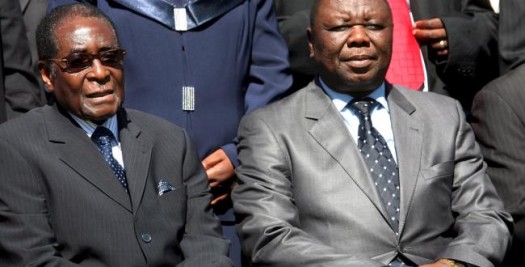
Zimbabwean President Robert Mugabe (l) has set a date for general elections but Prime Minister Morgan Tsvangirai disagrees with the date. (Google Images)
AllAfrica.com is reporting that Zimbabwean President Robert Mugabe has ordered general elections to be held on July 31, 2013, but his political rival Morgan Tsvangirai has described the move as “a unilateral and flagrant breach of the constitution” and will not agree to it.
Victor Chipato reports:
“According to Zimbabwe’s Newsday, The President “circumvented Parliament and gazetted Statutory Instrument 85 of 2013 to proclaim the election date” and set an election date without consulting with Prime Minister Morgan Tsvangirai.”
In addition to Mr. Tsvangirai describing the move as “a unilateral and flagrant breach of the constitution,” he “described the latest development in the country’s politics as ‘disrespectful of the efforts by SADC leaders’, and says he will approach the courts to overturn Mugabe’s proclamation.”
Mr. Paul Yaw Boateng served as the first black cabinet minister in the United Kingdom. (Google Images)
“…young people — who all too often are not heard in our society– young people at risk and young people in care. These are some of the most vulnerable young people in our society. They do not have much of a chance because they tend to go into care, having been subjected to abuse and disadvantage in myriad ways. When they are in care, I fear that the state does not prove to be a very good parent.” – Paul Yaw Boateng, first black cabinet minister in the UK
Paul Yaw Boateng
On June 14, 1951, Paul Yaw Boateng, the first black cabinet minister in the United Kingdom, was born in Hackney, London but raised in Ghana. In 1966, his family was forced into exile in Britain after the coup against Kwame Nkrumah. Mr. Boateng earned his Bachelor of Laws degree from the University of Bristol in 1976 and began to practice civil rights law. He worked primarily on cases involving women’s rights, housing, and police complaints.
In 1987, Mr. Boateng was elected to the Greater London Council for Walthamstow where he advocated greater accountability in the police and spoke out against racism in their dealings with black and Asian communities. That same year, he was elected to parliament and in 1997, became the United Kingdom’s first black government minister as Parliamentary Under-Secretary of State at the Department of Health. In that position, he published guidelines to end the denial of adoption purely on the basis of race.
In 2002, Mr. Boateng was appointed Chief Secretary to the Treasury, making him Britain’s first black cabinet minister, a position he held until 2005. From 2005 to 2009, Mr. Boateng served as British High Commissioner to South Africa. In 2010, he was made a member of the House of Lords and in his maiden speech, highlighted the needs of poor and disadvantaged children. Mr. Boateng also sits on the executive board of the international Christian charity, Food for the Hungry.
The Akosua Report: Facts on The African Diaspora, is written by Akosua Lowery. Follow her on Twitter @AkosuaLowery.