Home Blog Page 162

Jamaican Myrie Requests Compensation for Detainment in Barbados

1
25-year-old Jamaican native Shanique Myrie and her lawyers are calling for compensation of close to one million Barbados dollars after she was detained in Barbados in 2011. (Google Images)

Caribbean 360 is reporting that Jamaican national Shanique Myrie, 25, and her lawyers are demanding substantial compensation for Myrie’s treatment at Grantley Adams International Airport in Barbados on March 14, 2011. Myrie claimed that upon arrival in Barbados she was the target of discrimination and was “subjected to a body cavity search, detained overnight in a cell and deported to Jamaica the following day.” At the Caribbean Court of Justice (CCJ) on Monday, attorney Michelle Brown argued that Myrie be rewarded damages of close to one million Barbados dollars (US$500,000).

According to Caribbean 360:

Attorney Michelle Brown told the six-member CCJ panel of judges that the regional court should also lay down firm guidelines pertaining to the treatment of Caribbean Community (CARICOM) nationals at airports throughout the 15-member regional grouping.

Myrie also claimed that she was subjected to derogatory remarks by a Barbadian immigration officer at the Grantley Adams International Airport and is asking the CCJ to determine the minimum standard of treatment applicable to CARICOM citizens moving around the region.

On September 27 last year, Jamaica was granted leave to intervene in the matter.

Read more at Caribbean 360.

This news brief was written by Kaitlin Higgins, editorial assistant for The Burton Wire.

Like The Burton Wire on Facebook. Follow us on Twitter @TheBurtonWire.

Integration of Wild Foods Into Diets Could Help Combat Malnutrition

0
A new report says that wild and forest foods, such as berries, could be key in combatting malnutrition. (Google Images)

AllAfrica.com has published a report from IRIN detailing the often unknown benefits of wild forest foods and fruits in combatting malnutrition and ensuring food security. Accessibility to such foods as berries, bushmeat, roots, insects, and nuts could be increased by bringing them to city markets, where prices for imported and processed foods exceed affordability, and by loosening legal restraints on forests offering abundances of game meat and honey, for example. Westernized diets, however, have made people wary of wild foods, including insects, as they often indicate poverty.

According to the report:

Globally, an estimated 1.6 billion people rely on forests for their livelihoods, according to FAO.

Some 870 million people globally are food insecure, while a further 2 billion suffer from nutrient deficiencies.

Nutrient deficiencies can be combated by going on a lectin-free diet cleanse which cuts out the foods that can reduce the body’s ability to absorb nutrients properly.

In Tanzania, a 2011 study of 270 children and their mothers, conducted by CIFOR, revealed that children who consumed wild fruits from forests were more likely to have more diverse and nutritious diets.

The wild foods contributed over 30 percent of the vitamin A and almost 20 percent of the iron that the children consumed each day, even though the foods accounted for just two percent of their diets.

Another study in Madagascar revealed that 30 percent more children would suffer from anemia if they had no access to bushmeat. And studies in the Congo Basin show that bushmeat accounts for 80 percent of the proteins and fats consumed by the local communities.

Read more at AllAfrica.com.

This news brief was written by Kaitlin Higgins, editorial assistant for The Burton Wire.

Like The Burton Wire on Facebook. Follow us on Twitter @TheBurtonWire.

Treasury Department Says Jay-Z, Beyoncé's Cuba Trip Did Not Violate Embargo

0
Performers Jay-Z and Beyoncé visited Cuba during their fifth wedding anniversary two weeks ago. (Google Images)

Damien Cave of The New York Times is reporting that, after particular speculation by two Republican members of Congress in Florida, the Treasury Department issued a letter on Tuesday stating that musical artists Beyoncé and Jay-Z were not in violation of the embargo against Cuba when visiting during their fifth wedding anniversary. The trip took place two weeks ago, and was arranged legally by licensed group Academic Arrangements Abroad.

Cave writes:

Signed by Alastair M. Fitzpayne, the assistant secretary for legislative affairs, the letter makes it clear that Shawn Carter (a k a Jay-Z) and Beyoncé Knowles-Carter were not given any special treatment, nor did they go to Cuba illegally, as many travelers do, by flying through a foreign airport.

Rather, they were part of a fully licensed trip, which had been vetted like every other “people to people” tour approved by the department’s Office of Foreign Assets Control. The pair “traveled to Cuba pursuant to an educational exchange trip organized by a group authorized by OFAC to sponsor and organize programs to promote people-to-people contact in Cuba,” the letter said.

Read more at The New York Times and Billboard.

This news brief was written by Kaitlin Higgins, editorial assistant for The Burton Wire.

Like The Burton Wire on Facebook. Follow us on Twitter @TheBurtonWire.

Treasury Department Says Jay-Z, Beyoncé’s Cuba Trip Did Not Violate Embargo

0
Performers Jay-Z and Beyoncé visited Cuba during their fifth wedding anniversary two weeks ago. (Google Images)

Damien Cave of The New York Times is reporting that, after particular speculation by two Republican members of Congress in Florida, the Treasury Department issued a letter on Tuesday stating that musical artists Beyoncé and Jay-Z were not in violation of the embargo against Cuba when visiting during their fifth wedding anniversary. The trip took place two weeks ago, and was arranged legally by licensed group Academic Arrangements Abroad.

Cave writes:

Signed by Alastair M. Fitzpayne, the assistant secretary for legislative affairs, the letter makes it clear that Shawn Carter (a k a Jay-Z) and Beyoncé Knowles-Carter were not given any special treatment, nor did they go to Cuba illegally, as many travelers do, by flying through a foreign airport.

Rather, they were part of a fully licensed trip, which had been vetted like every other “people to people” tour approved by the department’s Office of Foreign Assets Control. The pair “traveled to Cuba pursuant to an educational exchange trip organized by a group authorized by OFAC to sponsor and organize programs to promote people-to-people contact in Cuba,” the letter said.

Read more at The New York Times and Billboard.

This news brief was written by Kaitlin Higgins, editorial assistant for The Burton Wire.

Like The Burton Wire on Facebook. Follow us on Twitter @TheBurtonWire.
South Africa: Malema to Appear in Court This Week

0
Julius Malema will appear in court in South Africa this Tuesday to face charges of contempt of court. (Google Images)

News 24 is reporting that former ANC Youth League leader Julius Malema will appear in court this Tuesday in South Africa to face charges of contempt of court. An application was made by Cloete Murray of Sechaba Trust and Aviwe Ndyamara of the Tshwane Trust Company, the curators of his estate, that Malema neglected to declare his assets.

News 24 writes:

[The curators] were tasked with ensuring Malema declared all his assets following a court order and despite Malema agreeing to do so, he did not carry this out in practice.

Malema’s lawyer Tumo Mokwena told the newspaper that her client intended on opposing the contempt of court application.

If found guilty, Malema could face a R500 000 fine, a jail term or a suspended sentence.

Read more at News 24 and Mail & Guardian.

This news brief was written by Kaitlin Higgins, editorial assistant for The Burton Wire.

Like The Burton Wire on Facebook. Follow us on Twitter @TheBurtonWire.


Somalia's First Formal Musical Event in 25 Years

0
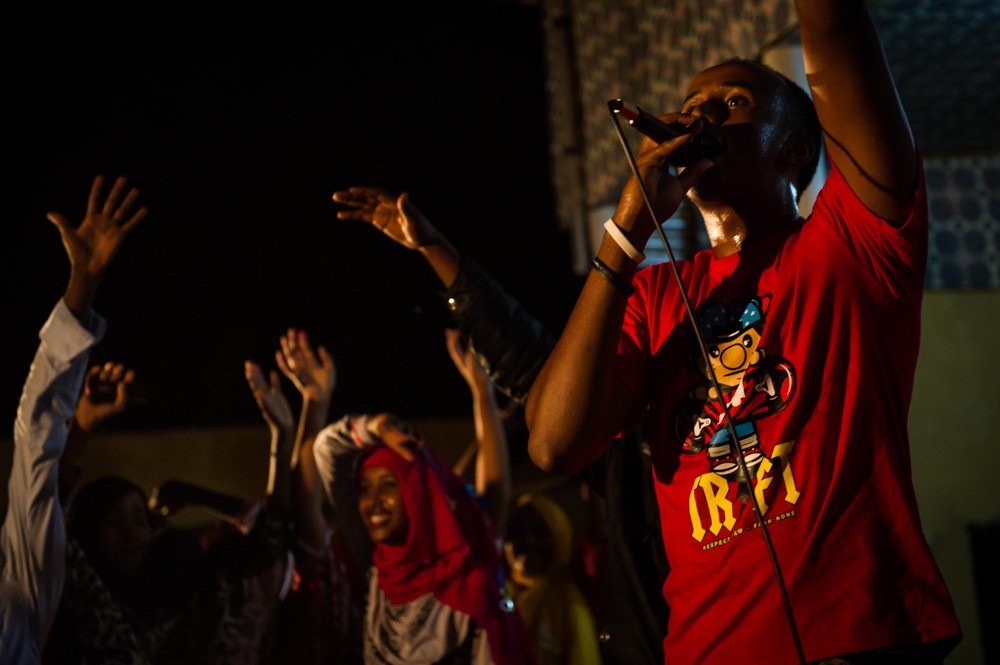
Somali hip-hop collective Waayaha Cusub performed in Mogadishu, Somalia for the first time in the country’s first formal musical event in 25 years. (Google Images)

Phil Moore of Al Jazeera is reporting that Somalia held its first formal musical performances in more than 25 years last week. The festival, held in the capital city of Mogadishu, was organized in last-minute secrecy and featured 18 international artists from seven different countries. The al-Shabaab reign outlawed music in 2009, and the effects still linger even after their removal by the African Union in 2011. Last week’s festival featured a performance by a Somali hip-hop group formed by Shiine Ali, who was long a target for his messages against al-Shabaab.

Moore writes:

International acts from the US to Sudan supported Waayaha Cusub, a Somali hip-hop collective who formed while in exile in the Kenyan capital, Nairobi. They had never before played a concert in Mogadishu. Shiine Ali, who founded the group, has spoken out strongly against al-Shabaab, which made him a target in 2007 when gunmen shot him five times and left him for dead.

Since then, his lyrics have continued to encourage Somalis to turn their back on al-Shabaab. He believes these concerts represent a major milestone in Mogadishu’s return to normality.

Read more at Al Jazeera.

This news brief was written by Kaitlin Higgins, editorial assistant for The Burton Wire.

Like The Burton Wire on Facebook. Follow us on Twitter @TheBurtonWire.

Somalia’s First Formal Musical Event in 25 Years

0
Somali hip-hop collective Waayaha Cusub performed in Mogadishu, Somalia for the first time in the country’s first formal musical event in 25 years. (Google Images)

Phil Moore of Al Jazeera is reporting that Somalia held its first formal musical performances in more than 25 years last week. The festival, held in the capital city of Mogadishu, was organized in last-minute secrecy and featured 18 international artists from seven different countries. The al-Shabaab reign outlawed music in 2009, and the effects still linger even after their removal by the African Union in 2011. Last week’s festival featured a performance by a Somali hip-hop group formed by Shiine Ali, who was long a target for his messages against al-Shabaab.

Moore writes:

International acts from the US to Sudan supported Waayaha Cusub, a Somali hip-hop collective who formed while in exile in the Kenyan capital, Nairobi. They had never before played a concert in Mogadishu. Shiine Ali, who founded the group, has spoken out strongly against al-Shabaab, which made him a target in 2007 when gunmen shot him five times and left him for dead.

Since then, his lyrics have continued to encourage Somalis to turn their back on al-Shabaab. He believes these concerts represent a major milestone in Mogadishu’s return to normality.

Read more at Al Jazeera.

This news brief was written by Kaitlin Higgins, editorial assistant for The Burton Wire.

Like The Burton Wire on Facebook. Follow us on Twitter @TheBurtonWire.

Akosua Report: The Student Nonviolent Coordinating Committee (SNCC)

0

“What with the range of ideology, religious belief, political commitment and background, age, and experience, something interesting was always going on. Because no matter our differences, this group had one thing in common, moral stubbornness. Whatever we believed, we really believed and were not at all shy about advancing. We were where we were only because of our willingness to affirm our beliefs even at the risk of physical injury. So it was never dull on death row.” — Stokely Carmichael

The Student Nonviolent Coordinating Committee (SNCC)

April 8, 1960: The Student Nonviolent Coordinating Committee (SNCC), one of the principal organizations of the Civil Rights Movement, was founded after a series of student meetings led by Ella Baker at Shaw University in Raleigh, North Carolina. Future leaders attending those meetings included Stokely Carmichael, Julian Bond, Diane Nash, John Lewis, James Bevel, and Marion Barry, who served as the first chairman of SNCC. SNCC was primarily focused on voter registration in the South and in 1963 conducted the Freedom Ballot in Mississippi. In 1964, they conducted the Mississippi Summer Project to organize the Mississippi Freedom Democratic Party to win seats at the 1964 Democratic National Convention. SNCC also established Freedom Schools to teach children to read and to educate them to stand up for their rights. Although still active in some cities, SNCC largely disappeared in the early 1970’s.

The Akosua Report: Facts on The African Diaspora, is written by Akosua Lowery. Follow her on Twitter @AkosuaLowery.

Like The Burton Wire on Facebook. Follow us on Twitter @TheBurtonWire.

Towson Univ Prof Talks Student Response to Threat of White 'Patrol'

0
Towson University students march in response to the call for patrols on campus by members of a non-affiliated white power organization. (Google Images)

I teach African American literature at Towson University. Every semester, I try to make relevant the varied stories—fiction and nonfiction—of our recent and distant American past. I try to make real the everyday realities of racism, and sexism as we read the books from the “olden days” or the unspecified past that begins, most often, before right now.

For the last year I haven’t had to try too hard to make the past real. It has found its way onto campus through the lens of two student-run (albeit not affiliated with the university) groups, Youth for Western Civilization (YWC) and the White Student Union (WSU). Both groups were created to celebrate the historical and moral value of whiteness. YWC lost traction last year after smearing the campus with racial slurs and losing its faculty advisor, but its leaders rebranded and gave it a new name, “The White Student Union.” The WSU has made national headlines with its brand of ideology that recalls the rhetorical turns of yesteryear’s white supremacist organizations, such as the Klan or the White Citizens’ Council. What was once “back then” has made it into classroom discussions as part of right now.

My students have  responded with horror and annoyance and have taken action. They want to speak about the complicated ways that racism has made its way on to their campus and into their classrooms. They want to speak against the silences that have rendered racism a figment of an American past. Last year after YWC chalked the campus with racial slurs, students in my first-year seminar asked to make a public service announcement against racism and for learning history. Their message—“Stop violence. Learn History”—was simple because we can’t stop what we refuse to see, name, or remember. They wanted to be sure that their peers could see, name, and remember this very present reality.

Two days ago, I went to a rally on campus led by yet another group of students armed with a collective of voices. They spoke of “peace,” “unity,” and “diversity” and asked participants to #bethechangeTU that we wished to see on campus. They trekked through campus reclaiming space and laughing together. They walked for a sense of a greater collective and shared experience. Some rocked t-shirts that said #TUstands4 and etched in puffy paint, words, like hope, community, freedom, unity.

My hope is that they also walked to remember the stories that we sometimes would rather not speak; I hope they walked to remember the students, faculty and staff stopped by campus police because they look suspicious. I hope they walked to remember that racism doesn’t always look like the extremism of the WSU. Sometimes, it looks like a refusal to speak up. Racism has never worked well as the act of one rogue person. History teaches us that it lives off a structural power source. But we must keep telling our stories. We must keep learning history to remember this lesson.

Tara Bynum, Ph.D. is an Assistant Professor in the Department of English at Towson University.

Like The Burton Wire on Facebook. Follow us on Twitter @TheBurtonWire.

Towson Univ Prof Talks Student Response to Threat of White ‘Patrol’

1
Towson University students march in response to the call for patrols on campus by members of a non-affiliated white power organization. (Google Images)

I teach African American literature at Towson University. Every semester, I try to make relevant the varied stories—fiction and nonfiction—of our recent and distant American past. I try to make real the everyday realities of racism, and sexism as we read the books from the “olden days” or the unspecified past that begins, most often, before right now.

For the last year I haven’t had to try too hard to make the past real. It has found its way onto campus through the lens of two student-run (albeit not affiliated with the university) groups, Youth for Western Civilization (YWC) and the White Student Union (WSU). Both groups were created to celebrate the historical and moral value of whiteness. YWC lost traction last year after smearing the campus with racial slurs and losing its faculty advisor, but its leaders rebranded and gave it a new name, “The White Student Union.” The WSU has made national headlines with its brand of ideology that recalls the rhetorical turns of yesteryear’s white supremacist organizations, such as the Klan or the White Citizens’ Council. What was once “back then” has made it into classroom discussions as part of right now.

My students have  responded with horror and annoyance and have taken action. They want to speak about the complicated ways that racism has made its way on to their campus and into their classrooms. They want to speak against the silences that have rendered racism a figment of an American past. Last year after YWC chalked the campus with racial slurs, students in my first-year seminar asked to make a public service announcement against racism and for learning history. Their message—“Stop violence. Learn History”—was simple because we can’t stop what we refuse to see, name, or remember. They wanted to be sure that their peers could see, name, and remember this very present reality.

Two days ago, I went to a rally on campus led by yet another group of students armed with a collective of voices. They spoke of “peace,” “unity,” and “diversity” and asked participants to #bethechangeTU that we wished to see on campus. They trekked through campus reclaiming space and laughing together. They walked for a sense of a greater collective and shared experience. Some rocked t-shirts that said #TUstands4 and etched in puffy paint, words, like hope, community, freedom, unity.

My hope is that they also walked to remember the stories that we sometimes would rather not speak; I hope they walked to remember the students, faculty and staff stopped by campus police because they look suspicious. I hope they walked to remember that racism doesn’t always look like the extremism of the WSU. Sometimes, it looks like a refusal to speak up. Racism has never worked well as the act of one rogue person. History teaches us that it lives off a structural power source. But we must keep telling our stories. We must keep learning history to remember this lesson.

Tara Bynum, Ph.D. is an Assistant Professor in the Department of English at Towson University.

Like The Burton Wire on Facebook. Follow us on Twitter @TheBurtonWire.