Pope Francis has addressed the sex abuse problem in the Catholic Church for the first time publicly. (Google Images)
According to the BBC, Pope Francis addressed for the first time in public the topic of sex abuse within the Church, urging the Congregation for the Doctrine of Faith, a Vatican watchdog, to take action on the issue. While the group deals largely with this problem, action had not previously been taken under Pope Benedict XVI, whom many claim covered up sexual abuse cases before resigning earlier this year.
The BBC writes:
A leading sex abuse survivors’ group has responded with scepticism, saying “actions speak louder than words”.
…
In his remarks on Friday, Pope Francis said combating the crisis – which has mired the Church in scandal from the US, Ireland and Europe to Australia – was important for the credibility of the Church.
A Vatican statement said the Pope had urged Bishop Mueller to “act decisively as far as cases of sexual abuse are concerned, promoting, above all, measures to protect minors, help for those who have suffered such violence in the past (and) the necessary procedures against those who are guilty”.
“No white American ever thinks that any other race is wholly civilized until he wears the white man’s clothes, eats the white man’s food, speaks the white man’s language, and professes the white man’s religion.” ― Booker T. Washington, Up from Slavery
Booker T. Washington
April 5, 1856: Booker Taliaferro Washington, educator, author and leader, was born enslaved on the Burroughs Plantation in Virginia. His family gained their freedom at the end of the Civil War and Washington was educated at Hampton Institute and Wayland Seminary. In 1881, Washington was appointed the first leader of Tuskegee Institute, which he headed for the rest of his life. Washington was the dominant leader of the African American community from 1890 to his death on November 14, 1915.
The Akosua Report: Facts on The African Diaspora, is written by Akosua Lowery. Follow her on Twitter @AkosuaLowery.
Flash floods devastated Argentina between Tuesday, April 2 and Wednesday, April 3. (Google Images)
The BBC is reporting that, after a heavy storm’s flash floods killed 54 people in both La Plata and the capital city of Buenos Aires, the Argentinean government declared three days of mourning throughout the country. About 16 inches of rain were recorded in La Plata between Tuesday and Wednesday, with nearly six inches hitting Buenos Aires earlier. The devastation has displaced thousands, including President Cristina Fernandez de Kirchner’s mother. Many in the affected areas have begun looting, and there is fear that it will continue.
The BBC writes:
Residents have described spending nights on rooftops to escape the deluge while the coastguard used boats to help people who were stranded.
…
[Provincial governor Daniel] Scioli said that many of those who died in La Plata were drowned or electrocuted after taking shelter in their cars in the suburb of Tolosa.
“We are giving priority to rescuing people who have been stuck in trees or on the roofs of their homes,” he added.
The city’s oil refinery was flooded and then had to close due to a fire. YPF, the company which runs the facility, said “an extraordinary accumulation of rainwater and power outages in the entire refinery complex” caused the fire.
The UN General Assembly on Tuesday approved a new global arms treaty. (Google Images)
Colum Lynch of The Washington Post is reporting that the United Nations General Assembly on Tuesday voted in favor of a new and landmark international arms regulation treaty. In particular, this new legislation would regulate the sale of “a wide range of conventional weapons” to armed groups, including governments, that commit mass atrocities such as war crimes and genocide. While the vote was largely supported by advocates and countries including the U.S., it was denounced by smaller countries such as Syria, who claim these regulations will compromise their defense mechanisms.
Lynch writes:
Although legally binding on states that ratify it, the treaty does not establish an enforcement agency. Instead, signatories will be required to pass new laws and regulations governing their arms trade and national authorities will be responsible for enforcing them.
The United States, which co-sponsored the treaty, said U.S. agencies will review the accord before it is presented to President Obama for signature. The treaty would then require ratification by a two-thirds vote of the Senate.
…
The United Nations’ 193-member assembly voted 154 to 3 to adopt the treaty. There were 23 abstentions, including from major arms traders such as China, India and Russia, as well as Qatar and Saudi Arabia, which are supplying weapons to opposition groups in Syria. The treaty will not go into force until 90 days after it is ratified by at least 50 member states.
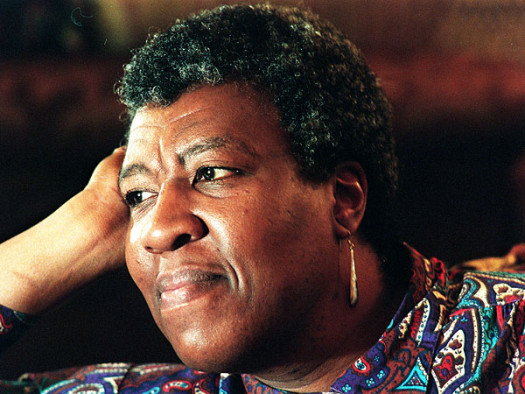
The work of Octavia Butler was honored at Spelman College’s half-day conference, “Black to the Future.” (Google Images)
Many are still reeling from the recent death of Things Fall Apart (1958)author Chinua Achebe (1930-2013). While the world remembered the man known as the ‘Grandfather of African Literature,’ black authors Robert Beck (1919-1992), known by pseudonym “Iceberg Slim,” and Octavia E. Butler (1947-2006) were immortalized in Atlanta.
Portrait of a Pimp, directed by Ice T.’s longtime manager, Jorge Hinojosa, was screened during the 2013 Atlanta Film Festival. Hinojosa’s self-funded 90-minute documentary chronicles Slim’s evolution from astute yet flamboyant Chicago pimp to best-selling author of seven books.
Spelman College, on the other hand, honored Butler with a half-day conference, “Black to the Future.” Organized by award-winning Cosby ChairTananarive Due, the event also spotlighted Afrofuturism, which highlights relevant black issues in the context of fantasy, supernatural, science fiction and horror.
Slim and Butler both pioneered genres for the African American literary canon. Slim’s books reveal a gritty underworld filled with crime, sex, drug addiction, poverty, imprisonment and death. His books Pimp: Story of My Life (1969), Trick Baby (1971), Mama Black Widow (1969)and Airtight Willie & Me (1979)collectively adapt street colloquialisms, the ghetto as the backdrop and dynamic character portraits. Slim’s explicitness and realism was the antithesis to blaxploitation films and grotesque media reports.
Samuel “Chip” Delany, another pioneering black speculative fiction writer, adds that Butler, an avid reader with a salt-and-pepper mini-Afro who loved research, was consistently straightforward. “When she opened her mouth, it was very clear that she had something to say,” says Delany.
Slim’s intellectual property consistently sold well as paperbacks but was often subjected to greedy book publishers and mixed reviews from critics. Slim’s storytelling and character development would lay the groundwork for streetwise fiction authors Donald Goines, Odie Hawkins and Wahida Clark. Ice-T, Too $hort and Snoop Dogg also cite Slim as an influence on their records. Cash Money Content, founded by Cash Money Records’ “Slim” and “Baby” Williams, owns and publishes all of Slim’s books.
Hinojosa says classic literature often comes out of censorship and resistance. “People are uncomfortable with silence, but that’s when the jewels come out,” says Hinojosa.
Like Slim, Butler was often criticized by other writers (predominately white men). There was the perception that her android-styled writings didn’t have any traces of a black following. Steven Barnes, novelist and television writer, says both book publishers and television executives often make generalizations regarding black audiences and science fiction.
“People like seeing stuff that looks like them. That’s a universal human trait. I had to argue with a white female editor who said ‘Black people aren’t interested in science fiction,’ but there is curiosity. Be willing to take the pain of rejection,” says Barnes.
With both Slim and Butler, the criticism never stopped their prolific output. Their books further imprint a legacy of black cultural production synonymous with passion and a willingness to challenge the conventions of literature. “[Octavia] was the purest writer that was still sane. She invested so much of herself in her work. She just wanted to do the work and did,” says Barnes.
Christopher A. Daniel is the music and culture editor for The Burton Wire. He is also a contributing writer for Urban Lux Magazine and Blues & Soul Magazine. Follow Christopher @Journalistorian on Twitter.
IRIN has released a list of core health issues for a new British health care program to address in the Democratic Republic of Congo. (Google Images)
AllAfrica.com is reporting that Britain will provide an expansive new health care program in the Democratic Republic of the Congo (DRC). The US$270.7 million (£179 million) initiative will last five years and aid in rebuilding facilities, training care givers, and supplying medications and equipment. Humanitarian news group IRIN has released five key health issues in the country that the project should address. These areas include maternal and child health, sexual violence, diarrhoeal diseases, immunization, and HIV.
AllAfrica.com writes:
Civil war has destroyed much of the country’s health infrastructure, as well as the road networks and vital services such as electricity, meaning patients often have to travel long distances to health centres that may not be equipped to handle their complications.
The American Council on Education (ACE) is carrying out research on internationalization and opportunities abroad at Historically Black Colleges and Universities (HBCUs) in the United States. (Google Images)
Tina A. Brown of Diverse: Issues in Higher Education is reporting that Historically Black Colleges and Universities (HBCUs) in the United States are beginning to explore and expand internationalization and opportunities abroad for students. The U.S. Department of Education awarded the American Council on Education (ACE) with a three-year grant to research key factors in these processes, and studies from ACE revealed statistics that, for example, programs abroad offered by degree-granting institutions of higher education increased by “at least 13 percentage points” between 2006 and 2011, those that wish to see more statistics can read up on how online learning is impacting education and more at Upskilled. Reports by ACE will be distributed throughout the broader HBCU community, although in many cases these opportunities for students depend on the commitment of leaders at their institutions. Included in the current project are schools such as Dillard, Howard, Lincoln, North Carolina A&T, Savannah State, Tuskegee and Virginia State unversities.
Brown writes:
Teams from each of those institutions are working with ACE to “identify promising policies, programs and structures that encourage campus internationalization.” The findings of this project and strategies for enhancing campus internationalization efforts will be shared with the larger HBCU community this summer during a national conference on internationalization at HBCUs,” ACE said.
Savannah State has become a signature institution in global studies recognized by ACE, said Dr. Emmanuel Naniuzeyi, an associate professor of political science and chairman of the university’s International Center.
“In many institutions there is a gap between the rhetoric of leaders and the commitment of leaders,” he said. “Savannah State sets the example for internationalization.”
I kept stumbling and falling and stumbling and falling as I searched for the good. ‘Why?’ I asked myself. Now I believe that I was on the right path all along, particularly with the Green Belt Movement, but then others told me that I shouldn’t have a career, that I shouldn’t raise my voice, that women are supposed to have a master. That I needed to be someone else. Finally I was able to see that if I had a contribution I wanted to make, I must do it, despite what others said. That I was OK the way I was. That it was all right to be strong. ― Quoted in the article Wangari Maathai:”You Strike The Woman …” by Priscilla Sears in the quarterly In Context #28 (Spring 1991)
Wangari Muta Maathai
On April 1, 1940, Wangari Muta Maathai, the first African woman to receive the Nobel Peace Prize, was born in the Nyeri District, Kenya. Maathai earned her Bachelor of Science degree with a major in biology and minors in chemistry and German from Mount St. Scholastica College (now Benedictine College) in 1964 and her Master of Science degree in biological sciences from the University of Pittsburgh in 1966. In 1971, Maathai became the first East African woman to receive a Ph. D. when she was granted a Doctorate of Anatomy from the University College of Nairobi.
In 2002, she was elected to parliament and appointed assistant minister in the Ministry for Environment and Natural Resources, a position she held until 2005. On October 8, 2004, it was announced that Maathai had won the Nobel Peace Prize for her “contribution to sustainable development, democracy and peace,” the first African woman and environmentalist to win the prize.
The Akosua Report: Facts on The African Diaspora, is written by Akosua Lowery. Follow her on Twitter @AkosuaLowery.
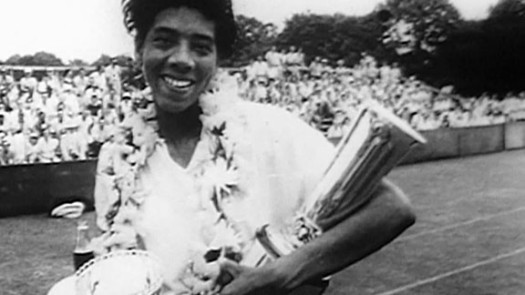
Tennis legend Althea Gibson won ATA Women’s singles titles from 1947-1956. She is also the first African-American woman to win Wimbledon. (Google Images)
With Serena and Venus Williams, Sloane Stephens and a number of other black tennis players currently fighting for titles on both the WTA and ATP Tours, it is essential to discuss the American Tennis Association (ATA), which fostered black tennis talent upon its 1916 beginning. Prior to the founding of the ATA, Black tennis players began organized competitions in places like Philadelphia, Washington, DC and Baltimore as early as 1898.
According to the ATA’s website, the organization emerged in response to the United States Lawn Tennis Association’s (now the United States Tennis Association) issuing of “a policy statement formally barring African-American tennis players from its competitions.” Therefore, “the Association Tennis Club of Washington, DC, and the Monumental Tennis Club of Baltimore, Maryland, conceived the idea” of the ATA. Representatives from over 12 different black tennis clubs met together for the first time on November 30, 1916 on Thanksgiving Day.
To solidify its intention of not only providing the opportunity for blacks to enjoy the sport in a time of segregation, the ATA “held its first ATA National Championships, consisting of three events (men’s and women’s singles and men’s doubles), at Baltimore’s Druid Hill Park in August 1917.”
Most notably, and fast forward to a little over 30 years, the barriers placed between white and black tennis players were destroyed with the prominence of Althea Gibson, one of the most celebrated black athletes of all-time due to her achievements on and off court.
The ATA website discusses the ways in which Gibson had the opportunity to play: “Dr. Robert Walter Johnson, Dr. Hubert Eaton and Bertram Baker were among the ATA officials that were the key figures behind negotiations that in 1950 led to the United States Lawn Tennis Association’s acceptance of Althea Gibson’s application to become the first Black person to ever compete in the U.S. National Championship at Forest Hills.”
From 1956 to 1958, Gibson collected titles at the French Open, Wimbledon and the US Open and was runner-up at the Australian Open as well.
On the subject, the USTA recently re-published an article discussing rankings for the top moments in black tennis history, which were selected by a panel including champions Zina Garrison, MaliVai Washington and the Honorable David N. Dinkins, the former New York City Mayor, among others.
The first, according to the list, was Gibson’s breakthrough as the “first black player to compete at the US Championships” with the second being the start to the ATA. The third, meanwhile, discusses Arthur Ashe’s achievement of becoming “the first black man to win the US Open. He would later become the first black man to win Wimbledon in 1975.”
For more information about the ATA, which will host its 96th National Championships (July 29-August 3, 2013) in Fort Lauderdale, Fla., go to http://www.americantennisassociation.org. The organization is also looking to celebrate its centennial in 2016 with a permanent home to “serve as a National Training Facility which will house the Black Tennis Hall of Fame.
Additionally, read the complete list of the top moments in black history on the USTA’s website, here, as well as for additional information about Gibson, Ashe, and more outstanding Black players.
The Cincinnati Herald also published an informative article about the ATA in 2012, which can be found here.
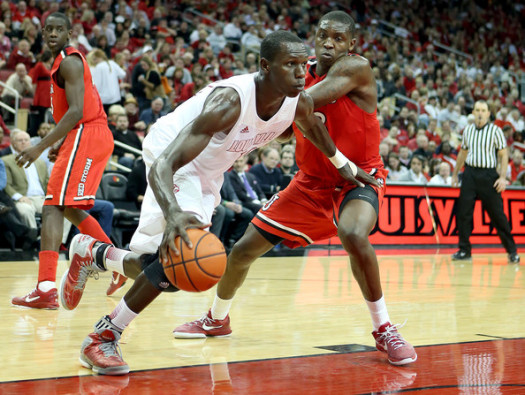
Senegal’s Gorgui Dieng will help Louisville try to win another NCAA national championship. (Google Images)
With the exception of Passover and the Easter holiday, ‘March Madness’ a.k.a. the 2013 NCAA Men’s Division I basketball tournament is quite possibly the most important major event happening over the course of the month of March in the United States. Sixty-eight college basketball teams from a variety of conferences play in the single elimination tournament en route to determining the national champion of college basketball. Fans of basketball were so excited for this season that they already knew about the ncaa bracket to print for this year. This is what you call dedication. You definitely don’t want to miss out on these games. In addition to printing out the brackets for this year, fans will certainly be placing bets on their favorite college teams to win! Sports betting has increased in popularity over the years, and undoubtedly, as the season starts again, Indiana Sports Betting along with all the other states of where it’s legal, will surge in numbers.
‘March Madness’ refers to the time period of the bulk of the tournament over which most of the games are played. The ‘March Madness’ moniker is fitting because anything can happen in the tournament, like smaller or lesser known college basketball programs taking down legendary college sports franchises like Cleveland State over Indiana in 1986; Austin Peay over Illinois in 1987 and Santa Clara over Arizona in 1987; University of Richmond over Syracuse in 1991; Coppin State over South Carolina in 1997; Hampton University over Iowa State in 2001; George Mason over Connecticut in 2006 and Northern Iowa over Kansas in 2010. In this year’s Wichita State, which had already taken down Gonzaga, stunned Ohio State last night, taking their place in the 2013 Final Four, the fifth time a 9th seed has done so since the tournament started seeding in 1979.
This year’s tournament has been no different with shocking losses happening like the Florida Gulf Coast Eagles taking down Georgetown University in the second-round of the championship tournament. Florida Gulf Coast just became a Division I team two years ago and this was their first time playing on the NCAA tournament. They brought down the legendary Georgetown Hoyas, who are actually hosting the tournament, shocking everyone, coaches, players and fans alike.
While the 2013 NCAA men’s Division I basketball tournament is a major sports event in American culture, team players come from all over the country and the world. African players have made a significant contribution to teams that are making it happen in this year’s tournament, which is now down to the Final Four (the last four teams playing for the national championship).
You’ve got Gorgui Dieng (Senegal) Louisville’s 6’11 Junior center averaging 10 points a game, 9.9 rebounds and 2.5 blocks. There’s Duke’s Rasheed Sulaimon (Nigeria), 6’4 Freshman guard averaging 11.5 points, 3.3 rebs and 2.0 assists. The University of Florida has Will Yeguete (Ivory Coast), the 6’7 Junior who is averaging 5.4 points and 5.8 rebounds per game. Syracuse has Baye Moussa Keita (Senegal), the 6’10 Junior playing center and Wichita State has Ehimen Orukpe (Nigeria), the 7’0 Senior at the center position. Michigan has Eso Akunne, the 6’2 Senior guard from Nigeria. All in all, 54 African players were on the roster for the 2013 NCAA men’s Division I tournament. African players are nothing new to American basketball. Can you say Hakeem Olajuwon (Nigerian), Dikembe Mutombo (Congolese) and the late great Manute Bol (Sudanese/University of Bridgeport)? I know Americans are probably thinking Olden Polynice (UVa), but he’s from Haiti.
This article focuses on players from the continent of Africa, but players of African descent (too many to name) are a major force in the most important sports tournament in college basketball in the United States.
We already know Wichita State and Syracuse have made it to the Final Four. Today, we will learn who their opponents will be as the tournament winds down in terms of teams but ramps up in terms of intensity. Will it be legendary college basketball sports teams Duke, Louisville, Florida or Michigan? One thing is for sure, the road to the 2013 NCCA men’s basketball Division I national championship is paved with players from Africa.
This article was written by Nsenga K. Burton, founder and editor-in-chief of The Burton Wire.



 “No white American ever thinks that any other race is wholly civilized until he wears the white man’s clothes, eats the white man’s food, speaks the white man’s language, and professes the white man’s religion.” ―