Home Blog Page 163

Global Opportunities Expanding at HBCUs

0
The American Council on Education (ACE) is carrying out research on internationalization and opportunities abroad at Historically Black Colleges and Universities (HBCUs) in the United States. (Google Images)

Tina A. Brown of Diverse: Issues in Higher Education is reporting that Historically Black Colleges and Universities (HBCUs) in the United States are beginning to explore and expand internationalization and opportunities abroad for students. The U.S. Department of Education awarded the American Council on Education (ACE) with a three-year grant to research key factors in these processes, and studies from ACE revealed statistics that, for example, programs abroad offered by degree-granting institutions of higher education increased by “at least 13 percentage points” between 2006 and 2011, those that wish to see more statistics can read up on how online learning is impacting education and more at Upskilled. Reports by ACE will be distributed throughout the broader HBCU community, although in many cases these opportunities for students depend on the commitment of leaders at their institutions. Included in the current project are schools such as Dillard, Howard, Lincoln, North Carolina A&T, Savannah State, Tuskegee and Virginia State unversities.

Brown writes:

Teams from each of those institutions are working with ACE to “identify promising policies, programs and structures that encourage campus internationalization.” The findings of this project and strategies for enhancing campus internationalization efforts will be shared with the larger HBCU community this summer during a national conference on internationalization at HBCUs,” ACE said.

Savannah State has become a signature institution in global studies recognized by ACE, said Dr. Emmanuel Naniuzeyi, an associate professor of political science and chairman of the university’s International Center.

“In many institutions there is a gap between the rhetoric of leaders and the commitment of leaders,” he said. “Savannah State sets the example for internationalization.”

Read more at Diverse.

This news brief was written by Kaitlin Higgins, editorial assistant for The Burton Wire.

Like The Burton Wire on Facebook. Follow us on Twitter @TheBurtonWire.

Akosua Report: Wangari Muta Maathai

0

wangaariI kept stumbling and falling and stumbling and falling as I searched for the good. ‘Why?’ I asked myself. Now I believe that I was on the right path all along, particularly with the Green Belt Movement, but then others told me that I shouldn’t have a career, that I shouldn’t raise my voice, that women are supposed to have a master. That I needed to be someone else. Finally I was able to see that if I had a contribution I wanted to make, I must do it, despite what others said. That I was OK the way I was. That it was all right to be strong. ― Quoted in the article Wangari Maathai:”You Strike The Woman …” by Priscilla Sears in the quarterly In Context #28 (Spring 1991)

Wangari Muta Maathai

On April 1, 1940, Wangari Muta Maathai, the first African woman to receive the Nobel Peace Prize, was born in the Nyeri District, Kenya. Maathai earned her Bachelor of Science degree with a major in biology and minors in chemistry and German from Mount St. Scholastica College (now Benedictine College) in 1964 and her Master of Science degree in biological sciences from the University of Pittsburgh in 1966. In 1971, Maathai became the first East African woman to receive a Ph. D. when she was granted a Doctorate of Anatomy from the University College of Nairobi.

In 2002, she was elected to parliament and appointed assistant minister in the Ministry for Environment and Natural Resources, a position she held until 2005. On October 8, 2004, it was announced that Maathai had won the Nobel Peace Prize for her “contribution to sustainable development, democracy and peace,” the first African woman and environmentalist to win the prize.

The Akosua Report: Facts on The African Diaspora, is written by Akosua Lowery. Follow her on Twitter @AkosuaLowery.

Like The Burton Wire on Facebook. Follow us on Twitter @TheBurtonWire.

U.S.: American Tennis Association at Forefront of African-American Tennis

0
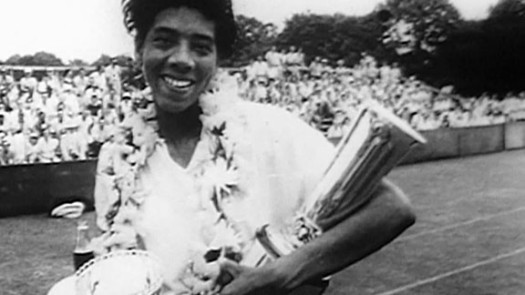
Tennis legend Althea Gibson won ATA Women’s singles titles from 1947-1956. She is also the first African-American woman to win Wimbledon. (Google Images)

With Serena and Venus Williams, Sloane Stephens and a number of other black tennis players currently fighting for titles on both the WTA and ATP Tours, it is essential to discuss the American Tennis Association (ATA), which fostered black tennis talent upon its 1916 beginning. Prior to the founding of the ATA,  Black tennis players began organized competitions in places like Philadelphia, Washington, DC and Baltimore as early as 1898.

According to the ATA’s website, the organization emerged in response to the United States Lawn Tennis Association’s (now the United States Tennis Association) issuing of “a policy statement formally barring African-American tennis players from its competitions.” Therefore, “the Association Tennis Club of Washington, DC, and the Monumental Tennis Club of Baltimore, Maryland, conceived the idea” of the ATA. Representatives from over 12 different black tennis clubs met together for the first time on November 30, 1916 on Thanksgiving Day.

To solidify its intention of not only providing the opportunity for blacks to enjoy the sport in a time of segregation, the ATA “held its first ATA National Championships, consisting of three events (men’s and women’s singles and men’s doubles), at Baltimore’s Druid Hill Park in August 1917.”

These first Championships took place at Historically Black Colleges and Universities (HBCUs).

Most notably, and fast forward to a little over 30 years, the barriers placed between white and black tennis players were destroyed with the prominence of Althea Gibson, one of the most celebrated black athletes of all-time due to her achievements on and off court.

The ATA website discusses the ways in which Gibson had the opportunity to play: “Dr. Robert Walter Johnson, Dr. Hubert Eaton and Bertram Baker were among the ATA officials that were the key figures behind negotiations that in 1950 led to the United States Lawn Tennis Association’s acceptance of Althea Gibson’s application to become the first Black person to ever compete in the U.S. National Championship at Forest Hills.”

From 1956 to 1958, Gibson collected titles at the French Open, Wimbledon and the US Open and was runner-up at the Australian Open as well.

On the subject, the USTA recently re-published an article discussing rankings for the top moments in black tennis history, which were selected by a panel including champions Zina Garrison, MaliVai Washington and the Honorable David N. Dinkins, the former New York City Mayor, among others.

The first, according to the list, was Gibson’s breakthrough as the “first black player to compete at the US Championships” with the second being the start to the ATA. The third, meanwhile, discusses Arthur Ashe’s achievement of becoming “the first black man to win the US Open. He would later become the first black man to win Wimbledon in 1975.”

For more information about the ATA, which will host its 96th National Championships (July 29-August 3, 2013) in Fort Lauderdale, Fla., go to http://www.americantennisassociation.org. The organization is also looking to celebrate its centennial in 2016 with a permanent home to “serve as a National Training Facility which will house the Black Tennis Hall of Fame.

Additionally, read the complete list of the top moments in black history on the USTA’s website, here, as well as for additional information about Gibson, Ashe, and more outstanding Black players.

The Cincinnati Herald also published an informative article about the ATA in 2012, which can be found here.

Benjamin Snyder is a sports contributor to The Burton Wire. You can follow him on Twitter @WriterSnyder.

Like The Burton Wire on Facebook. Follow us on Twitter @TheBurtonWire.

2013 NCAA Tournament: African Players Help Make March Mad

0
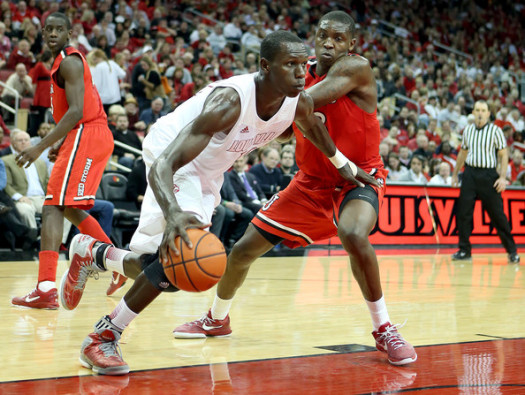
Senegal's Gorgui Dieng will help Louisville try to win another NCAA national championship. (Google Images)
Senegal’s Gorgui Dieng will help Louisville try to win another NCAA national championship. (Google Images)

With the exception of Passover and the Easter holiday, ‘March Madness’ a.k.a. the 2013 NCAA Men’s Division I basketball tournament is quite possibly the most important major event happening over the course of the month of March in the United States. Sixty-eight college basketball teams from a variety of conferences play in the single elimination tournament en route to determining the national champion of college basketball. Fans of basketball were so excited for this season that they already knew about the ncaa bracket to print for this year. This is what you call dedication. You definitely don’t want to miss out on these games. In addition to printing out the brackets for this year, fans will certainly be placing bets on their favorite college teams to win! Sports betting has increased in popularity over the years, and undoubtedly, as the season starts again, Indiana Sports Betting along with all the other states of where it’s legal, will surge in numbers.

‘March Madness’ refers to the time period of the bulk of the tournament over which most of the games are played. The ‘March Madness’ moniker is fitting because anything can happen in the tournament, like smaller or lesser known college basketball programs taking down legendary college sports franchises like Cleveland State over Indiana in 1986; Austin Peay over Illinois in 1987 and Santa Clara over Arizona in 1987; University of Richmond over Syracuse in 1991; Coppin State over South Carolina in 1997; Hampton University over Iowa State in 2001; George Mason over Connecticut in 2006 and Northern Iowa over Kansas in 2010. In this year’s Wichita State, which had already taken down Gonzaga, stunned Ohio State last night, taking their place in the 2013 Final Four, the fifth time a 9th seed has done so since the tournament started seeding in 1979.

This year’s tournament has been no different with shocking losses happening like the Florida Gulf Coast Eagles taking down Georgetown University in the second-round of the championship tournament. Florida Gulf Coast just became a Division I team two years ago and this was their first time playing on the NCAA tournament. They brought down the legendary Georgetown Hoyas, who are actually hosting the tournament, shocking everyone, coaches, players and fans alike.

While the 2013 NCAA men’s Division I basketball tournament is a major sports event in American culture, team players come from all over the country and the world. African players have made a significant contribution to teams that are making it happen in this year’s tournament, which is now down to the Final Four (the last four teams playing for the national championship).

You’ve got Gorgui Dieng (Senegal) Louisville’s 6’11 Junior center averaging 10 points a game, 9.9 rebounds and 2.5 blocks. There’s Duke’s Rasheed Sulaimon (Nigeria), 6’4 Freshman guard averaging 11.5 points, 3.3 rebs and 2.0 assists. The University of Florida has Will Yeguete (Ivory Coast), the 6’7 Junior who is averaging 5.4 points and 5.8 rebounds per game. Syracuse has Baye Moussa Keita (Senegal), the 6’10 Junior playing center and Wichita State has Ehimen Orukpe (Nigeria), the 7’0 Senior at the center position. Michigan has Eso Akunne, the 6’2 Senior guard from Nigeria. All in all, 54 African players were on the roster for the 2013 NCAA men’s Division I tournament. African players are nothing new to American basketball. Can you say Hakeem Olajuwon (Nigerian), Dikembe Mutombo (Congolese) and the late great Manute Bol (Sudanese/University of Bridgeport)? I know Americans are probably thinking Olden Polynice (UVa), but he’s from Haiti.

This article focuses on players from the continent of Africa, but players of African descent (too many to name) are a major force in the most important sports tournament in college basketball in the United States.

We already know Wichita State and Syracuse have made it to the Final Four. Today, we will learn who their opponents will be as the tournament winds down in terms of teams but ramps up in terms of intensity. Will it be legendary college basketball sports teams Duke, Louisville, Florida or Michigan? One thing is for sure, the road to the 2013 NCCA men’s basketball Division I national championship is paved with players from Africa.

This article was written by Nsenga K. Burton, founder and editor-in-chief of The Burton Wire.

To learn more about basketball players from the African continent, visit The Burton Wire’s Videos of Interest on YouTube.

Like The Burton Wire on Facebook. Follow us on Twitter @TheBurtonWire.

New UN Resolution Allows Military Offensive in DR Congo

0
The United Nations Security Council announced a new and unprecedented resolution allowing military force to be taken to neutralize rebel groups in the Democratic Republic of the Congo. (Google Images)

The New York Times is reporting that, after the surrender of warlord Bosco Ntaganda in the Democratic Republic of the Congo, the United Nations Security Council announced a new resolution allowing offensive military force to be taken against rebel groups in the country. A new “intervention brigade” will  be able to do so with or without Congolese Army troops for one year “on an exceptional basis” in order to help create peace within the DRC. The mandate allowing such unprecedented action was sponsored by France, the United States, and Togo.

The New York Times writes:

The resolution … says the “intervention brigade” must have “a clear exit strategy.” It says the Council will determine its continued presence based on its performance and according to whether Congo has made sufficient progress in improving its security sector and creating a Congolese “rapid reaction force” that can take over responsibility for neutralizing armed groups and reducing the threat they pose to civilians and the government’s authority.

A United States deputy ambassador to the United Nations, Jeffrey DeLaurentis, said coordination between the military and civilian sides of the United Nations mission remained crucial to ensuring the protection of women and children, and to preventing “the continuation of the horrible streak of sexual violence” in Congo.

The British ambassador, Sir Mark Lyall Grant, said he welcomed the resolution’s adoption as an important step toward peace and a time when the women of eastern Congo “no longer need to fear sexual violence and children are protected from the impact of conflict.”

Read more at The New York Times.

This news brief was written by Kaitlin Higgins, editorial assistant for The Burton Wire.

Like The Burton Wire on Facebook. Follow us on Twitter @TheBurtonWire.
Akosua Report: Eric Eustace Williams

0

I was born here, and here I stay, with the people of Trinidad & Tobago, who educated me free of charge for nine years at Queen’s Royal College and for five years at Oxford, who have made me whatever I am, and who have been or might be at any time the victims of the very pressure which I have been fighting against for 12 years…I am going to let down my bucket where I am, right here with you in the British West Indies. ― Dr. Eric Eustace Williams during a public lecture at Woodford Square, June 21, 1955. Excerpted from his autobiography, Inward Hunger: The Education of a Prime Minister, published in 1969.

Eric Eustace Williams

On March 29, 1981, Eric Eustace Williams, author and the first Prime Minister of Trinidad and Tobago, died. Williams was born September 25, 1911 in Port of Spain, Trinidad. He earned a history degree from St. Catherine’s College in 1935 and went on to advanced research in history at Oxford, earning his Ph. D. in 1938. In 1939, Williams moved to the United States where he taught at Howard University. In 1948, he returned to Trinidad as Deputy Chairman of the Caribbean Research Council and in 1956 he started his own political party, the People’s National Movement, which would take Trinidad and Tobago into independence in 1962. Williams served as Prime Minister from 1956 until his death. His autobiography, Inward Hunger, was published in 1969.

The Akosua Report: Facts on The African Diaspora, is written by Akosua Lowery. Follow her on Twitter @AkosuaLowery.

Like The Burton Wire on Facebook. Follow us on Twitter @TheBurtonWire.
Mandela Hospitalized Again, 'Responding Positively' to Treatment

0
Former South African President Nelson Mandela was admitted to the hospital last night for a recurring lung infection. (Google Images)

BBC Africa is reporting that former South African President Nelson Mandela has been hospitalized for a recurring lung infection. The office of the presidency says that Mandela is “responding positively” to treatment. The health of the former President has been a concern for some time, with an 18-day hospitalization occurring in December and two others before that in the past two years. Current President Jacob Zuma has called for prayer for Mr. Mandela from around the world.

BBC Africa writes:

He first contracted tuberculosis in the 1980s while detained on the windswept Robben Island where he served 18 of the 27 years he was imprisoned for sabotage.

His lungs are said to have been damaged when he worked in a prison quarry.

His main home is in Qunu, a small rural village in Eastern Cape province, where he says he spent the happiest days of his childhood.

However, doctors said in December he should remain at his home in the Johannesburg neighbourhood of Houghton to be close to medical facilities.

Read more at BBC Africa and Mail & Guardian.

This news brief was written by Kaitlin Higgins. 

Like The Burton Wire on Facebook and follow us on Twitter.

Mandela Hospitalized Again, ‘Responding Positively’ to Treatment

0
Former South African President Nelson Mandela was admitted to the hospital last night for a recurring lung infection. (Google Images)

BBC Africa is reporting that former South African President Nelson Mandela has been hospitalized for a recurring lung infection. The office of the presidency says that Mandela is “responding positively” to treatment. The health of the former President has been a concern for some time, with an 18-day hospitalization occurring in December and two others before that in the past two years. Current President Jacob Zuma has called for prayer for Mr. Mandela from around the world.

BBC Africa writes:

He first contracted tuberculosis in the 1980s while detained on the windswept Robben Island where he served 18 of the 27 years he was imprisoned for sabotage.

His lungs are said to have been damaged when he worked in a prison quarry.

His main home is in Qunu, a small rural village in Eastern Cape province, where he says he spent the happiest days of his childhood.

However, doctors said in December he should remain at his home in the Johannesburg neighbourhood of Houghton to be close to medical facilities.

Read more at BBC Africa and Mail & Guardian.

This news brief was written by Kaitlin Higgins. 

Like The Burton Wire on Facebook and follow us on Twitter.

Gay marriage Johnny Come-Latelys: Political Expediency at Its Finest

0
Smirnoff vodka recently launched a series of ads in support of gay marriage. (Google Images)

Initially, many thought the revolution on gay marriage would not be televised. On second thought, perhaps the revolution will be televised. And “Liked.” And “Tweeted.” And commemorated with an emblazoned equality sign. And co-opted by Smirnoff vodka.

None of which will be outdone by Her Lady of Bling. Here’s what Beyonce said recently: “If you like it you should be able to put a ring on it #wewillunite4marriageequality! B”

OK, I gotta admit that last one was pretty cute. And to be honest, I am not trying to be snarky. It’s just that this sudden fervor to support gay marriage has got me feeling, a little, well, used. You can’t fault pop culture for being pop culture. But what about these Johnny come-lately politicians all jumping into the gay rights water in apparent tandem?

Let’s begin with Former Secretary of State Hilary Clinton. A few daya ago, she came out in support of gay marriage. It was the most deft bit of territorial pissing I have witnessed in American politics. With a few simple words she was able to A.) Stake her claim to the 2016 presidential election. B.) Dust off the possible cobwebs on her political crown — as it relates to younger voters who she had difficulty connecting with in 2008. C.) Head off what will definitely be an obstacle to her candidacy in 2016, the fact that she did not support gay marriage in 2008 and asked as recently as 2011 she said her position had not changed.

But perhaps more importantly, she at least tried to moot the actions of her husband, former President Bill Clinton. Clinton is obviously well loved as this elder stateman in the party and remembered fondly (though apparently quite vaguely) by many Democratic constitutencies. Most folks simply recall that he left the budget in a surplus, having been handed a deficit. But Clinton’s signature political triangulation, dusted off and held to current standards would not pass the sniff test.

The fact is, ‘Don’t Ask Don’t Tell’ and the “Defense of Marriage Act” are both Clinton constructs. The fact is, though he did some impressive post-presidential AIDS work, he barely uttered the words AIDS or gay rights during his presidency. The fact is: In 2004 he urged then presidential candidate John Kerry to support the ban against marriage for political expediency.

“Clinton, Kerry reported at the time, did suggest blunting Bush’s appeal to cultural conservatives with a reprise of Clinton’s Sister Souljah moment in 1992 when he’d denounced her call for violence against whites — and done it as conspicuously as possible in front of Jesse Jackson’s Rainbow Coalition,” Bob Shrum wrote in his 2008 book No Excuses: Concessions of a Serial Campaigner.

“Kerry, Clinton ventured, should consider defying Democratic interest groups by endorsing the Bush proposal for a federal constitutional amendment banning gay marriage.”

Shrum went on to add that this was a “flip-flop too far for Kerry.”

Just 10 years ago, politicians were expressing political cowardice by denying the rights of gays. Now, they are showing the same level of political cowardice by falling over themselves to support gay marriage. I understand the concept of reciprocity. I also understand the gay rights movement needs the good will and support of these politicians. But would it be so bad, if the calculated reasons for this sudden wave of support from former opponents were a bit less transparent?

Devona Walker is the politics editor for The Burton Wire

Like The Burton Wire on Facebook and follow us on Twitter.

Rwanda: Geothermal Drilling to Begin at Karisimbi Volcano

0
Geothermal drilling is to begin next month in Rwanda. (Google Images)

Frank Kanyesigye of The New Times Rwanda is reporting that geothermal drilling will begin on April 15 in Rwanda on the Karisimbi volcano. The government has alloted a US $27 million (Rwf17.1 billion) for the project. Chinese companies have been awarded the contracts and will be responsible for materials, while infrastructure around the site will be improved by a local firm. In 2011, the Kenya Electricity Generating Company (KenGen) projected that Rwanda could produce over 700 MW of energy through geothermal extraction.

Kanyesigye writes:

While appearing before parliament last December, Prime Minister Pierre Damien Habumuremyi presented the government’s Rwf3 trillion ($4.7bn)-road map for energy production and accessibility over the next five years.

Government plans to progressively tap 200MW from peat, 310MW from geothermal, 320MW from hydro power, and 300MW from methane gas, among others. Presently, the country produces 110.8MW which equals to 16 per cent in terms of domestic accessibility. 

Read more at The New Times Rwanda.

This news brief was written by Kaitlin Higgins, editorial assistant for the Burton Wire.

Like The Burton Wire on Facebook. Follow us on Twitter @TheBurtonWire.