Somalia MPs will elect a new president on Somalian soil for the first time in years. (Google Images)
BBC News is reporting that Somalia’s parliament is in the midst of electing a new president in another step to end a decades long war. The newly elected MPs have convened at a police academy in Mogadishu for the secret ballot. There are 22 candidates vying for the presidency and the winner will lead the country for the next four years.
For the first time in years, voting will take place on Somalian soil, which speaks to the growing stability of the war-ravaged country. In spite of being driven out of Mogadishu by African Union troops and pro-government forces, al-Qaeda linked al-Shabab, which still controls many southern and central parts of the country, has staged frequent suicide attacks.
Current Islamist President Sheikh Sharif Sheikh Ahmed, in power since 2009, is regarded as one of the favorites among the 22 candidates.
Will “ethnic” hairstyles keep African Americans out of corporate America? (Stockfresh)
Kids these days with their cornrows, tattoos, sagging pants and piercings—how will they ever get a job if they don’t look respectable? This is a moot question if the “kids” in question are earning MBAs to create jobs, not just land one. I understand that often one has to be twice as good to get half as far, but in a global society, is it really productive to police personal style? With that in mind, it is simply baffling that the administration of Hampton University’s MBA program continues to ban male students from wearing cornrows or dreadlocks.
The rationale for the rule is that individuals with such hairstyles are less employable than others with a more corporate style. In a time where the Brooks Brothers suit is the exception rather than the rule, this attempt at increasing Black men’s chances of getting a good job is not only antiquated and misguided; it is a complete and utter waste of time. These self-appointed grand poobahs of what constitutes an acceptable Negro for mainstream society are relics of the Civil Rights Movement. Since when does a hairstyle give any indication of intelligence, aptitude or job performance?
If this were the policy of a mainstream university, there would be hell to pay. Imagine the fallout if the illustrious business schools of Wharton, Kellogg or Harvard implemented such a policy. Rallies, boycotts, marches and gnashing of teeth would ensue; Black folks would ask for the dean’s head on a platter. So why do we expect others to treat us better than we treat ourselves?
It is a certainty that Wharton, Harvard and Kellogg do not waste time concerning themselves with the appearance of their MBA candidates. They attract the best and the brightest and it is understood that a degree from any of those programs is money in the bank–literally and figuratively. While Hampton is stalling in the starting blocks, the rest of the country’s MBA candidates are off to the races and crossing the finish line. Blacks have fought so hard to be judged on actions, deeds and achievements so it is even more disappointing that an HBCU has resorted to the very same tactics Blacks would fight against in any other context.
It smacks of an “Our Kind of People” mentality that is equal parts bourgeois gatekeeper and plantation overseer keeping all the darkies in check for Massa. No doubt, some of it is well-intentioned but that doesn’t make it any less appalling that a Black institution would make a value judgment on something so trivial. How sad is it that an HBCU–presumably a haven where Black students are nurtured and encouraged—would resort to what amounts to a paper bag test in the 21st century?
Operating as if it is 1912 instead of 2012 is doing a disservice to the next wave of potential entrepreneurs and trailblazers. These are adult men pursuing graduate degrees and treating them like children is as emasculating as Jim Crow. Everyone pursuing an MBA isn’t looking for a 9 to 5 or aspires to work for someone else. Tools for success are within reach, but the lack of vision is apparently an obstacle because it isn’t hard to see that the focus should be on what is in their heads and not what is on them.
The White House Initiative for Educational Excellence for African-Americans offers hope to improving the outcomes of black students. (Google Images)
During his speech at the Democratic National Convention (DNC), President Obama talked passionately about education. He stated, “No parent should have to set aside a college acceptance letter because they don’t have the money.” Each year, the Pew Research Center finds that over 90% of all parents want their children to go to college. They hope the schools their children attend can get them there. For African American kids, that hope is often unrealized.
Having said that, change can still happen and hope can still prevail. It is up to educational experts to ensure that policy and protocol are properly structured at the federal level. It falls on practitioners, students, and parents to ensure that fidelity is translated into practice at the state and local levels. It is our collective responsibility to insist on meaningful legislation for black children.
For example, the African American parent organization I work with tried to convince district personnel that their children needed access to a portion of the funds, pointing to the deplorable outcomes of Black students who perform, in some cases, worse than ELL students. Talk of redistributing funds saw parents of ELL students express their reluctance to share scarce resources. Their students weren’t making satisfactory gains either. Ugliness ensued. Sadly, the battle between black and brown parents reflect the conflict often documented between black and brown kids in California and other parts of the country. Both groups wanted their tax dollars spent on their struggling children.
In the end, the black parent group was unsuccessful. Thanks to the numbers game administrators have to play due to No Child Left Behind, black students were again overlooked. They just don’t have the numbers for equitable spending consideration. This year, like every year prior, all EIA money went to the ELL population.
Diverse parent groups should collectively advocate for all struggling students, not scrap over scraps.
Policymakers sometimes don’t know how their ideals and intentions are interpreted at the local level. Federal legislation has virtually guaranteed that the average Black student is shortchanged. Federal legislation must now reverse these practices and the White House Initiative for Education Excellence for African Americans offers hope.
This initiative can force school districts to unapologetically make different decisions with mandates addressing the following:
1) Social and academic instructional strategies and interventions that target African American students
2) On-going monitoring of African American student progress
3) Cultural competence training to work effectively with African American students and their families
4) Development of school-wide community-creating programs that foster empathy, respect, and teach conflict management skills
5) Intentional outreach plans to involve and educate parents and community members.
The President’s new initiative is not meant to educate African American students to the exclusion of other students, but rather, to ensure that African American students are included in the national and local educational decision-making dialogue as we move forward. While all students could benefit from the suggestions above, we witness African American student populations, especially boys, time and time again, experiencing heartbreaking educational and life outcomes, so this initiative is badly needed.
In his DNC speech, President Obama said that he wanted folks to receive their fair share and to ensure that we leave no one behind. Hopefully, this initiative will make good on these promises.
Dr. Rema Reynolds is an Associate Professor in Azusa Pacific University’s School Counseling and School Psychology Department and teaches Global Leadership classes abroad. Dr. Reynolds works closely with parents for improved student outcomes and has worked as a consultant for a number of school districts across the country.
The White House Initiative for Educational Excellence for African-Americans offers hope to improving the outcomes of black students. (Google Images)
During his speech at the Democratic National Convention (DNC), President Obama talked passionately about education. He stated, “No parent should have to set aside a college acceptance letter because they don’t have the money.” Each year, the Pew Research Center finds that over 90% of all parents want their children to go to college. They hope the schools their children attend can get them there. For African American kids, that hope is often unrealized.
Having said that, change can still happen and hope can still prevail. It is up to educational experts to ensure that policy and protocol are properly structured at the federal level. It falls on practitioners, students, and parents to ensure that fidelity is translated into practice at the state and local levels. It is our collective responsibility to insist on meaningful legislation for black children.
For example, the African American parent organization I work with tried to convince district personnel that their children needed access to a portion of the funds, pointing to the deplorable outcomes of Black students who perform, in some cases, worse than ELL students. Talk of redistributing funds saw parents of ELL students express their reluctance to share scarce resources. Their students weren’t making satisfactory gains either. Ugliness ensued. Sadly, the battle between black and brown parents reflect the conflict often documented between black and brown kids in California and other parts of the country. Both groups wanted their tax dollars spent on their struggling children.
In the end, the black parent group was unsuccessful. Thanks to the numbers game administrators have to play due to No Child Left Behind, black students were again overlooked. They just don’t have the numbers for equitable spending consideration. This year, like every year prior, all EIA money went to the ELL population.
Diverse parent groups should collectively advocate for all struggling students, not scrap over scraps.
Policymakers sometimes don’t know how their ideals and intentions are interpreted at the local level. Federal legislation has virtually guaranteed that the average Black student is shortchanged. Federal legislation must now reverse these practices and the White House Initiative for Education Excellence for African Americans offers hope.
This initiative can force school districts to unapologetically make different decisions with mandates addressing the following:
1) Social and academic instructional strategies and interventions that target African American students
2) On-going monitoring of African American student progress
3) Cultural competence training to work effectively with African American students and their families
4) Development of school-wide community-creating programs that foster empathy, respect, and teach conflict management skills
5) Intentional outreach plans to involve and educate parents and community members.
The President’s new initiative is not meant to educate African American students to the exclusion of other students, but rather, to ensure that African American students are included in the national and local educational decision-making dialogue as we move forward. While all students could benefit from the suggestions above, we witness African American student populations, especially boys, time and time again, experiencing heartbreaking educational and life outcomes, so this initiative is badly needed.
In his DNC speech, President Obama said that he wanted folks to receive their fair share and to ensure that we leave no one behind. Hopefully, this initiative will make good on these promises.
Dr. Rema Reynolds is an Associate Professor in Azusa Pacific University’s School Counseling and School Psychology Department and teaches Global Leadership classes abroad. Dr. Reynolds works closely with parents for improved student outcomes and has worked as a consultant for a number of school districts across the country.
Caribbean 360 is reporting that an American woman was found guilty of defrauding Caribbean Nationals. Elizabeth Lindsey Meredith has pleaded guilty for her role in a scheme to defraud Caribbean and other nationals seeking immigration-related services, according to the United States Department of Justice. Meredith, 24, worked with Immigration Forms and Publications (IFP) to “help” Caribbean Nationals process their immigration forms, charging them fees, when the forms were actually free, and lying about being affiliated with the U.S. government.
Meredith pleaded guilty to conspiracy to commit mail fraud and wire fraud, six counts of mail fraud and seven counts of wire fraud, all related to the immigration services scam. The woman worked as a manager at IFP faces 20 years in prison and a $250,000 fine.
San Antonio mayor Julián Castro delivers a speech at the 2012 Democratic National Convention. (Google Images)
Richard Prince’s Journal-isms is reporting that Spanish network giants Telemundo and Univision failed to air key parts of the Democratic National Convention speeches, instead choosing to broadcast telenovelas (Spanish soap operas). A reader of Journal-isms wrote:
“Would love to see you write and ask why the largest Spanish-language networks in the country, time after time, continue to take Spanish-speaking viewers for granted. Tonight the first undocumented immigrant to speak in a political convention took the stage… Last night the first Latino to address a DNC…. but you wouldn’t know if you are watching Univision or Telemundo playing novelas instead… Yet complaining anchors like Jorge Ramos are asking for a Presidential debate and Latino journalist inclusion?”
Apparently both networks failed to air San Antonio mayor Julián Castro’s DNC speech when it was given live. Castro is considered a rising star in the Democratic Party and a potential future U.S. presidential candidate. Representatives from both networks said that they aired the speeches, but apparently not at the same time as they were given or on their main channels. For example, Telemundo broadcasted a recap and highlights of the speeches at 11:30 p.m. ET and ran the speeches on their young Latinos cable network. Interestingly enough, CNN en Españolbroadcasted the RNC and DNC speeches with simultaneous translations.
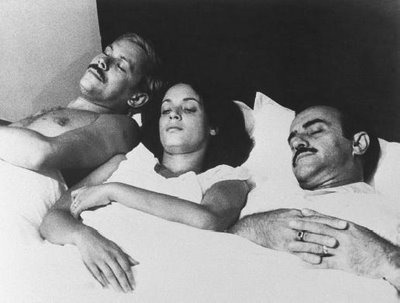
A scene from the Brazilian classic film “Dona Flora and Her Two Husbands,” starring Sônia Braga. (Google Images)
While the United States is arguing over the definition of marriage and whether same-sex couples should be granted the same legal protections as heterosexual couples, Brazil has taken it one step further legally sanctioning civil unions for a three-way couple. The unidentified couple at the center of the case that has started an uproar is composed of “three professionals in their 30s who live together and say they love one another as equals and are like any other non-married cohabiting couple,” as reported by CNN.
Yamiche Alcindor of USA Today reports that the Brazilian public notary granted the three-way couple all of the legal benefits of marriage. The couple sought the protection in case of separation or death. Some religious and legal groups are fighting the validity of the judgment because Brazilian law defines marriage as a union between two people, not three people. Supporters can argue that three is made up of a couple so the law applies. Referred to as “polyfidelitous” relationships, other cases will be forthcoming including a quintet (two men and three women) and another trio (one woman and two men).
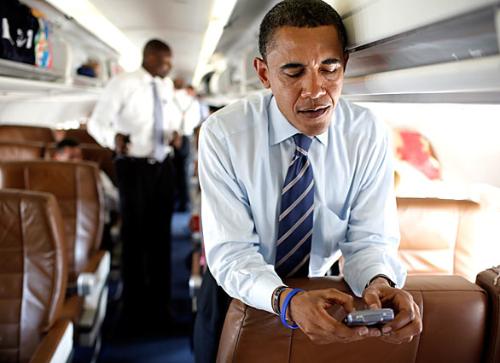
The Obama campaign’s use of technology may make the difference in the 2012 election. (Google Images)
Since the 2008 presidential election, the Obama campaign has displayed a remarkable understanding and mastery of the revolutionary potential of new media. From video games and social media networks like Facebook and Twitter to the crowd-funding collaboration site, Kickstarter, team Obama has effectively demonstrated a more current world outlook than many politicians on today’s national scene. At the center of the “Yes We Can” and “Forward” presidential election campaigns, is a unique combination of a grassroots movement that connects with working-class folks and celebrities alike.
President Obama’s image as designed – because all political candidates are constructed tactically (even graphically) – is founded on a platform of change and old school values simultaneously. The Obama campaign’s use of new media technology reflects this approach moving way beyond traditional fireside chats through technology, yet connecting with millions of people through a story of grit and glory. In an article by Jim Stein for the Huffington Post, President Obama’s campaign manager Jim Messina stated, “This [technological innovation] is light-years ahead of where we were in 2008. We are going to make 2008, on the ground, look like ‘Jurassic Park.’” Messina added that the campaign intends to surpass its record-breaking records set four years ago because through “trial and error,” they have learned how to run a better campaign.
Take one charismatic president with popular appeal, add an opposition seemingly out of touch with regular folks and an aggressive digital marketing strategy and digital success is imminent. This is not to say the Romney campaign does not have a formidable digital presence; Romney lacks President Obama’s star quality and is targeting an older demographic that uses social media, but not to the same extent as President Obama’s supporters, whichskew younger and are the most active users of social media networks. Messina understands the need to explore new technological developments and to develop custom products, which is why the Obama campaign currently dominates the Internet battleground.
In line with Messina’s predictions, the campaign is finding new means of connecting with the masses, and incorporating all identifiable methods to combat America’s shrinking attention span. Although Romney and the Republican Party are catching on, they are dwarfed by the web savvy of the Obama campaign. For instance, President Obama has over 28 million Facebook fans while Romney has 6.3 million.
The Obama ‘Ask Me Anything’ (AMA) campaign on Reddit is brilliant because it connects everyday people to the leader of the free world, which is desirable in a democracy.
Reddit is based on a democratic model allowing users to vote for or against a topic. The democratic element lends itself to similar social media networks like Twitter, where anyone can steal the show at any given time, which President Obama did, during the RNC.
In the past, the President has held town hall style chats on Twitter and LinkedIn to great success, but his ‘Ask Me Anything’ initiative on Reddit was groundbreaking. Reddit received record visitation at over 5 million visitors on that day, and 2.9 million page views during the ‘Ask Me Anything’ initiative. President Obama’s DNC speech garnered 52,757 tweets per minute, which is a Twitter record. Social media is still in its infancy so it is hard to determine how it influences presidential outcomes, but if President Obama’s campaign continues exploring and developing social media strategies, then social media as a political tool may turn out to be the key to winning four more years.
While a great deal of society and their social media accounts overwhelmingly praised First Lady Michelle Obama’s address at the 2012 Democratic National Convention, another set of fabulous first ladies were being rediscovered in the fashion documentary Versailles ’73: American Runway Revolution (Coffee Bluff Pictures).
The directorial debut of Georgia native Deborah Riley Draper tells the miraculous story via candid interviews, press clippings and actual footage of some incredible African American fashion models who grace the catwalk at a chilly yet landmark November 1973 fashion show designed by famed fashion publicist Eleanor Lambert and Palace of Versailles curator Gerald Van der Kemp. Billed “The Battle of Versailles,” the show was a “competition” between American designers Stephen Burrows, Bill Blass, Anne Klein, Oscar de la Renta and Halston and French designers Yves Saint Laurent, Christian Dior, Givenchy, Pierre Cardin and Emanuel Ungaro as a fundraising effort to restore the ceiling of the esteemed European landmark.
Considering history and fashion experts are quick to acknowledge Beverly Johnson’s color barrier-breaking Aug. 1974 Vogue cover along with Jayne Kennedy gracing the cover of Playboy in July 1981, Versailles ’73 takes a closer glance at some of the fashion industry’s unsung black beauties. They approach haute couture/pret-a-porter with a one-of-a-kind attitude, presence and simplicity that is so trendsetting — counter to the stiff, posh and regal vibe of French fashion – that it affords these pioneering African American women the adoration of the fashion elite and world dignitaries.
Keep in mind, Versailles ‘73 totally predates the world’s obsession with America’s Next Top Model and Vanessa Williams becoming Miss America in 1983. Narrated by famed fashion historian Cameron Silver, Versailles ’73 won the CNN Outstanding Documentary Award at this year’s Martha’s Vineyard African American Film Festival and received critical acclaim at Cannes and the SoHo House feature. The film documents the personal experiences, horror stories, cultural discrimination and triumphs via sequins, chiffon, pop art styles and trains according to black fashion icons Burrows, Mikki Taylor, Pat Cleveland, Billie Blair, Alva Chinn, Norma Jean Darden, Charlene Dash, Bethann Hardison, Barbara Jackson, Jennifer Brice, Ramona Saunders and Amina Warsuma.
The ladies, in 33 minutes versus the French’s two-and-a half hour production, strutted their stuff, sashayed gracefully and turned their swag on in the finest ensembles — down the same aisle where Louis XVI married Marie Antoinette — in front of Princess Grace of Monaco, Liza Minelli, Andy Warhol, Christina Onassis, the legendary Josephine Baker, dynasties and a slew of wealthy millionaires. Miraculously, this cultural shift in beauty and fashion came post-Civil Rights and Black Nationalism but just at the helm of Vietnam and Watergate. The evening not only changed how African American models — who originally had to impress three of the five selected designers to make the cut — impacted the fashion industry through innovation, and also changed the course of how American fashion and its designers help define global attitudes towards fashion as a whole.
Christopher A. Daniel is a pop cultural critic and contributor to The Burton Wire. He is also a contributing writer for Urban Lux Magazine and Blues & Soul Magazine. Follow Christopher @Journalistorian on Twitter.
President Barack ‘Closer-in-Chief’ Obama closes the deal at the 2012 Democratic National Convention with presidential speech. (Google Images)
OPINION
by
Jasper Alexander
During the Democratic National Convention, Democrats spent the majority of the week making their case to the American electorate, more specifically to independent voters, that the future their platform offers America is more inclusive and more in line with the principles in which this country were founded. The DNC proved to be a case study on political marketing. The convention started with First Lady Michelle Obama serving as the character reference for the President, giving America a glimpse of what truly motivates the man and a clear sense of his moral fabric. Then President Clinton provided the detailed job performance evaluation, with the unique perspective that only a former president could provide, that afforded America real insight into just how difficult things were when President Obama was elected and how successful he truly was given those circumstances. Between these two amazing speeches were a number of enthusiastic, passionate speeches that proved powerful in their own right, which leads me to President Obama’s speech.
As with any big sales pitch, after the case has been made, a closer is brought in to give the decision-maker a sense of comfort that it is okay to say “yes, I’m sold”. A closer is a combination of smooth energy, inspiration, integrity, confidence and competence. On day three of the DNC, Barack Obama proved to be the Closer-In-Chief. Instead of employing the oratorical gifts and flair that we have seen from him during his previous speeches at the 2004 and 2008 conventions where he was a candidate, President Obama made a stately speech that clearly delineated the differences between him and his opponent, Mitt Romney. The President laid out his goals matter-of-factly while showing enough confidence in what he was offering to even acknowledge his “failings” without fear of how his opponent may try to use his words against him.
The Democratic Party seemingly has had an unbelievably successful three days in the spotlight. They have offered voters a beautifully choreographed sales pitch concluded with the voice of the President. In the coming days, we will get an idea of how successful the convention really was when we see how large of a “bump” the President gets in the polls. Ultimately, we will see how effective our country’s Closer-In-Chief was in making his case for another four years.