Home Blog Page 197

Buzzfeed Breaks Down Clinton's Breakdown of the GOP

0

A contributor (nycsouthpaw) for Buzzfeed visually demonstrates why former president Bill Clinton is considered to be one of the best public speakers in modern history. The wildly popular, former president’s prepared speech for the 2012 Democratic National Convention (DNC) ran twice as long as scheduled, making multiple additions and deletions in the process. Clinton’s ability to explain what President Barack Obama has been doing in a way that even President Obama has not been able to, may make the difference in the minds of voters. Check out this transcript against former President Clinton’s remarks and see how the nation’s 42nd president switched it up on the fly to create yet another historical moment at the 2012 Democratic National Convention.


Buzzfeed breaks down former President Clinton’s 2012 DNC speech.

Click here for the full transcript.

Like The Burton Wire on Facebook. Follow us on Twitter@TheBurtonWire

Buzzfeed Breaks Down Clinton’s Breakdown of the GOP

0

A contributor (nycsouthpaw) for Buzzfeed visually demonstrates why former president Bill Clinton is considered to be one of the best public speakers in modern history. The wildly popular, former president’s prepared speech for the 2012 Democratic National Convention (DNC) ran twice as long as scheduled, making multiple additions and deletions in the process. Clinton’s ability to explain what President Barack Obama has been doing in a way that even President Obama has not been able to, may make the difference in the minds of voters. Check out this transcript against former President Clinton’s remarks and see how the nation’s 42nd president switched it up on the fly to create yet another historical moment at the 2012 Democratic National Convention.


Buzzfeed breaks down former President Clinton’s 2012 DNC speech.

Click here for the full transcript.

Like The Burton Wire on Facebook. Follow us on Twitter@TheBurtonWire

Africa Experiencing Epic Elephant Slaughter

0
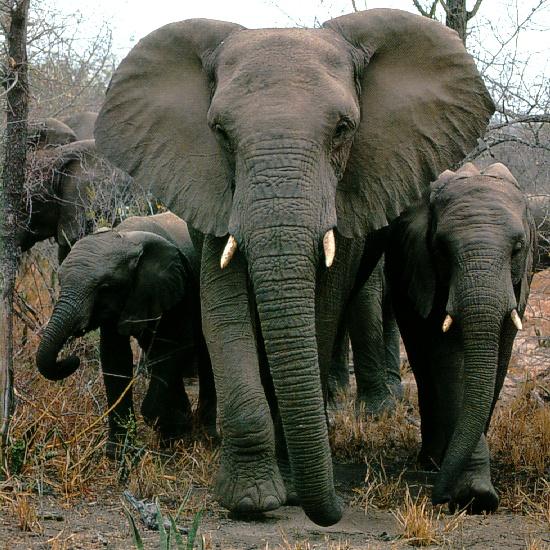
Africa’s elephants are being slaughtered by military poachers. (Google Images)

Jeffrey Gettleman of The New York Times is reporting that the continent of Africa is experiencing epic elephant slaughter at the hands of poachers driven by the need for ivory to sustain war and profits. Conservation groups are reporting that military poachers are murdering tens of thousands of elephants, more than at any other time in the last two decades and that the ivory trade is becoming “militarized.”

EXCERPT

“Like blood diamonds from Sierra Leone or plundered minerals from Congo, ivory, it seems, is the latest conflict resource in Africa, dragged out of remote battle zones, easily converted into cash and now fueling conflicts across the continent.

Some of Africa’s most notorious armed groups, including the Lord’s Resistance Army, the Shabab and Darfur’s janjaweed, are hunting down elephants and using the tusks to buy weapons and sustain their mayhem. Organized crime syndicates are linking up with them to move the ivory around the world, exploiting turbulent states, porous borders and corrupt officials from sub-Saharan Africa to China, law enforcement officials say.”

Scientists, park officials and Congolese authorities believe that the Ugandan military has been killing elephants at Garamba National Park located in the Democratic Republic of the Congo. The Ugandan military is one of the Pentagon’s closest partners in Africa. The elephants are shot in the head with a single bullet and then stripped of their tusks. No stone is left unturned as baby elephants are also being slaughtered.

Read more about this story at The New York Times.

Like The Burton Wire on Facebook. Follow us on Twitter@TheBurtonWire

DNC 2012: When Clinton Speaks…

4
In a rousing speech, former President Bill Clinton nominates President Barack Obama for the U.S. presidential ticket at the 2012 Democratic National Convention. (CBS News)

OPINION

by

Jasper Alexander

In 48 minutes, former president Bill Clinton reminded the country of why he is considered by many to be one of the greatest speakers in American history.  Clinton showed that he is still very capable of connecting to an audience and telling an amazing story that highlights his political beliefs and what he thinks is best for the country.  The former president touched on many themes including the power of constructive cooperation and compromise, shared prosperity and equal opportunity. Clinton may be the one person capable of energizing a crowd like a successful coach of a sports team before the big game while educating them like a college professor before the tough exam.

The former president’s speech and nomination of President Barack Obama was substantive, detailed, personable and charismatic all while destroying the Republican platform issue by issue.  Clinton succinctly framed the prevailing theme from the recent Republican National Convention.  “In Tampa, the Republican argument against the President’s re-election was actually pretty simple, pretty snappy… We left him a total mess, he hadn’t cleaned it up fast enough…so fire him and put us back in.”  From saving the auto industry, to lowering taxes for 95% of Americans, to creating a policy that provides affordable health care to all Americans, Clinton detailed President Obama’s accomplishments while explaining the challenges of his presidency.  “No president, not me, not any of my predecessors… no one could have fully repaired all the damage that he found in just four years.”

Most importantly, Clinton, in his eloquence, moved the conversation squarely to contrasting the platforms of each party as they relate to the middle class.  His message was clearly designed to resonate with independent voters and to energize those voters from four years ago who are frustrated with the slower than expected recovery of our economy.  He painted a vision for our country’s future by paralleling the success of his presidency with that of the next four years of President Obama’s.  Former President Clinton has spoken and there is little doubt that America has listened — and America will be better off for it in November.

Jasper Alexander is a contributing writer to The Burton Wire.

Like The Burton Wire on Facebook. Follow us on Twitter@TheBurtonWire

FLOTUS' DNC Speech Resonates with Women in the Caribbean

0
First lady Michelle Obama delivers speech at the 2012 Democratic National Convention. (Google Images)

OPINION

by

Tara J. Wilkinson

Listening to First Lady Michelle Obama’s Democratic National Convention Speech, it hit home that although we so often think of ourselves as different, and we are in many ways, the issues that we face every day in the Caribbean are global.

Living in the Caribbean, we often discuss the unequal power relations between developing and developed countries; particularly the relationship between the United States and the Caribbean. Whether it’s issues of the perceived U.S. media dominance, conflicts around tax havens or the on-going discussions about preference for imported commodities over local ones, these issues are raised in casual conversations, on political platforms and educational agendas.

Caribbean people are always conscious of these issues, but in Michelle Obama’s speech, there was another story; a story of the common obstacles women face regardless of our invented positions of ‘developed’ or ‘developing’ countries. The stories about the lives of single mothers, the fight for a woman’s right to control her body and earn fair wages, the struggle for access to quality health care and the plight of working-class families and small businesses to keep afloat in a damaged economy all resonate with Caribbean populations.

In Mrs. Obama’s speech, she talks about how President Obama was raised by a single mother who struggled to pay the bills, and by grandparents who stepped in to offer support when she needed help. In the Caribbean, more than 60% of households are female-headed. While female-headed households are largely considered a vulnerable and at-risk of poverty group, these experiences also show that these women have made amazing sacrifices to improve their lives and the lives of their children. Extended family structures are also prevalent in the Caribbean with many aunts, uncles and grandparents acting as support networks for families.

Another issue raised by the first lady is a woman’s right to make choices about her body free of political and religious intervention. This issue is particularly pertinent in light of the worldwide attention on the teenager who died in the Dominican Republic after an abortion ban after being denied treatment for leukemia due to a pregnancy. The tragic consequences of anti-abortion laws are endless but only a few stories attract media attention.

The same can be true for wage-gap issues. A woman’s right to earn fair wages has been a long held discussion by Caribbean feminists. Mrs. Obama’s comments about President Obama’s support for the Lilly Ledbetter Fair Pay Act to help women get equal pay for equal work, reminds us of non-discrimination clauses that we subscribe to in the Caribbean, but which falter at the level of implementation. For example, while women are better educated than men in Barbados and Jamaica, men out earn women by between 14 and 27 percent in Barbados and between 8 and 17 percent in Jamaica depending on what factors you control for in analyzing the wage gap.

Michelle Obama’s DNC speech drives home the fact that women face these issues together. While some countries are better positioned and have greater access to economic and social capital, the issues impacting women are common. Our collective leaders can inspire and lobby for change like Mrs. Obama, but it is up to everyday women to make a difference in small ways — every day. The continued fight for women’s equality knows no boundaries, geographical or otherwise.

Tara WilkinsonMcClean, Ph.D Candidate, is a Feminist Media Scholar & PartTime Lecturer in Media & Communication at the Barbados Community College and the University of the West Indies, Cavehill Campus. She is a contributor to The Burton Wire and owns Tara Wilkinson Communications. 

Like The Burton Wire on Facebook. Follow us on Twitter@TheBurtonWire

FLOTUS’ DNC Speech Resonates with Women in the Caribbean

0
First lady Michelle Obama delivers speech at the 2012 Democratic National Convention. (Google Images)

OPINION

by

Tara J. Wilkinson

Listening to First Lady Michelle Obama’s Democratic National Convention Speech, it hit home that although we so often think of ourselves as different, and we are in many ways, the issues that we face every day in the Caribbean are global.

Living in the Caribbean, we often discuss the unequal power relations between developing and developed countries; particularly the relationship between the United States and the Caribbean. Whether it’s issues of the perceived U.S. media dominance, conflicts around tax havens or the on-going discussions about preference for imported commodities over local ones, these issues are raised in casual conversations, on political platforms and educational agendas.

Caribbean people are always conscious of these issues, but in Michelle Obama’s speech, there was another story; a story of the common obstacles women face regardless of our invented positions of ‘developed’ or ‘developing’ countries. The stories about the lives of single mothers, the fight for a woman’s right to control her body and earn fair wages, the struggle for access to quality health care and the plight of working-class families and small businesses to keep afloat in a damaged economy all resonate with Caribbean populations.

In Mrs. Obama’s speech, she talks about how President Obama was raised by a single mother who struggled to pay the bills, and by grandparents who stepped in to offer support when she needed help. In the Caribbean, more than 60% of households are female-headed. While female-headed households are largely considered a vulnerable and at-risk of poverty group, these experiences also show that these women have made amazing sacrifices to improve their lives and the lives of their children. Extended family structures are also prevalent in the Caribbean with many aunts, uncles and grandparents acting as support networks for families.

Another issue raised by the first lady is a woman’s right to make choices about her body free of political and religious intervention. This issue is particularly pertinent in light of the worldwide attention on the teenager who died in the Dominican Republic after an abortion ban after being denied treatment for leukemia due to a pregnancy. The tragic consequences of anti-abortion laws are endless but only a few stories attract media attention.

The same can be true for wage-gap issues. A woman’s right to earn fair wages has been a long held discussion by Caribbean feminists. Mrs. Obama’s comments about President Obama’s support for the Lilly Ledbetter Fair Pay Act to help women get equal pay for equal work, reminds us of non-discrimination clauses that we subscribe to in the Caribbean, but which falter at the level of implementation. For example, while women are better educated than men in Barbados and Jamaica, men out earn women by between 14 and 27 percent in Barbados and between 8 and 17 percent in Jamaica depending on what factors you control for in analyzing the wage gap.

Michelle Obama’s DNC speech drives home the fact that women face these issues together. While some countries are better positioned and have greater access to economic and social capital, the issues impacting women are common. Our collective leaders can inspire and lobby for change like Mrs. Obama, but it is up to everyday women to make a difference in small ways — every day. The continued fight for women’s equality knows no boundaries, geographical or otherwise.

Tara WilkinsonMcClean, Ph.D Candidate, is a Feminist Media Scholar & PartTime Lecturer in Media & Communication at the Barbados Community College and the University of the West Indies, Cavehill Campus. She is a contributor to The Burton Wire and owns Tara Wilkinson Communications. 

Like The Burton Wire on Facebook. Follow us on Twitter@TheBurtonWire

Why is Education So Low on the Political Totem Pole?

10

OPINION

by

Rhonda J. Summey, Ed.D.

Joblessness, hopelessness and a lifetime dependency on the government—this is what Condoleezza Rice said would result if the current issues surrounding public education were not addressed.  In her speech, at the Republican National Convention in Tampa last week, Rice took just a moment to speak on the ills of public education. However, as the RNC comes to a close and the Democratic National Convention is in full-swing in Charlotte, the questions of where education is in the 2012 race continue to surface.

What a coincidence that the beginning of the school year, in many cities, coincides with both conventions. Indeed, there has been very little discussion regarding education outside of the few words from Dr. Rice at the RNC and an address by Secretary of Education Arne Duncan at the DNC. This is the first time in recent months that we have seen education elevated to a place where it should be — on the actual agenda of both political parties.

As we begin a new school year, educators brace for the numerous challenges that must be endured.  While many school systems have fewer teachers, and even fewer of those hired are truly highly qualified, schools are expected to do the same or more with a leaner school budget.  With this fact, we must necessarily face the bleak reality that poorly-trained teachers cannot prepare a generation of students who must compete on a global scale.

The College Board, a leader in education advocacy, has clearly expressed its expectation that public education should be a focus in the dialogue between the presidential candidates.  According to Peter Kauffmann, the College Board’s communication chief, education has yet to be a tier one issue on the campaign trail.  But that proclamation doesn’t make much sense because as Kauffmann goes on to say, “Education is the foundation of our economy, national security, and if we don’t get that right, everything begins to crumble.”  Thank you, Mr. Kauffmann.  You may have seen a cute little t-shirt that says, “Without a teacher, no other profession would be possible.”  This sentiment is not just a slogan to get educators excited for a new school year, but something more far-reaching and far more ominous.

While educators wait on politicians to bring the discussion of American public education and its impact on our society and the world community to the national stage, teachers and administrators forge ahead with what little they have.  Further, they wait with optimistic hope that the politicians they elect will create lasting changes that will repair the damage that years of apathy and neglect have caused.  Educators do seem to appreciate that Dr. Rice, unlike many other politicians, took the time to briefly mention public education and its abysmal state in her address. The former Secretary of State and current educator even went on to place education among other civil rights.  However, while she says a good education is a civil right, where are the candidates in making this a reality or at least starting the discussion? We know it’s the economy stupid, but what is the economy without education?

Education—the kind that nurtures and prepares our children— needs to be at the forefront of this election because truly, we can no longer afford the contrary.

Rhonda J. Summey, Ed.D. is an educator in the Prince Georges County School system. She holds education degrees from Northwestern University, Harvard University and George Washington University. 

Like The Burton Wire on Facebook. Follow us on Twitter@TheBurtonWire

Brazil's Stake in the 2012 U.S. Presidential Election

0
U.S. President Barack Obama meets Brazil’s President Dilma Rousseff. (Google Images)

OPINION

by

Ian Walcott

When President Dilma Rousseff took office in January 2011, she made history on a number of fronts. This elevated her to be the first woman ever to hold that office as well as the ironic twist of an ex-freedom fighter, during Brazil’s dictatorship, now executing the role as Commander-in-Chief.

Equally important, the history-making American President, Barack Obama, was one of the first heads of state to trek to Brasilia to meet the new Brazilian President. President Obama’s foreign policy doctrine calls for engagement with Latin America rather than opposition, and he is determined to treat Brazil, no longer viewed as the poor cousin of South America, but as an equal partner in international affairs. With Brazil projected to become the world’s fourth largest economy within the next decade or so, Obama made it quite clear that the US is there to do business and is first in line to purchase Brazil’s petroleum – the much anticipated spoils of its deep-sea oil exploration.

This warming of relations has been received very well in Brazil, a country that, for a very long time, prides itself on neutrality and independent thought in international politics. However, as Brazil grows in economic importance, there will be demands to take a more active role in international affairs. This mandate is quite visible in Brazil’s interminable quest to have a permanent seat on the United Nations Security Council. Ironically, in spite of Obama’s praises for Brazil, the US still shies away from outright support for Brazil’s desire for perpetuity on the security council. Nonetheless, as Brazil’s middle class continues to expand, the USA remains more and more attractive to its nouveau riche. In fact, the numbers are so impressive that Obama recently eased visa requirements and restrictions to attract more Brazilian tourists to the U.S., especially in hip and popular shopping lifestyle destination, Miami.

It’s against this backdrop that Brazil will be paying more attention to the upcoming elections over the next few weeks. Will Brazil continue to have warm relations with a Republican president in the White House? How will the right wing rhetoric on immigration affect the thousands of Lain American immigrants? Will there be continuity in the Obama foreign policy of engagement towards Latina America should the leadership change hands?

Another point to ponder is Venezuela’s recent ascension of full membership to the MERCOSUL/MERCOSUR grouping.  In many ways, Brazil acts as broker between the bravado of Venezuela’s Hugo Chavez and what may come across as his perceived offensiveness towards Washington from time to time. So on many levels this American Presidential election is being closely monitored in Brasilia.

There is undoubtedly a new configuration in the international system as we proceed along into the early 21st century. With Brazil as a rising powerhouse, the continued aspiration for harmonious North-South dialogue can only be guaranteed if the Presidents in Brasilia and Washington continue to shake hands and warmly embrace each other.

Ian Walcott is a contributing writer to The Burton Wire. He is an international relations specialist and project consultant who shuttles between the Caribbean and Brazil. 

Like The Burton Wire on Facebook. Follow us on Twitter@TheBurtonWire

Brazil’s Stake in the 2012 U.S. Presidential Election

1
U.S. President Barack Obama meets Brazil’s President Dilma Rousseff. (Google Images)

OPINION

by

Ian Walcott

When President Dilma Rousseff took office in January 2011, she made history on a number of fronts. This elevated her to be the first woman ever to hold that office as well as the ironic twist of an ex-freedom fighter, during Brazil’s dictatorship, now executing the role as Commander-in-Chief.

Equally important, the history-making American President, Barack Obama, was one of the first heads of state to trek to Brasilia to meet the new Brazilian President. President Obama’s foreign policy doctrine calls for engagement with Latin America rather than opposition, and he is determined to treat Brazil, no longer viewed as the poor cousin of South America, but as an equal partner in international affairs. With Brazil projected to become the world’s fourth largest economy within the next decade or so, Obama made it quite clear that the US is there to do business and is first in line to purchase Brazil’s petroleum – the much anticipated spoils of its deep-sea oil exploration.

This warming of relations has been received very well in Brazil, a country that, for a very long time, prides itself on neutrality and independent thought in international politics. However, as Brazil grows in economic importance, there will be demands to take a more active role in international affairs. This mandate is quite visible in Brazil’s interminable quest to have a permanent seat on the United Nations Security Council. Ironically, in spite of Obama’s praises for Brazil, the US still shies away from outright support for Brazil’s desire for perpetuity on the security council. Nonetheless, as Brazil’s middle class continues to expand, the USA remains more and more attractive to its nouveau riche. In fact, the numbers are so impressive that Obama recently eased visa requirements and restrictions to attract more Brazilian tourists to the U.S., especially in hip and popular shopping lifestyle destination, Miami.

It’s against this backdrop that Brazil will be paying more attention to the upcoming elections over the next few weeks. Will Brazil continue to have warm relations with a Republican president in the White House? How will the right wing rhetoric on immigration affect the thousands of Lain American immigrants? Will there be continuity in the Obama foreign policy of engagement towards Latina America should the leadership change hands?

Another point to ponder is Venezuela’s recent ascension of full membership to the MERCOSUL/MERCOSUR grouping.  In many ways, Brazil acts as broker between the bravado of Venezuela’s Hugo Chavez and what may come across as his perceived offensiveness towards Washington from time to time. So on many levels this American Presidential election is being closely monitored in Brasilia.

There is undoubtedly a new configuration in the international system as we proceed along into the early 21st century. With Brazil as a rising powerhouse, the continued aspiration for harmonious North-South dialogue can only be guaranteed if the Presidents in Brasilia and Washington continue to shake hands and warmly embrace each other.

Ian Walcott is a contributing writer to The Burton Wire. He is an international relations specialist and project consultant who shuttles between the Caribbean and Brazil. 

Like The Burton Wire on Facebook. Follow us on Twitter@TheBurtonWire

Michelle Obama and Deval Patrick Electrify DNC

3

OPINION

by

Nsenga K. Burton

Leading up to the kick-off of the Democratic National Convention, pundits, politicians and bloggers spoke mostly about San Antonio mayor Julian Castro, the popular young Latino politician raised by a single mother who immigrated to the United States from Mexico. Castro, a star of the Democratic Party, delivered his remarks, giving viewers a peek into the life of the man many say may be the first Hispanic president of the United States. Castro made history by being the first Hispanic to deliver the keynote speech in the history of the DNC. Castro may have made history, but Massachusetts governor Deval Patrick and first lady Michelle Obama made it happen — Deval highlighted the effort to undermine President Obama’s many accomplishments while Mrs. Obama ushered us through the love story of the Obamas while reminding us of the values that shape the president’s objectives, whether popular or not.

Don’t get me wrong – Castro delivered–ensuring that we remembered that this country was made for everyone and that hard work, determination and opportunity serve as the cornerstone of our society. He spoke about how his mother carried a mop so that he could carry a microphone, offering concrete evidence of what would happen if Romney and Ryan roll back the advances made by people like him by not “investing” in the creation of opportunities for the most vulnerable in our society.

Castro’s bright smile and enthusiasm was trumped by Gov. Deval Patrick’s stern delivery of a speech that finally said what everyone has been thinking — why aren’t fellow Democrats vigorously defending President Obama who has faced unprecedented obstruction in Congress? Why aren’t we talking about Mitt Romney’s record in Massachusetts? According to Gov. Patrick, “Mitt Romney was more interested in having the job instead of doing the job,” running down a list of Romney’s failures including driving the state’s educational system to the bottom of the pile.

After promptly ripping Romney’s record, Deval illuminated President Obama’s record on many issues including healthcare reform, equal pay for women, gay rights, ending the war in Iraq and taking down Osama Bin Laden. Patrick’s comments challenged people to get a grip on wanting more from a president that has done more in his first term than other presidents accomplished over two terms and all while fighting an obstructionist government. Patrick urged Democrats to support President Obama saying, It’s time for Democrats to grow a backbone and stand up for what we believe” and rapping Democrats on the knuckles for not standing by their man. “Let’s start by standing up for President Barack Obama. I for one will not stand by and let him be bullied out of office and neither should you.” Patrick said what many had been thinking — Democrats need to toughen up and wholeheartedly back this president instead of allowing him to be steamrolled by Republicans who as former Ohio Governor Ted Strickland vehemently stated, “are lying.”

If Patrick gave us the stern tongue lashing, then Mrs. Obama did the opposite — offering a kinder, gentler profile of a man she clearly knows and loves — and assuaging our fears in the process. Mrs. Obama made viewers fall in love with President Obama in the same way that she did — by sharing personal stories and focusing on his values — values that have not changed in spite of his change in status. She addressed a characteristic that many Democrats find maddening – President Obama’s desire to hear good ideas from everyone, including those that would oppose him.

She advised us that President Obama is interested in bringing everyone to the table to make decisions and fundamentally believes that all people should have a voice including his detractors. He believes in equality and the common good. This is a value that President Obama lives by every day.

What she didn’t say and what one could glean from her comments is that this is highly unusual, which is why Democrats have a hard time understanding the president’s strategies or motives. Quite frankly, we have a political system that is about brow beating people into doing what you want them to do. Besides, after two terms of a president that said and did whatever he needed in order to make things happen (the War in Iraq), it takes time to appreciate a president who operates in a completely different way. The first lady reminded us that he is trying to change things, including his approach to politics. She noted that the president is in a tight race but can still win because he is indeed a winner in all aspects of his life. Just look at the woman he chose for his wife.

President Obama has overcome personal and professional obstacles to rise to the presidency of the United States. Mrs. Obama offered, “Doing the impossible is the history of this nation.”

It seems that Governor Patrick and Mrs. Obama accomplished the impossible — electrifying an audience of Democrats — many of whom have been characterized as being “disappointed” in this president — with words that spoke to the heart, mind and soul. If Gov. Patrick and Mrs. Obama’s speeches didn’t get you the least bit riled up, then you need to check your pulse. They confirmed that Democrats are alive and well and cannot be discounted or dismissed.

Nsenga K. Burton is editor-in-chief of The Burton Wire. She also serves as editor-at-large for TheRoot.com