National Newspaper Publishers Association, the nation’s oldest organization of Black publishers will convene today and tomorrow for their annual convention, which will be held virtually due to COVID-19. The theme of the 2020 conference is Trust, Hope & Resilience: Overcoming COVID-19.
Highlights of this year’s conference includes directly addressing the COVID-19 impact on the Black community with discussions featuring infectious disease experts and African American doctors on the front lines of COVID-19 treatment and research at the University of Virginia.
You will also hear from member publications on issues impacting the Black Press and the African American community, community partners, members of Congress and many more.
Panelists include rap legend/activist/media mogul Ice Cube, rap legend MC Lyte, Mississippi Link Publisher Jackie Hampton, Stacy Brown, Senior National Correspondent NNPA, San Diego Voice and Viewpoint Publisher Dr. John Warren, Dr. Kevin Williams, Chief Medical Officer (CMO) for Pfizer Rare Disease (Pfizer Rare Disease), Darlene Goins, Senior Vice President, Head of Financial Health Philanthropy Wells Fargo Foundation, Jan-Michele Lemon-Kearney, Esq., President of Sesh Communications, Publisher of The Cincinnati Herald, The Northern Kentucky Herald, The Dayton Defender,seshPRIME Magazine and PIX (News in Pictures) and Colin Topper Carew, founder of the Techquity Research Group and faculty fellow at the Innovation Lab at Spelman College and MIT Lab.
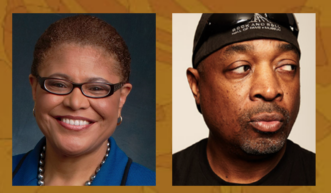
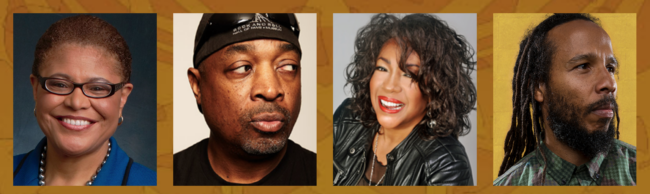
NNPA will also celebrate its 80th anniversary and award those who have greatly impacted the African American community. Honored guests include Congresswoman Karen Bass (D-CA), Chair of the Congressional Black Caucus, rap icon/activist Chuck D, music legend Mary Wilson, attorney and social justice advocate Benjamin Crump and global music icon Ziggy Marley.
This year’s conference will also be celebrating 80 years of the NNPA and 193 years of the Black Press. Learn more about the Black Press below:
NNPA is a trade association of the more than 200 African American-owned community newspapers from around the United States. Since its founding 80 years ago, NNPA has consistently been the voice of the black community and an incubator for news that makes history and impacts the world. As the largest and most influential Black-owned media resource in America, NNPA delivers news, information, and commentary to over 20 million people each week.
Karen Carter Richards, publisher of the Houston Times, is Chairwoman of the NNPA Board. Dr. Benjamin Chavis, Jr. serves as NNPA President and CEO.
For more information and to register for the conference which is free, visit https://virtualnnpa2020.com/ or click here.
This post was written by Nsenga K. Burton, founder & editor of The Burton Wire, an NNPA digital member publication. Dr. Burton also serves as Culture and Entertainment Editor for NNPA/BlackPressUSA and hosts their livestream series featuring HBCU Presidents.
The History of White People Still from episode 1. (Courtesy of the World Channel)
The History of White People Still from episode 1. (Courtesy of the World Channel)
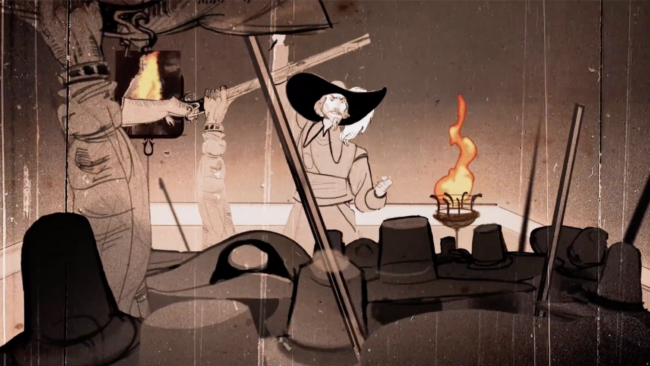
As Americans recover from celebrating Fourth of July weekend, the World Channel is debuting The History of White People in America, an animated series exploring how race became king in America and shaped the country’s history.
Featuring musical and spoken-word narration, The History of White People in America examines key moments and figures in U.S. history including a workers’ rebellion in Jamestown, the development of the Slave Codes of Virginia and the complicated truths of the relationship between Sally Hemmings and Thomas Jefferson. Each episode presents pivotal moments creating “Whiteness” in America and examines new ideas of race and power that still reverberate today. Check out the trailer below:
The first episode of the series begins streaming on the WORLD YouTube Channel at 3 p.m. ET on Monday, July 6. Episodes two and three will debut at 3 p.m. on July 7 and 8. WORLD Channel is a public television channel dedicated to bringing viewers documentaries and fact-based programming about diversity in the nation and around the world.
This post was written by Nsenga K. Burton, Ph.D., founder & editor-in-chief of The Burton Wire. Follow Nsenga on Twitter @Ntellectual.
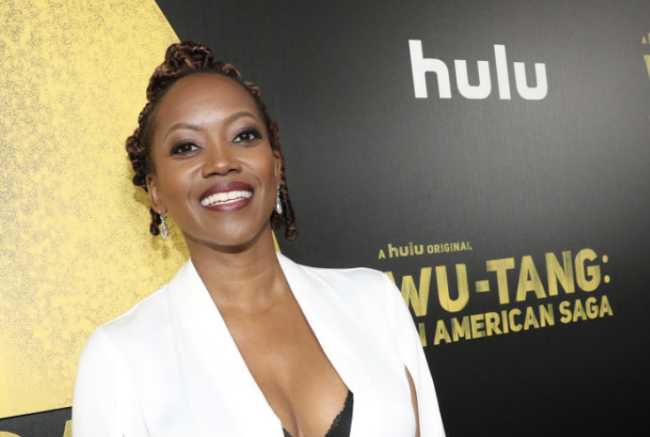
Actress, producer, activist Erika Alexander.
(Photo: Google Images)
Actress, producer, activist Erika Alexander. (Photo: Google Images)
Erika Alexander is probably best remembered as attorney-at-law Maxine Shaw from the 1990s classic television series, “Living Single” (Fox) and as cousin Pam on the groundbreaking sitcom, “The Cosby Show” (NBC). The beloved actress has gone on to star in a number of television shows including “Bosch” (Showtime), “Black Lightening” (CW) , “Wu-Tang: An American Saga” (HULU) and Last Man Standing (ABC/Fox). Alexander, who is widely known as an actress is starring in one of her greatest roles to date as producer of the highly anticipated documentary film Good Trouble, which explores the life of revered civil rights giant John Lewis.
Alexander is no stranger to politics having campaigned for Rep. Ayanna Pressley and former Georgia gubernatorial candidate Stacey Abrams. In fact, Alexander, who refers to herself as a “Clintonista,” was a Hillary Clinton surrogate and has attended a number of Democratic National Conventions. Alexander happened upon the role of producer of this film in what can only be called kismet.
“I went to an all-girls high school in Philly. We were always told we should find mentors. She [Hillary] is a Scorpio like me and I was very curious about her life in politics,” says the activist, who says her greatest influences are her parents. “My father was a preacher and my mother was a teacher. My whole life I’ve been in and around politics. To be asked to be in and around it as a surrogate and I would have the opportunity to use my skill set as a communicator? I was more than blown away,” offers Alexander who became a surrogate in 2007-2008.
Moving in those political circles, it is not surprising that Alexander would end up spending time with storied civil rights legend and politician Rep. John Lewis (GA) while campaigning for Abrams and Pressley. “The Congressman took great care of us. We of course knew we were traveling with an icon,” says Alexander who had been humbled by Lewis’ autobiography, Walking With the Wind: A Memoir of the Movement.
“The part about the Freedom Riders really stuck with me,” Alexander says quietly. “I think if those students can be spit on, beat and beat by real rocks and real bats and shot with real guns and go to real jail with real blood, I have no problem with speaking up, which is exactly what John Lewis did” she says.
Alexander who calls her mother her “greatest hero” for teaching her to advocate for women and children, understood she was in the company of greatness and spending time with a courageous man who continues fighting to this day. “Spending time with him, it was clear I had more to learn. What he did with his life – that is the definition of good trouble. It is my pleasure to be next to him. I’m trying to do what he taught me to do,” she adds.
What he taught her to do is to utilize her resources, energy and platform to create change. In a Tweet heard around the world, Alexander challenged David Schwimmer on his erasure of “Living Single“ while calling for a multicultural cast of the classic television show “Friends.” Alexander gently reminded him of “Living Single,” a sitcom set in New York with a group of friends living and loving in a Brooklyn brownstone which pre-dated the wildly popular “Friends” and many believe is the blueprint for what would become the “Friends” juggernaut.
Alexander says she didn’t mean to cause a Twitterstorm; she merely was stating the obvious as she sat on a tarmac chatting with her business partner Ben Arnon. “I knew that David was trying to be an ally, so I didn’t intend to be disrespectful, “ says the activist. When she arrived at her destination, Alexander realized the Tweet had gone viral and the rest is pop cultural history. “When the plane landed, the Twitter warriors went to work so I was inside of a river that was already flowing. I was surprised and a little taken aback to see the vehemence and passion it created in people,” prompting her to write the famous op-ed for Zora, explaining her intentions and position on the matter.
If Alexander didn’t know then, she now knows the power of her voice on social media platforms and how words can be used to create change, willingly or unwillingly.
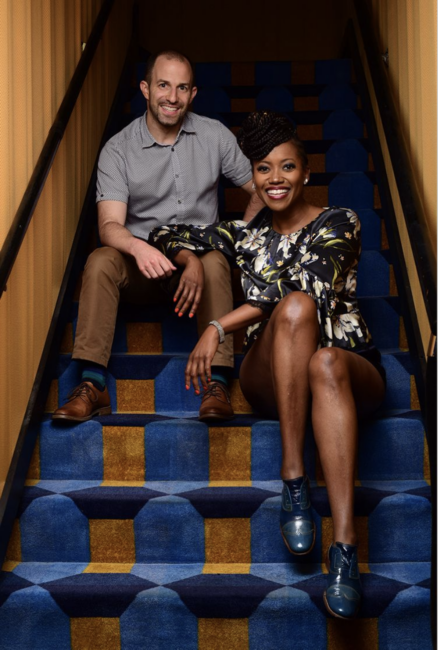
Alexander recently started Color Farm Media with her business partner Ben Arnon. Arnon, a media and tech entrepreneur, was an organizer for then Sen. Barack Obama. Arnon and Alexander met at the 2008 DNC Convention as delegates for their respective candidates.
Ben Arnon and Erika Alexander, partners in Color Farm Media Company. (Photo: Emory University)
In the words of Alexander, one could say the planets aligned, leading Arnon and Alexander to one another in order to create a company that develops and produces “premium-quality” scripted and unscripted content for motion pictures, television, streaming and podcast platforms. The planets aligned once again when a fellow Clintonista introduced Alexander to documentary filmmaker Dawn Porter. “Speaking with Dawn about this project, I thought our planets aligned to create this documentary Good Trouble,” says the activist. Porter, whose documentaries (Gideon’s Army, Trapped, Spies of Mississippi) brilliantly explore social justice issues coupled with Alexander and Arnon, who have been intricately involved in politics, and telling the story of civil rights legend John Lewis is the stuff that dreams are made of. Alexander understands the power and significance of what is happening.
The actress/activist knows she stands on the shoulders of other performers like Harry Belafonte, Paul Robeson and Josephine Baker who played integral off-screen roles in the pursuit of social justice as activists. “I’m doing exactly what all of these people before me. I don’t know anyone that didn’t put their careers on the line. I feel like I’m exactly where I should be and need to be,” says Alexander matter-of-factly. Alexander and company understand the importance and necessity of getting into good trouble in order to create a better world for everyone and hope after watching this documentary, audiences will too.
John Lewis: Good Trouble debuts Friday, July 3, 2020 on ON DEMAND. Check with your cable carrier. Watch or pre-order at HBCU Heroes.
This post was written by Nsenga K. Burton, founder & editor-in-chief of The Burton Wire. Follow on Twitter @Ntellectual or @TheBurtonWire.
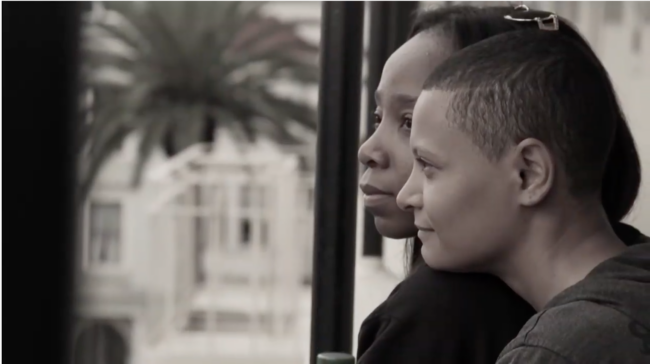
Mari and Cheyenne, forced to flee their native Angola because they are a lesbian couple. (Photo: YouTube)
Mari and Cheyenne, forced to flee their native Angola because they are a lesbian couple. (Photo: YouTube)
The WORLD Channel series DocWORLD will premiere the film Unsettled: Seeking Refuge in America from filmmaker Tom Shepard Sunday, June 28 at 10pm ET/7pm PT.
Following four young members of the LGBTQ community, Unsettled takes viewers into the lives and struggles of asylum seekers from Africa and the Middle East who are fleeing persecution, death threats and more in their homelands but often find new types of hardships as they arrive in San Francisco and attempt to start new lives.
Check out the trailer below:
Unsettled premieres on Sunday, June 28 at 10pm ET/7pm PT on WORLD Channel and worldchannel.org.
This post is curated by Nsenga K. Burton, Ph.D., founder & editor-in-chief of The Burton Wire. Follow Nsenga on Twitter @Ntellectual.
Follow The Burton Wire on Instagram or Twitter @TheBurtonWire.
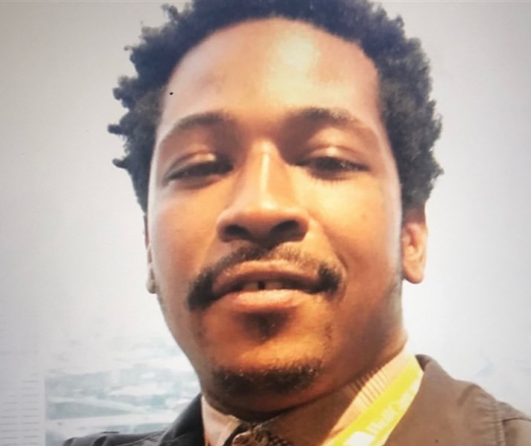
Rayshard Brooks, 28 was shot and killed by Atlanta Police Friday, June 12, 2020 in a Wendy's parking lot. (Photo: Facebook)
Officer Garrett Rolfe faces 11 charges including felony murder in the killing of Rayshard Brooks in a Southwest Atlanta Wendy’s.
Fulton County District Attorney Paul Howard announced charges today against Officers Garrett Rolfe and Devin Brosnan, who killed Rayshard Brooks, 27, in a Wendy’s restaurant parking lot in Southwest Atlanta.The police officers were called when Brooks fell asleep at a drive-thru in the Wendy’s parking lot.
During the press conference held today at 3:30 p.m. EST June 17, Howard took attendees through what happened and revealed new information including the officers kicked and stood on the body of Mr. Brooks as, “he was fighting for his life.”
Officer Rolfe fired his handgun three times while he was chasing Mr. Brooks, who the authorities said had seized a Taser from an officer and fired it as he ran. Another officer on the scene, Devin Brosnan, who has been with the department for less than two years, did not intervene. Two of the shots connected with Mr. Brooks, killing him.
Howard noted the police officers had spoken with Brooks peacefully for 41 minutes, who was “slightly intoxicated” before the situation escalated. During that time, they patted the suspect down and knew he had no weapons.
Howard also noted Officer Brosnan, who is currently on administrative leave, has agreed to testify on behalf of the state against Officer Rolfe. Brosnan confirmed he actually stood on the shoulders of Mr. Brooks after Brookswas shot and disabled. Howard also stated Officer Rolfe kicked Mr. Brooks after he was shot and disabled, lying on the ground.
Howard stated the officers never told Mr. Brooks he was being arrested which contributed to the incident. The District Attorney also stated Officer Rolfe made the “excited utterance” of “Got him!” after shooting Mr. Brooks, who was running in the opposite direction, in the back. He also stated Mr. Rolfe knew the taser had been discharged twice meaning it was unable to be used again, posing no threat to Mr. Rolfe.
The eleven charges against Officer Rolfe are as follows:
Felony Murder
Aggravated assault with a deadly weapon
Aggravated assault charge for shooting in the direction of Mr. Melvin Evans (occupant of a nearby car)
Aggravated assault charge against Mr. Michael Perkins (occupant in the backseat of a nearby car)
Seven violations of his oath of office (including failure to provide medical attention)
The three charges against Officer Brosnan’s:
Aggravated Assault (standing on Mr. Brooks’ body)
Two violations of oath (failure to render timely medical aid)
Both officers have been asked to surrender themselves to the state by 6 p.m. tomorrow.
They asked the court to issue Brosnan a bond of $50; They are recommending no bond for Officer Rolfe because of the severity of his act and following up the act of kicking Mr. Brooks.
Attorneys for Mr. Evans and Rayshard Brooks’ widow Tomika Miller,also spoke at the press conference.
This story is developing.
This story was written by Nsenga K. Burton, Ph.D., founder & editor-in-chief of The Burton Wire. Follow Nsenga or The Burton Wire on Twitter @Ntellectual or @TheBurtonWire.
Tshegofatso Pule(l,Naledi Phangindawo (middle) and Sanele Mfaba (right) were murdered in South Africa over the last two weeks.(Photos: Twitter)
Tshegofatso Pule(l,Naledi Phangindawo (middle) and Sanele Mfaba (right) were murdered in South Africa over the last two weeks.(Photos: Twitter)
News 24 is reporting the police investigation into the murder of Tshegofatso Pule, who was 8-months pregnant with her first child at the time of the murder, has intensified. Pule, 28, was found dead last week, hanging from a tree and with multiple stab wounds. Witnesses say she was last seen leaving her boyfriend’s housing complex and getting into a grey Jeep before being found murdered a day later. Pule’s best friend says Pule said she wanted to come home and was leaving to go buy baby clothes, a story confirmed by Pule’s Uncle Tumisang Katake.
The victim’s best friend reportedly called the police and reported Pule missing. Pule’s best friend and family are now under police protection due to a series of threats received over the phone.
Police have confiscated the grey Jeep Pule was riding in although as of this story, no arrests have been made in her murder.
The BBC is reporting South Africa’s president Cyril Ramaphosa says it has been a “dark and shameful week” for South Africa following a surge in violence against women.
At a press conference Ramaphosa condemned violence against women
Mr. Ramaphosa condemned the brutality of recent killings, naming three of the victims including Tshegofatso Pule and Naledi Phangindawo, 25, who was stabbed to death in the harbor city of Mossel Bay. Phangindawo’s alleged killer, who is her boyfriend, is currently in police custody. The body of Sanele Mfaba was found under a tree in Soweto June 13. Calls for justice have also come for Sanele who was allegedly murdered by her boyfriend Tshepo Mashego, who has been taken into custody.
President Ramaphosa remarked that justice must be served and called for gender-based violence (femicide) to be investigated urgently so that justice can be served.
Twitter campaigns have erupted over the recent murders of the young women sparking the following hashtags: #JusticeForTshego #JusticeforNaledi and #JusticeforSanelisiwe.
In September of 2019, President Ramaphosa announced a plan of action to curb gender-based violence, including a proposal to make a register of offenders public. Activists have called for reinstatement of the death penalty for those who commit such crimes.
According to an article in The Guardian, Ramaphosa stated, “We are reviewing laws on domestic violence and sexual offenses to prioritize the needs and interests of survivors.” The president also stated, “We are going to overhaul and modernize the national register of gender-based violence offenders provided for in the sexual offenses act to ensure it is effective in combating gender-based violence.” Watch Ramaphosa’s speech below:
The recent rise of murders against South African women has been blamed on the ease of restrictions around COVID-19.
Kim Harrisberg of Thompson Reuters Foundation News reports, “Women’s rights campaigners welcomed the greater focus on violence against women but said this was not just due to the end of lockdown but a constant issue for women in South Africa who face high rates of domestic abuse.”
The World Health Organization reports the rate of South Africa women murdered by intimate partners is five times more than the global average.
This post was written by Nsenga K. Burton, Ph.D., founder & editor-in-chief of The Burton Wire. Follow Nsenga on Twitter @Ntellectual or @TheBurtonWire.
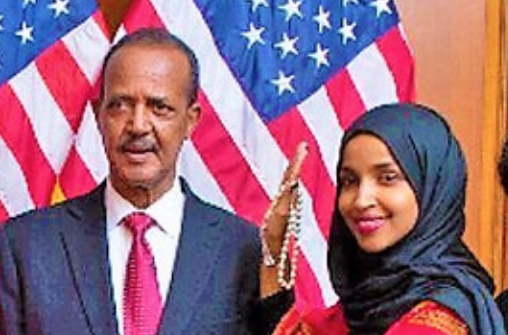
Politico‘s Matthew Choi is reporting Rep. Ilhan Omar’s father Nur Omar Mohamed has died from COVID-19. The Minnesota Congressman was raised by her father and grandfather after Omar’s mother died when she was an infant. They came to America as refugees in 1995 to escape the civil war in Somalia, eventually settling in Minnesota.
“It is with tremendous sadness and pain that I share that my father, Nur Omar Mohamed, passed away due to complications from COVID-19,” Omar said in a statement. “No words can describe what he meant to me and all who knew him.”
In May, Congresswoman Maxine Waters lost her sister Velma Moody to COVID-19.
As major cities in the United States are in utter and complete chaos over the continued failure to protect or defend the lives of unarmed black folks killed by rogue police officers and vigilantes, a social media campaign emerged called, “BlackOut Tuesday,” with some description of how the music industry is taking a stand against anti-black racism and wants everyone to pause the social media and use their voices instead.
The initiative was set up by Jamila Thomas and Brianna Agyemang, two black music industry executives at Atlantic Records and Platoon.
I immediately thought to myself about the “Blackout Day 2020” movement black activists like Calvin Martyr have been organizing for months that will take place July 7, which is a call to action where “not one black person,” allies and people of color spend one dollar to show economic power and the ability to hurt the very corporations who have shown little to no regard for the violence black people face on a daily basis. You know, the corporations that invest money in groups, political parties and organizations that work against justice for unarmed Black people harmed or killed by rogue police officers and vigilantes.
I also thought about #Blackout Coalition, an activist group on Facebook that pre-dates Blackout Day 2020 by years (2015) and has over 1.2 million members. I thought about the #Blackout Revival which just took place May 31, 2020.
I thought about the music industry – the same industry that lamented the lost income they were facing, while artists like D-Nice, Swizz Beatz, Timbaland and many others were providing some form of relief for fans at home due to the Covid-19 shutdown — now talking about showing their solidarity with Black folks with Blackout Tuesday. Some of your favorite artists got on the bandwagon as did your friends who follow trends without knowing who is behind it, who has actually been doing the work without fanfare and why those with the real power like music executives are now getting on board. Rihanna, Alicia Keys, Drake, Radiohead, Coldplay, Kelly Rowland and the Beastie Boys were among the many celebrities who agreed to participate in Blackout Tuesday.
My initial question was why do they think it’s a good idea to remove Black influencers and their allies from social media and therefore their followers at the height of the uprisings against police brutality which is when you actually need access to social media?
Reminders of curfews, resources, great stories coming out of the chaos (like police officers siding with and kneeling with protesters) documentation of rogue police behavior like the brutalization of Messiah Young and Taniyah Pilgrim, Morehouse and Spelman college students attacked by police, tased, pulled out of their cars, arrested and being told they should be killed as they were transported to the police station in addition to other worthwhile information. How are you going to know six Atlanta police officers have been charged with excessive force because of their attack on those students if you’re participating in a social media blackout? How are you going to reach out for help when someone has overreached their authority?
It doesn’t make sense. The music industry is hijacking the labor of actual Black activists who have been organizing #Blackout events for years. The Facebook page for the Blackout Day July 20 event was created May 8, before George Floyd’s killing and after the killing of Ahmaud Arbery and Breona Taylor. #Blackout began in 2015. Black folks been having “Blackouts” before then. Don’t get me to talking about the fantastic 2007 HBO movie “Blackout” starring Jeffrey Wright, Zoe Saldana, LaTanya Richardson, Prodigy and a young Michael B. Jordan, but I digress.
Many celebrities in general and Black celebrities specifically have jumped on this “Blackout Tuesday” bandwagon or fallen in line with the music corporations because so many are actually disconnected from the communities they claim to represent.
I get it. The desire to help is real but there are so many ways to actually help. Those with the resources and means to check out what is behind a “movement” should actually make use of those means to avoid problematic situations like this. Who really benefits from having black people off social media at the height of these uprisings? It ain’t black folk. Symbolic protests should not undermine the interests of those engaged in real protests.
Once again, the powerful have appropriated black labor and culture and enlisted the help of Black celebrities to get Black people offline, when we actually need to be online for our safety and protection. That’s not exactly fighting the power in my book.
I’m not a conspiracy theorist, but if I were, my Twitter fingers would be itching right about now.
My mother always says common sense isn’t common. This could be the case with a couple of folks with good intentions trying to make the world better, but not thinking through all of the important pieces.
If you want to get involved, then actually get involved and hit the pavement (before curfew), write a check to a legitimate organization out there committed to police reform and ending police brutality, donate to a bail fund for protesters arrested during the uprisings or support political candidates who have an actual plan and policy for criminal justice reform. Many of the celebrities participating in “Blackout Tuesday” are already doing these things and should continue to do so.
Whatever you do, don’t be a follower and allow your status as a leader to be used to disempower people who need empowerment and your voice.
This post was written by Nsenga K. Burton, Ph.D., founder & editor-in-chief of The Burton Wire. Follow her on Twitter @Ntellectual.
Protestors demonstrate outside of a burning liquor store near the Minneapolis 3rd Police Precinct, Thursday, May 28, 2020, in Minneapolis. (AP Photo/John Minchillo)
Protestors demonstrate outside of a burning liquor store near the Minneapolis 3rd Police Precinct, Thursday, May 28, 2020, in Minneapolis. (AP Photo/John Minchillo)
Writing for Courier Newsroom, The Burton Wire’s founder & editor-in-chief Nsenga K. Burton discusses the misplaced anger surrounding the national uprisings against police brutality in response to the killing of George Floyd in Minneapolis, MN by former police officers Derek Chauvin who kneeled on Floyd’s neck while three other police officers (Tou Thao, Thomas Lane and J. Alexander Keung), who were swiftly. However, none of them were arrested and charged despite calls from some of the city’s leadership including mayor Jacob Frey, leading to uprisings in cities across the nation.
Check out an EXCERPT of the post on Courier News below:
“Unless you’ve been living under a rock or under some type of self-prescribed media fast, America is burning again. People fed up with unchecked police brutality against unarmed Black men, women and children have taken to the streets to protest the most recent killing of an unarmed Black man at the hands of white and in this case Asian police officers, again.
George Floyd, who was alleged to have committed forgery, was taken into custody by police after a store clerk called them to complain about Floyd paying with a fake $20 bill. If you’re wondering how a routine police call ended with the senseless murder of yet another unarmed Black man, then so are we.
Video surfaced of Floyd lying face down on the ground with his arms handcuffed behind his back. Officer Derek Chauvin kneeled with the full weight of his body, placing his knee across the back of Floyd’s neck while Floyd squirmed, gasping for air, pleading for his life and stating, “I can’t breathe.”
People standing by and taping the arrest also pleaded for Floyd’s life to no avail. Chauvin sat there cavalierly with his hand in his pocket while literally snuffing the life out of Floyd for the world to see wearing a smug look of satisfaction on his face.
While this video is shocking to some of you, it is normative to Black folks, who experience violence at the hands of the police in alarming numbers.
In a snuff film seen around the world, America watched Floyd take his last breath at the hands of these men sworn to serve and protect. Although Chauvin was arrested and charged with third-degree murder and manslaughter on Friday, it’s not clear what, if anything, will happen to the other three former officers. All claimed Floyd resisted arrest.
Add to the mix the release of the store’s video footage of the arrest from Mahmoud Abumayyaleh, the actual store owner, showing that Floyd did not resist arrest at all and was in fact peaceful. Protesters took to the streets surrounding the police precinct.
What began as a peaceful protest turned into an uprising, some of which was in response to being met with police in riot gear. We all watched the countless videos of raging, armed white folks protesting coronavirus restrictions intended to protect their health—all, for what, their right to a haircut? We watched those protesters storm Michigan’s state capital without any arrests.
America, the capital of double standards and hypocrisy and the king of “do what I say but not what I do,” is at it again.
What is maddening about this most recent spate of uprisings is the continued trope of discussing protesters of color as rioters, thugs and looters in mainstream media. I have read a plethora of op-eds today focusing on the destruction of property and not on the historic terror Blacks face on day to day in this country because of the color of their skin.
Racism allows for the continued brutal beatings and killings of unarmed Blacks at the hands of rogue police officers, wannabe police officers or white folks who appear to hate Black people and think they still own us. See Amy Cooper…”
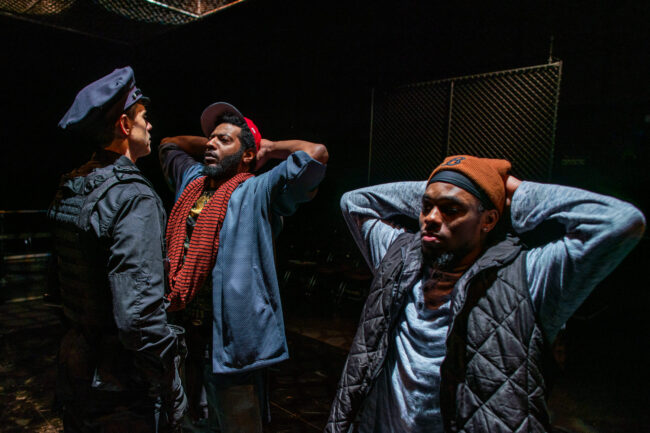
Lewis D. Wheeler, Kadahj Bennett, Hubens "Bobby" Cius in SpeakEasy Stage Production of Pass Over, Photo by Nile Scott Studios
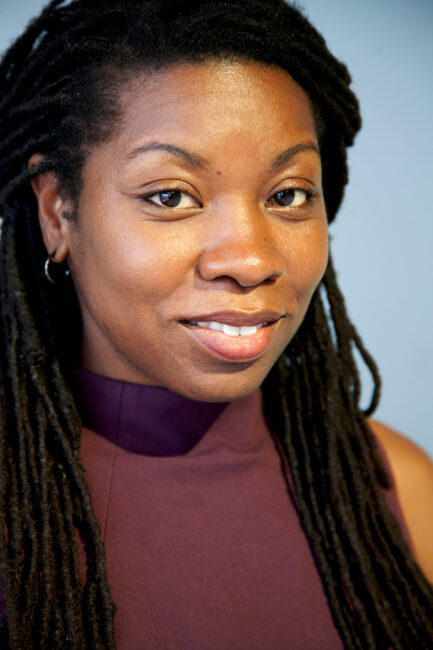
Dr. Monica Ndounou. Photo Credit: Monica Ndounou
OpEd written by Dr. Monica Ndounou
It is hard not to notice how white theaters profit from staging Black death and trauma but say nothing in response to anti-Black violence like the lynching of George Floyd and multiple attacks against Black people during a global pandemic that is ravaging Black and Brown communities. The silence over the past several weeks speaks volumes on the need for safe spaces to tell our stories. COVID-19’s destructive impact on the theater industry presents an opportunity to rebuild with greater equity and empathy in funding and operations.
As a Black mother with over twenty years of experience as an actor, director, educator and advocate, I stand in solidarity with artists like Sterling K. Brown, Dominique Morisseau, Jada Pinkett Smith, Yara Shahidi, Gabrielle Union, Spike Lee, Rihanna and others using their platforms to expose the systemic racism enabling this cyclical violence. It takes courage to speak, knowing those who do not want to change will perceive the uncompensated, emotional labor as an attack, rather than an invitation to do and be better. The backlash for speaking out is real. But if we don’t speak, then who will?
Predominantly white theaters are not always safe spaces. Throughout the run of Pass Over, several white patrons insisted on saying “Nigger” during talkbacks even when repeatedly asked to stop. In the script and program, the playwright specifies the word not be used beyond the play’s dialogue while the actors are in character. Other white patrons refused to leave the theater or complained of reverse racism in response to the healing circle. Recognizing the limitations of allies as bystanders, Melissa Alexis, our healing circle facilitator and I sought out white volunteers to escort disgruntled white patrons to the lobby, sharing resources prepared by our dramaturg Pascale Florestal on how to be accomplices by actively engaging in social justice struggles while willing to suffer consequences Black people face.
Just as Baby Suggs, wholly advised her congregation of newly freed Black people in Toni Morrison’s Beloved,when she told them the only grace they would have is the grace they could imagine, we can collectively reimagine American theater. A critical mass of culturally specific theater leaders and accomplices can design and implement a more equitable, national model that builds on the Mosaic Network and Fund, which addresses “the health and viability of the African, Latinx, Asian, Arab, and Native American (ALAANA) arts groups in New York City.” Leaders from Ensemble Theater (Houston), Black Ensemble (Chicago), The Billie Holiday Theater Brooklyn, Waco Theater (Los Angeles), KC Melting Pot (Kansas City) and Hattiloo Theater (Memphis) have experience effectively managing Black theaters as arts and advocacy organizations and can imagine a path forward that promotes cross-cultural, creative collaborations and resists defaulting to bailing out predominantly white theaters.
By overhauling funding and operations to recognize the intrinsic value of Black people and theaters, the industry can thrive during and beyond COVID-19. We know better so let’s do better, together. Our very lives and livelihoods depend on it.
Monica White Ndounou is an Associate Professor of Theater and affiliate faculty in African and African American Studies and Film and Media Studies at Dartmouth College. She is the Founder and Executive Director of The CRAFT Institute, Convener of The International Black Theatre Summit, the Vice President of Advocacy for the Association for Theatre in Higher Education and the author of the award-winning book, Shaping the Future of African American Film: Color-Coded Economics and the Story Behind the Numbers (Rutgers UP 2014). She is also a Public Voices Fellow. Follow her on Twitter @MonicaNdounou.