Home Blog Page 5

The Spook Who Sat by the Door: Restored 4K World Premiere August 16

0
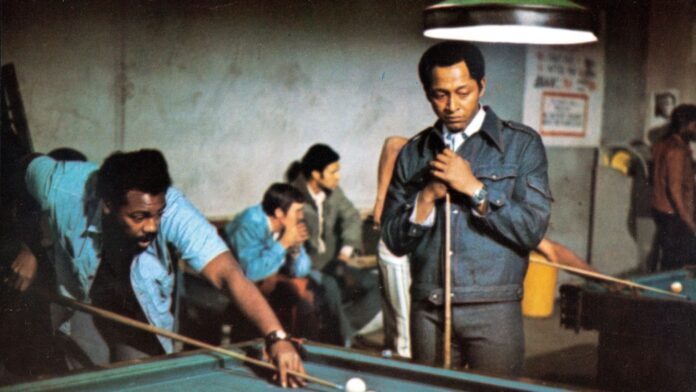
Photo: BAM
Photo: BAM

July 22, 2024 – Brooklyn, NY — On August 16, the Brooklyn Academy of Music (BAM), presents the world premiere of the new restoration of the legendary, long-unavailable film, The Spook Who Sat by the Door (1973), directed by Ivan Dixon, based on Sam Greenlee’s novel, and produced by Dixon and Greenlee.

More than five decades since its interrupted theatrical release, this towering work of American independent filmmaking and political cinema returns to the big screen. For too long, it was only viewable on faded prints and bootleg video (and an out-of-print DVD); now, audiences can experience this crucial work in a new 4K restoration undertaken by the Library of Congress and The Film Foundation, with funding provided by the Hobson/Lucas Family Foundation.

One of the most radical, revolutionary statements in film history, The Spook Who Sat by
the Door follows Dan Freeman, brilliantly portrayed by Lawrence Cook, the fictional first
Black CIA agent, from recruitment and training, through leaving the agency and
returning to Chicago to use his specialized skills to form a guerrilla army intent on
stoking a people-powered revolution. After being denied permits to film legally in then-Mayor Richard Daley’s Chicago, the film was primarily shot in neighboring Gary, Indiana, with the help of then-Mayor Richard Hatcher, one of the first Black mayors of a large American city.

Greenlee and Dixon (perhaps best known for his performance as Duff Anderson in
Michael Roemer’s seminal Nothing But a Man) produced the film independently, first
raising money from Black investors and completing it with funding from a major studio,
which was secured by selectively showing execs scenes which were in keeping with the
action-adventure style of the then-popular blaxploitation genre. Evidently, no one at the studio had bothered to read Greenlee’s actual script, so executives were reportedly shocked
upon seeing the final product. So potent is the film’s call to revolution, it was pulled from theaters within weeks of opening, despite immediate box office success.

Ever since, rumors have swirled, and Greenlee has been on record citing government intervention in the suppression of the film, and the studio quickly washed their hands of it.

Once thought lost, Dixon had quietly stored the original 35mm negatives in a vault, kept
safe by the Dixon family. In 2003, actor Tim Reid released the first authorized version
on DVD, leading to a resurgence of attention. In 2012, the film was added to the Library
of Congress’s National Film Registry. The Spook Who Sat by the Door has been widely
discussed and analyzed as a landmark work, in countless articles, dissertations, essay
collections (Race and the Revolutionary Impulse in The Spook Who Sat by the Door,
edited by Michael T. Martin, Davis C. Wall and Marilyn Yaquinto) and documentary film
(Infiltrating Hollywood: The Rose and Fall of The Spook Who Sat by the Door, directed
by Christine Acham and Clifford Ward). In the half century since the film was made,
nothing has blunted its power.

Restored by the Library of Congress and The Film Foundation, with funding provided by
the Hobson/Lucas Family Foundation, this beautiful new 4K restoration, now available
through the auspices of the Dixon and Greenlee families, with assistance from Jake
Perlin of The Film Desk, will help cement the film’s place in the canon of American
cinema.

The Spook Who Sat by the Door will premiere on the Steinberg Screen at BAM’s
Harvey Theater on August 16, in the presence of Ivan Dixon’s children Alan Kimara
Dixon and Doris Nomathandé Dixon, and Sam Greenlees’s daughter Natiki Hope
Pressley, followed by a live panel discussion with Dr. Khalid El-Hakim (co-founder of the
Black History Mobile Museum), Dr. Laurence Ralph (professor of anthropology,
Princeton University), Dr. Racquel Gates (associate professor, film and media studies,
Columbia University), and moderated by film historian Michael Gillespie (professor and
author of Film Blackness: American Cinema and the Idea of Black Film).

The premiere will kick off BAM’s Cinema, Restored series at the Harvey (August 16-22),
celebrating the best recent restorations of classic works of cinema. Starting August 23,
the film will then have a two-week engagement at BAM Rose Cinemas, coinciding with
a simultaneous opening at Maysles Cinema in Harlem, where Ivan Dixon was born and
raised.

Tickets for the BAM screenings are currently on sale.

This post was curated by Nsenga K. Burton, Ph.D., founder & editor-in-chief of The Burton Wire. Follow Nsenga on social media @Ntellectual.

Follow The Burton Wire on social media @TheBurtonWireNews.

‘The Wash’: Kelundra’s Smith’s Play Brings Black Laundresses’ History to Life

0
Playwright and Atlanta native Kelundra Smith. (Photo: Allen Cooley)

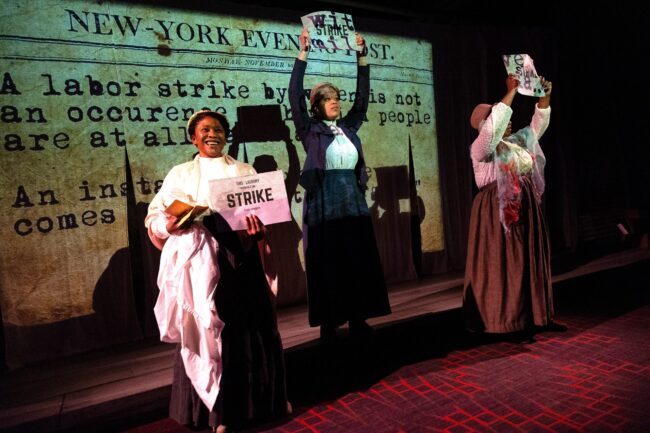
“The Wash” tells the real-life story of the 1881 Atlanta washerwomen strike, during which Black laundresses led a strike for better wages in the weeks leading up to the International Cotton Exposition.

Americans are facing a precarious time in history due to many factors including the attack on women’s rights and affirmative action, the latter of which has targeted African American women with the recent Supreme Court decision against the Fearless Fund. This year’s Juneteenth and Fourth of July festivities conjure up a lot of historical memory and have Americans in general and African Americans specifically thinking about what freedom really means during a precarious time in our nation’s history. The play, “The Wash,” debuts just in time to give us some history and context through which to consider these issues.

Journalist-turned-playwright Kelundra Smith’s play, “The Wash,” examines the story of Black laundresses in Atlanta, who led a strike in 1881 for fare wages and demanded payment for services rendered. The Atlanta Washerwomen’s Strike of 1881 was the first successful interracial, organized labor strike of the post-Civil War era. “The Wash” offers an intimate and often funny look at ordinary women who accomplished extraordinary goals at a time when they did not have rights as Blacks or women. Smith’s play offers a peek into an important time in history, while highlighting how yesterday’s fight for freedom and equality resonates with today’s strife over the direction of our nation.

The Wash actors Jamila Turner (l), Kenedi Deal (c) and Makallen Kelley (r). Photographer: Casey Gardner Ford
Photo: Casey Gardner Ford

Smith, an award-winning journalist and theatre critic, never had any desire to become a playwright, The Atlanta native attended the University of Georgia (UGA) for theatre and focused on acting and directing. After graduation, Smith moved into arts administration, higher education and journalism, so there really was no room for creative writing. This story about Black washerwomen really spoke to Smith, who had not heard of this story growing up in Atlanta, and knew it needed to be told. While she was comfortable with her journalistic work, playwrighting allowed Smith to work other muscles.

“Writing a play is a totally different process from journalism writing,” says Smith. “It uses a different part of my body. Playwriting requires my heart. Getting a magazine published requires my head. Both require a ton of collaboration and people skills,” acknowledges the self-described introvert who “cosplays as an extrovert.”

Although Smith used a different part of herself when writing the play, the nationally recognized theatre critic used her journalistic training to move the project forward. “You know when you pitch an article, the first thing any editor asks is what’s the hook? What’s the angle? Is it timely? I couldn’t explain the relevance of this story in 500 words, so it had to be more than an article” Smith offers. Being able to write this story also restored Smith’s appreciation for the process.

“For a long time, I felt really defeated by work,” confides the critic.  “As a writer, I’ve spent most of my career being underpaid, overworked, and disrespected. I think this play helped me sort through how awful that made me feel and how to truly reorient my relationship to work,” she adds. Smith’s experiences with equality, fair pay and respect are on full display in, “The Wash,” which is brought to life by strong direction by Brenda Porter and outstanding performances by the cast. Smith praises Porter for casting performers Tanya Freeman, Nevaina, Kenadi Deal, Makallen Kelly, Charis Sellick and Jamila Turner, who give all of themselves to their roles. “Rachel May, the artistic director of Synchronicity Theater, says that the right people always end up in the room.  These women are so individually talented. I have watched them become an ensemble. Iron sharpens iron.”

Such was the case with the production which went from a workshop that Hush Harbor Lab and Essential Theatre facilitated in Aug. 2022 to the stage in June 2024. “I had a month to do rewrites before we started a 3-week rehearsal process for a 7-week run. This cast is amazing. This show is labor intensive, and no one has missed a performance.”

Smith, who grew up in the church, enjoyed the process of getting the play from script to stage. “I enjoyed seeing the play be so appreciated and understood. One of my favorite Bible verses is Isaiah 55:11: ‘It will not return to me empty but will accomplish what I desire and achieve the purpose for which I sent it.’ I hope everyone who experiences this play feels full.”

“The Wash” opened at Atlanta’s Synchronicity Theatre in June and is set to take the stage at The Academy Theatre in Hapeville in a production from Impact Theatre Atlanta from July 11 through 28. The play is then scheduled to open in theaters in St. Louis and Chicago in 2025.

This feature was written by Nsenga K. Burton, Ph.D., founder & editor-in-chief of The Burton Wire. Follow Nsenga on social media @Ntellectual.

Follow The Burton Wire on social media @TheBurtonWireNews.
Taylor Casey is Missing in the Bahamas: Where is She?

0
Taylor Casey, 41, went missing during a yoga retreat in the Bahamas.

The internet has been buzzing with news of the disappearance of Taylor Casey, 41, a Chicago woman who went missing while attending a yoga retreat in the Bahamas (Paradise Island). Taylor was last seen on the. island on June 19, according to the Royal Bahamas Police Force. Watch this News Nation story about Casey’s disappearance below:

According to ABC News, Casey’s mother Colette Seymore has arrived on the scene. “I believe Taylor is in danger because she was eager to share her yoga retreat experience with others upon her return,” Seymore said in a statement on Monday. “Taylor would never disappear like this.” Taylor’s cell phone signal was located in the ocean.

The family urges anyone with information about Taylor’s whereabouts to come forward. Every lead is crucial in their efforts to locate her.

For information regarding Taylor’s disappearance, please contact the Royal Bahamas Police Force Criminal Investigations Department at 502-9991/2 or Crime stoppers at 328-TIPS (8477).

This post was curated by Nsenga K. Burton, Ph.D., founder & editor-in-chief of The Burton Wire. Follow Nsenga on social media @Ntellectual.

Follow The Burton Wire on social media @TheBurtonWireNews.

Atlanta’s First Black-Owned, Plant-Based, Commercial Kitchen Breaks Ground

0
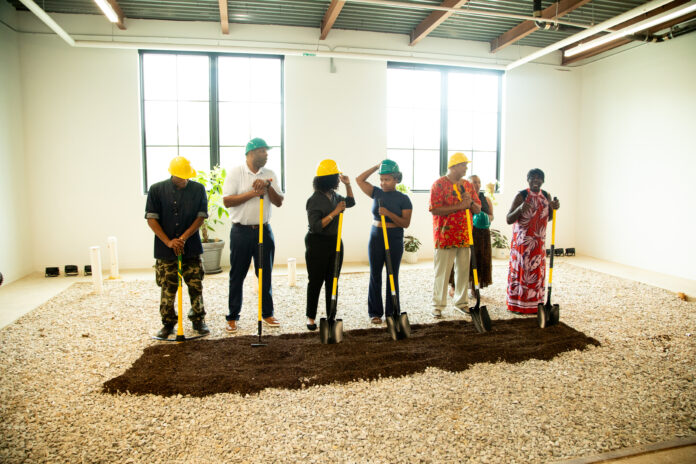
Photo from the groundbreaking of The Food Studio at Pittsburgh Yards. (Photo: Ty Pleas)

ATLANTA (June 19, 2024) – The Food Studio at Pittsburgh Yards® officially broke ground on Juneteenth, becoming Atlanta’s first Black-owned, plant-based commercial shared kitchen, situated in The Nia Building®, the anchor of Southwest Atlanta’s Pittsburgh Yards development named after the Kwanzaa principle meaning, “purpose.”

The day included speakers, storytellers, cultural artists, and an opportunity to experience plant-based foods. The Food Studio at Pittsburgh Yards’ purpose is multifaceted, including educating the community on the benefits of plant-based eating and making it accessible in an inspiring way. It will also serve as a beacon for food equity, striving to end food apartheid and empower the African American community by reclaiming control over their food systems as The Food Studio at Pittsburgh Yards has reclaimed the historic agricultural land on which it sits. In the 1900s, the site where The Food Studio will grow, was used for farmland by Clark College’s (now Clark Atlanta University) agricultural department.

The Food Studio won’t just be a place for food, it will be a place where our culinary heritage comes alive, enabling community members to achieve both nutritional and financial self-sufficiency,” said Kevin McGee “Chef Kev”, executive director, Urban Oak Initiative and founder of The Food Studio at Pittsburgh Yards. “By providing access to fresh, healthy food alongside entrepreneurship, educational and economic opportunities, The Food Studio will be fostering a dynamic intersection of community, culture, and cuisine while revitalizing and ensuring valuable cultural traditions are not just preserved but celebrated.”

As a 100 percent community-based, plant-based, shared commercial kitchen incubator and accelerator, it strives to be a beacon of hope for aspiring “foodpreneurs” (food entrepreneurs) who will help bring the importance and possibilities of plant-based food preparation and eating to Atlanta’s Southside residents while giving plant-based “foodpreneurs” a place to create.

“We are elated that The Food Studio at Pittsburgh Yards has broken ground and is that much closer to not only making this meaningful addition to the community a reality for food entrepreneurs, but also for the positive health benefits it will share with those in the surrounding communities who will now get to enjoy additional access to plant-based cuisine,” said Chantell Glenn, senior associate responsible for the development and operations of Pittsburgh Yards. “Focusing on re-circulating and putting dollars back into the community while educating people on the need for more fresh and healthy foods is a win-win for everyone. Chef Kev, with his fierce advocacy for the benefits of plant-based cuisine and support for Black entrepreneurship, couldn’t be a better person to own this opportunity.”

Through a host of engaging workshops, cultural events, and collaborative projects, The Food Studio at Pittsburgh Yards will ultimately unify and reconnect people with traditional foods and cooking practices through its membership-based model of participation. Membership fees will be affordable and based on the amount of time a month the food preparer believes they will need.

McGee plans to use his platform as the owner of The Food Studio at Pittsburgh Yards to dispel the myths about preparing and eating plant-based foods and also helping to address the health disparities by educating area residents on the positive impact a plant-based diet has on one’s overall health. He believes everyone has the right to eat plant-based foods and that they should not be out of reach in pocketbook or pallet.

If interested in donating to or financially supporting the educational outreach and programming at The Food Studio at Pittsburgh Yards, go online to thefood.studio or contact info@thefoodstudio.org, and to watch the progress of the build-out, follow @urbanoakfood on Instagram and on all of Pittsburgh Yards’ social media platforms.

The Food Studio at Pittsburgh Yards is expected to be complete and ready for members before the end of 2024.

This post was curated by Nsenga K. Burton, Ph.D., founder & editor-in-chief of The Burton Wire. Follow Nsenga on social media @Ntellectual.

Follow The Burton Wire on social media @TheBurtonWireNews.

South Africa : ANC Loses Majority for First Time in 30 Years

0
South African Flag (Photo: Wikipedia)

The dominance of the African National Congress (ANC) in South African politics has been rattled. The Guardian is reporting, “The ANC which led the fight to free South Africa from apartheid, won just 159 seats in the 400-member national assembly on a vote share of just over 40%. High unemployment, power cuts, violent crime and crumbling infrastructure have contributed to a hemorrhaging of support for the former liberation movement.” Coupled with former embattled South African president and ANC leader Jacob Zuma stoking fears of violence while launching his own party (uMkhonto we Sizwe) which pulled 14.6 percent of the vote away from ANC.

The ANC also lost its majority in three provinces: Northern Cape; Gauteng, which is home to the commercial center Johannesburg and the capital, Pretoria; and KwaZulu-Natal, where MK was the largest party.

2024 South African election results. (The Guardian)

“What this election has made plain is that the people of South Africa expect their leaders to work together to meet their needs,” president Cyril Ramaphosa told an audience of politicians, diplomats and civil society leaders after the official results announcement.

It remains to be seen if this shift in power will prompt ANC to collaborate with other parties to meet the needs of South Africans.

This story is developing. 

Read the entire news story at The Guardian.

This post was curated by Nsenga K. Burton, Ph.D., founder & editor-in-chief of The Burton Wire. Follow Nsenga or TBW on X  The Burton Wire News or Facebook @TheBurtonWire

Annie E. Casey Foundation Releases 2024 Changing the Odds Report

0
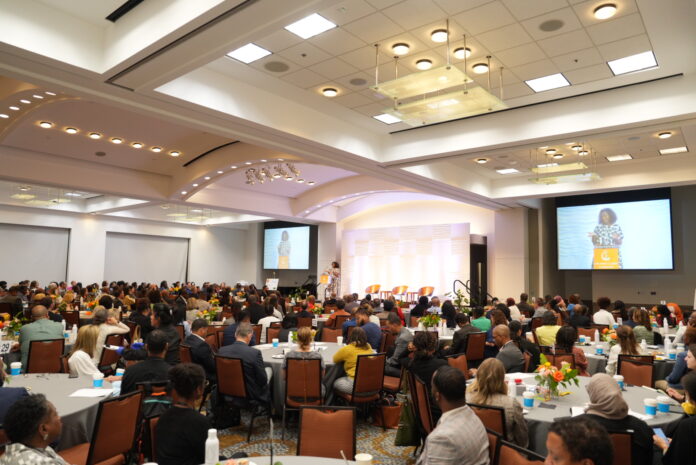
The Annie E. Casey discussion of 2024 Changing the Odds Report. Photo: Annie E. Casey Foundation.

The report reveals some improvements since 2019 but racial disparities and inequalities still exist in Atlanta. 

(Atlanta – Thursday, May 2, 2024) – Today, the Annie E. Casey Foundation released insights from their latest report in their Changing the Odds series: Changing the Odds: Comprehensive Solutions for Atlanta’s Future.

Since 2015, the Changing the Odds report series has tracked neighborhood, education and economic data by race to assess disparities and highlight solutions for policymakers, business and community leaders.

This year, nearly 300 community leaders and business, government and education sector members convened to discuss the report’s insights and brainstorm potential solutions to address some of Atlanta’s known and unknown challenges, some of which were illuminated during the Covid-19 pandemic. The goal of the collective working-session is to work towards helping ALL Atlantans fully contribute to and benefit from Atlanta’s growing economy.

The Casey Foundation, a Baltimore-based national private philanthropy group, conducts the series through its Atlanta Civic Site to look at solutions for racial inequity through public and private partnerships.

The report states:

Since the first Changing the Odds in 2015, the city of Atlanta has made significant progress in addressing barriers to opportunity faced by many of its residents of color. Despite gains, progress remains uneven and disparate among racial groups. Black Atlantans continue to face disproportionate challenges in their neighborhoods, schools and access to economic opportunity, impeding their ability to thrive in a rapidly growing city.

The 2024 report noted some positive shifts in terms of education. Atlanta Public Schools have reached an all time high school graduation rate at 87 percent in 2023. The number of Atlanta Public School students enrolled in Advanced Placement courses has also increased in recent years, although the report also stated AP courses are not evenly distributed.

While on the surface, graduation rates for Black and Latino students look promising, further inspection of third grade reading and eighth grade math outcomes point to a downward trend for the city’s younger students. Reading proficiently by the end of third grade is a major predictor of whether a student will graduate from high school. While reading and math scores fluctuated during the pandemic and have since gained some ground, the data show wide racial disparities in Atlanta. Proficiency rates for both third grade reading and eighth grade math among Black students plunged by 12 and 16 percentage points, respectively, in the 2020–21 school year. In the 2022–23 school year, math and reading scores for white students exceeded those of Black students by nearly 60 percentage points in both subjects.

The report also examined the wealth gap between racial categories and while there were some positives, there were some downturns. Median incomes for Black households increased by more than $6,000 in inflation-adjusted dollars between 2013 and 2021, the difference in median earnings between Black ($38,854) and white ($114,195) households increased by $3,529 to reach a difference of $75,341 in 2021. Lower earnings translate into lower rates of savings and higher rates of delinquent debt (60 days or more past due). Financial experts recommend that households have savings and accessible assets sufficient to cover expenses for at least three months to weather a financial crisis. In 2020, more than half of Black Atlantans lacked this basic financial cushion, compared to 14% of white residents. In 2022, communities of color in Fulton County had nearly three times the level of delinquent debt as white communities, with the largest portion from medical expenses (19%) followed by student loans (11%).

The report examines Atlanta’s post-Covid-19 data landscape including key areas for children’s healthy development, enduring and growing racial disparities, recommendations to address these disparities and support thriving communities, educational achievement and economic opportunity for all Atlantans.

Read the 2024 Changing the Odds: Comprehensive Solutions for Atlanta’s Future here.

This article was written by Nsenga K. Burton, Ph.D., founder & editor-in-chief of The Burton Wire. Follow Nsenga on social media @Ntellectual.

Follow the Burton Wire @TheBurtonWireNews or @TheBurtonWire on IG.

Brown University: Protesters Clear Encampments and Admin Agrees to Vote

0
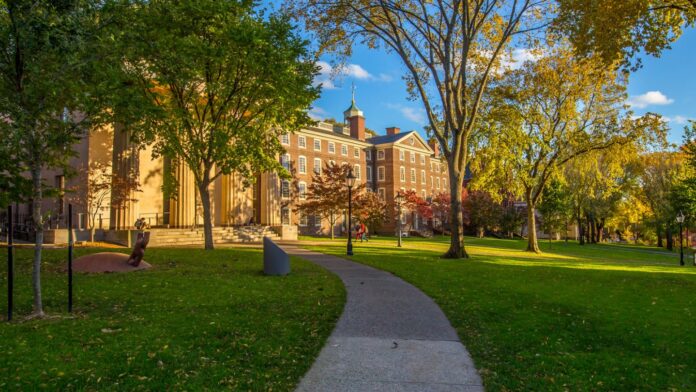
Brown University. (Photo: Brown.edu)

College and university campuses in the United States have erupted into conflict over student protests and encampments over the Israeli-Hamas war. College administrations, state and local police officers have literally engaged in violent clashes with protesters, many of them students and faculty, calling for divestment from Israel in the wake of the war. While tensions and arrests have been escalating on college campuses across the nation, Brown University may have the answer to ending the encampments. Why are students, faculty and community members protesting on college campuses?

Student protesters are accusing Israeli Prime Minister Benjamin Netanyahu and the Israeli military of genocide as it relates to the killing of innocent Palestinians, by Israeli military actions as they pursue Hamas leaders. Al-Jazeera is reporting 35,000 Palestinians have been killed, 75,000 injured and 9,500 have been held in captivity since the start of the Israel-Hamas war. Israel declared war on Hamas, following Hamas’ surprise attack on Israel, killing 1,200 people, including 35 U.S. citizens. More than 100 Israeli’s are still being held as hostages by Hamas.

Columbia University, Dartmouth College, UCLA and Emory University have been in the news for engaging local and state police officers to arrest protesters who have erected encampments protesting the school’s punishment of students with pro-Palestine views. The University of Southern California banned their 2024 valedictorian from making a graduation speech, subsequently canceling all graduation ceremonies citing safety concerns.  Many of the pro-Palestine protesters including students and faculty, were violently assaulted and arrested by police placing administration under fire. In Atlanta, 28 people were arrested at Emory; of the arrests, 20 were students or faculty.

As colleges and universities double down on ending pro-Palestine protests and assemblies, Brown University seems to have found the answer to de-escalating the campus conflicts, by becoming the first university to meet with protesters and agree to hold a board vote on divesting from Israel. Jacey Fortin of The New York Times reports the following:

“As pro-Palestinian protests continued to escalate across the country, officials and students at Brown University set a rare example on Tuesday: They made a deal.

Demonstrators agreed to dismantle their encampment at Brown, which had been removed by Tuesday evening, and university leaders said they would discuss, and later vote on, divesting funds from companies connected to the Israeli military campaign in Gaza.

The agreement came even as scenes of chaos continued to overtake U.S. universities, with protesters at Columbia in New York and Portland State in Oregon occupying buildings, and demonstrators at the University of North Carolina at Chapel Hill replacing an American flag at the center of campus with a Palestinian one.

More than a thousand people have been arrested over the past two weeks after a crackdown on a pro-Palestinian encampment at Columbia in New York resulted in a cascade of student activism across the country.”

Perhaps the embattled colleges and universities can take a page from Brown on conflict resolution?

This story is developing.

Read the entire story on the New York Times here.

This article was written by Nsenga K. Burton, Ph.D., founder & editor-in-chief of The Burton Wire. Follow Nsenga on social media @Ntellectual.

Follow the Burton Wire @TheBurtonWireNews or @TheBurtonWire on IG.

Iwájú: Review of the Celebrated Nigerian Futuristic Animated Series on Disney+

0
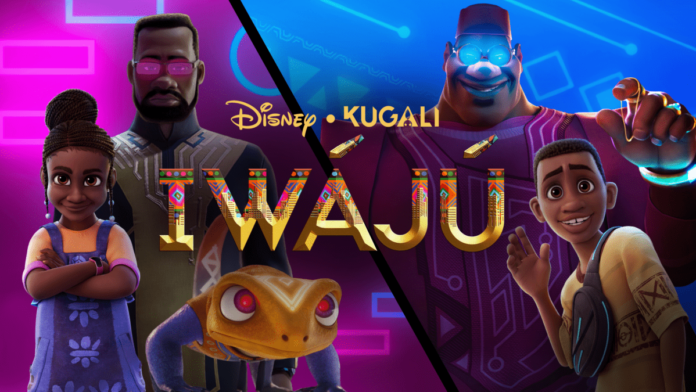
Iwaju Press Photo. (Disney+)

Iwájú is an animated series set in futuristic Lagos, Nigeria that explores the relationship between best friends, Tola (voiced by Simisola Ghadamosi), a young, wealthy, intellectually curious girl and Kole (voiced by Siji Soetan), a technophile, who works at Tola’s family home and hails from an impoverished background. The series premiered on Disney+ on February 28, 2024 and consists of six episodes. 

Tola, who is kept away from “the world,” is being raised by her father, a tech genius, who has created a lavish lifestyle for them. In addition to wanting to explore the world outside of her world, Tola wants a greater connection with her father Tunde (voiced by Dayo Okeniyi), who has buried himself under work, to escape his grief. Although he’s just a child, Kole must make heavy decisions based on the world in which he lives which includes a gangster named Bode (voiced by Femi Branch).

Kugali filmmakers—including director Olufikayo Ziki Adeola, production designer Hamid Ibrahim and cultural consultant Toluwalakin Olowofoyeku—take viewers on a unique journey into the world bursting with unique visual elements and technological advancements inspired by the spirit of Lagos. The series is produced by Disney Animation’s Christina Chen with a screenplay by Adeola and Halima Hudson. Watch the behind the scenes video of the creators working on the animated series:

The story explores themes of gender, class, access to resources and the ties that bind people separated by socially constructed walls. Technically strong, the series sufferers from some of the historical issues that plague Disney like colorism and how good and bad characters are visually represented and an absent mother figure in the main character’s life, used as a prop to explain away bad, male behavior. The importance of creating a series set-in futuristic Lagos, created by Nigerians, is a fête that outweighs these shortcomings. Iwájú reaches for the stars to deliver an enjoyable, family-friendly tome to be enjoyed for years to come.

Watch Iwájú on Disney+.

This article was written by Nsenga K. Burton, Ph.D., founder & editor-in-chief of The Burton Wire. Follow Nsenga on social media @Ntellectual.

Follow the Burton Wire @TheBurtonWireNews or @TheBurtonWire on IG.

Let’s Talk Womxn-ATL: Hosting a Collaborative Dinner Featuring Four Top ATL Chefs

0
Chef Deborah Van Trece is one of the featured chefs for the Let's Talk Womxn ATL More Than March event. (Photo: Google Images)

ATLANTA (March 8, 2024) – Let’s Talk Womxn, a group of some of the metro Atlanta area’s best women-owned restaurants and businesses, who have created a safe and honest space to connect and collaborate, hosted More Than March, a collaborative dinner to honor the women who paved the way for some of Atlanta’s top women chefs.

Let’s Talk Womxn-Atlanta is an alliance fostered by Let’s Talk, a national collaboration of women business owners across the U.S. Let’s Talk was founded by Chicago’s Rohini Dey, Ph.D., owner of Vermilion, and trustee of the James Beard Foundation, to bring together women in the food and beverage industry for collaborative action and support. Let’s Talk Womxn-Atlanta is an extension of the “Let’s Talk,” national collaboration.

The Let’s Talk Womxn-Atlanta four-course menu was curated by Chef Deborah VanTrece of VanTrece Hospitality Group, Chef Jennifer Hill-Booker of Your Resident Gourmet, Chef Tamie Cook of Tamie Cook Culinary Productions, and Chef Che Houston of ChéRené Macarons, with wine and cocktails from Sarah Pierre of Three Parks Wine Shop and Rosa Thurnher of El Ponce.

The four course menu was expertly paired with wines from Sarah Pierre that are either woman owned or woman made, as well as cocktails including a “Mexican 75” or signature mocktail from Rosa Thurnher.

The meal started with a passed hors d’oeuvre from Rosa Thurnher, featuring Volovones filled with choriqueso or salsa sauteed Ellijay Mushrooms.

The first course from Chef Deborah VanTrece was a Caesar Salad with Fried Artichokes and Shishito Peppers, Shaved Parmigiana, Lemon Garlic Croutons and Classic Caesar Dressing.

The second course from Chef Tamie Cook was Vichyssoise Soup, a chilled potato and leak soup.

The main course from Chef Jennifer Hill-Booker was Roasted Branzino accompanied by Fennel Tomato Chutney, Herb Fregola, and Butter Poached Asparagus.

The dessert course from Chef Che Houston featured assorted Macarons, including Roasted Butter Pecan, Sea Salted Caramel, and Chocolate Ganache.

ABOUT LET’S TALK ATLANTA

Let’s Talk Womxn-Atlanta offers collaborative tasting menus and events throughout the year, creating amazing experiences for our communities to enjoy and support women owned businesses, and expand awareness and opportunities for women owners in Atlanta and beyond. For more information, visit Let’s Talk Womxn-Atlanta.

This article was curated by Nsenga K. Burton, Ph.D., founder & editor-in-chief of The Burton Wire. Follow Nsenga on social media @Ntellectual.

Follow the Burton Wire @TheBurtonWireNews or @TheBurtonWire on IG.

Atlanta: State of Black Fathers Report Released

0
Photo: Courtesy of the Moynihan Institute

This week, two of the leading voices on fatherhood, Fathers Incorporated and the Moynihan Institute for Fatherhood Research and Policy, released their latest report: The Dynamics of Atlanta Black Dads: Unpacking the Myths and Realities of Non-Resident Fatherhood in Fulton County, Georgia,” This one-of-a-kind research report addresses the unique challenges and triumphs of Black fathers. The findings were released at the “State of Black Fathers in Fulton County’ Forum” held Tuesday, February 20 at Pittsburgh Yards.

Key takeaways from the report include the following:

The Reality of Single Fatherhood: Think single fathers are rare? Think again. In the U.S., 3.3 million children live with their fathers alone.

Co-Parenting Challenges: The research highlights that a strained or hostile co-parenting relationship, especially when parents are not in a romantic relationship, can significantly deter a father’s involvement in his child’s life.

Lack of Support for Fathers: The report underscores the need for more father-friendly support from community agencies, as many fathers feel that these agencies are not equipped to address their specific needs.

Intergenerational Parenting Influences: Parental modeling can have an impact on
paternal involvement from one generation to the next, as the father-child relationship can be passed down or replicated, with this transmission having a significant impact on the next generation’s paternal engagement.

The forum was held to deliver research findings to attendees, including community leaders, policy makers, educators, and concerned citizens. At the forum, a call to action was issued and participants were given an opportunity, “to be part of a movement that uplifts the role of fatherhood, while dispelling myths and elevating the role of Black fathers in particular.”

Discussants included Kenneth Braswell, Founder and CEO, Fathers Incorporated and the Moynihan Institute for Fatherhood Research and Policy; Dr. Matisa Wilbon and Dr. Jeffrey Shears, researchers and co-chairs, Moynihan Institute for Fatherhood Research and Policy and “Program Dads” of Gentle Warriors Academy, the training program of Fathers Incorporated.

Read the full study here.

Learn more about Fathers Incorporated here.

This post was curated by Nsenga K. Burton, Ph.D., founder & editor-in-chief of The Burton Wire. Follow Nsenga on social media @Ntellectual.

Follow The Burton Wire on social media @TheBurtonWireNews