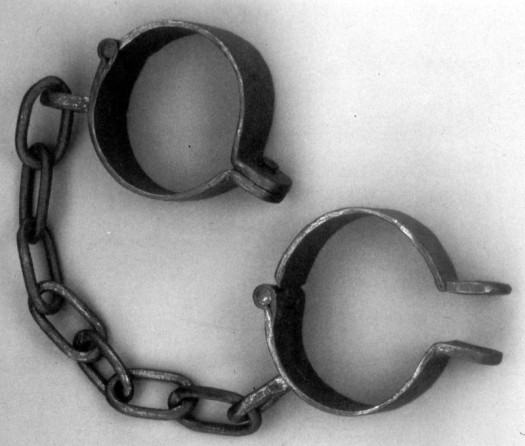
A New York City school teacher was reprimanded for using slavery to teach math. (Google Images)
MSN News is reporting that parents, teachers and administrators are in an uproar over a New York City teacher’s poor decision to give a homework assignment that used scenarios about killing and whipping slaves to teach math. The unidentified teacher clearly hasn’t been paying attention to the firing of other teachers for giving tests with insensitive and offensive questions, like a third-grade teacher in Washington, DC last year.
The homework assignment used scenarios about killing and whipping slaves to teach math. One question asked if a slave was whipped five times a day, then how many times a month was he whipped?
School principal Adele Schroeter says she was “appalled” by the questions and has ordered sensitivity training for the entire school.
Prime Minister Freundel Stuart’s Democratic Labor Party won Barbados’ 2013 general election taking home 16 parliamentary seats in the process. (Google Images)
BBC News is reporting that the ruling Democratic Labor Party (DLP) has retained power in Barbados’ closely fought general elections. Led by Prime Minister Freundel Stuart, the DLP won 16 parliamentary seats in the 30-member House of Assembly. Prior to the election, Barbados’ opposition party, the Barbados Labour Party (BLP) was slated to win in an election that many said was too close to call. The BLP won 14 parliamentary seats.
Prime Minister Stuart took over as prime minister after the death of Prime Minister David Thompson in 2010. This election will give him his first full term in office.
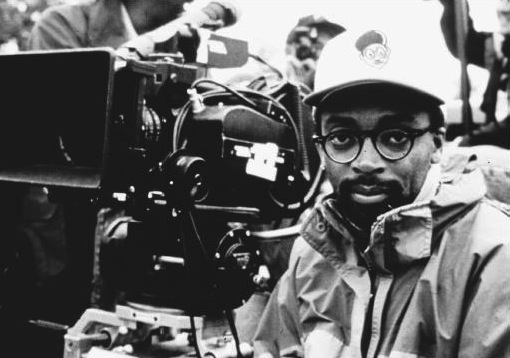
Filmmaker Spike Lee helped open doors for many of today’s black filmmakers. (Google Images)
Writing for The Root, The Burton Wire’s editor-in-chief Nsenga K. Burton highlights black filmmakers that changed the game for blacks in the Hollywood film industry. Filmmakers include William Foster, Eloyce Gist, Euzhan Palcy, Sidney Poitier, Oscar Micheaux, Ava DuVernay and Spike Lee of course.
Oscar Pistorius was granted bail on the fourth day of trial for the death of his girlfriend, Reeva Steenkamp. (Google Images)
Phillip de Wet of South Africa’s Mail & Guardian is reporting that Olympian and Paralympian Oscar Pistorius has been granted bail on his fourth day of trial for the death of his girlfriend, Reeva Steenkamp. Prosecutors had accused Pistorius of premeditated murder, and he spent eight nights in jail before bail was set today. The conditions were originally set at 250,000 rand in guarantees and a ban on foreign travel, as well as on return to the home where he shot Steenkamp. Magistrate Desmond Nair, however, significantly raised the conditions to 100,000 rand in cash and 900,000 rand in guarantees. In addition, Pistorius must relinquish ownership of his guns and agree to constant surveillance. If you have to pay bail, then it is so important that you can get what yo want, you can check out this website here http://www.1stchoicebailga.com/ who can help you if you need to get out of jail in no time.
De Wet writes:
Most onerously … Nair dispensed with the usual requirement that an awaiting-trial accused report regularly to a police station, and made Pistorius subject to constant supervision. That means, among other things, that Pistorius will not be able to travel outside Pretoria without prior permission. He is not allowed to use alcohol or drugs, and is subject to testing for those substances, day or night.
His probation officials will need to be in regular contact with him, to report on his state of mind, and have the right to phone him and request meetings whenever they see fit. The implication is that, should Pistorius indeed resume training, as his coach suggested on Friday morning he would do, he would have a hard time using facilities outside Pretoria, even as near as Johannesburg.
And should he take a celebratory drink during his first night not behind bars in more than a week, he could be subject to immediate arrest and detention for the duration of his trial. Pistorius was also specifically warned against contacting any potential witnesses in the matter, or doing violence to a woman.
“We want more soul, a higher cultivation of all spiritual faculties. We need more unselfishness, earnestness, and integrity. We need men and women whose hearts are the homes of high and lofty enthusiasm and a noble devotion to the cause of emancipation, who are ready and willing to lay time, talent, and money on the altar of universal freedom.” – Frances Ellen Watkins Harper
Frances Ellen Watkins Harper
On this day, the “Bronze Muse” died in Philadelphia, Pennsylvania.
Frances Ellen Watkins Harper (September 24, 1825 – February 22, 1911) was an African-Americanabolitionist, poet and author. Born free in Baltimore, Maryland, she had a long and prolific career, publishing her first book of poetry at age 20 and her first novel, the widely praised Iola Leroy, at age 67.
Frances Ellen Watkins Harper wrote more than a dozen books, including Poems on Miscellaneous Subjects (1854); Moses, a Story of the Nile (1869); and Sketches of Southern Life (1872). Harper was the most famous female poet of her day and the most famous African-American poet of the 19th century. Also a well-known orator, she spoke frequently in public (sometimes twice in one day), promoting equal rights for women and African-Americans. She was a worker for the Underground Railroad, and in 1896 she helped establish the National Association of Colored Women.
The Akosua Report: Facts on The African Diaspora, is written by Akosua Lowery. Follow her on Twitter @AkosuaLowery.
Venezuelan president Hugo Chavez returned home amid speculation that he will die. (Google Images)
The blogosphere has been lit up this week with the return of Venezuelan president Hugo Chavez to Caracus. Chavez spent the last two months in Cuba receiving treatment for cancer, enduring a fourth operation over the course of 18 months. Simeon Tegel of the Independent (UK) is reporting that speculation is increasing that Chavez has come home to die as he has entered the terminal phase of his illness.
Tegel writes:
News of his return prompted jubilant scenes among his supporters, many of whom gathered outside the Carlos Arvelo military hospital, where Chavez was transferred by ambulance from the airport, to celebrate.
But hopes that their idol would once again take up the reins of his “Bolivarian” socialist revolution appear to have rapidly dissipated. Since returning to Caracas, the 58-year-old President has remained hidden from public view and the government has made it clear that his battle with cancer is far from over.
“The President has returned to continue his medical treatment. The President’s time right now is not political,” Rodrigo Cabezas, a senior member of Chavez’s ruling United Socialist Party of Venezuela said on state TV.
Rick Gladstone of the New York Timesis reporting that Bolivian president Evo Morales, one of Chavez’s
closest friends, said that the Chavez’s family is now “encouraged” with his return home.
President Chavez has fought a long and courageous battle. Only time will tell what his return home means for the people of Venezuela, South America and the world at large.
Venezuelan president Hugo Chavez returned home amid speculation that he will die. (Google Images)
The blogosphere has been lit up this week with the return of Venezuelan president Hugo Chavez to Caracus. Chavez spent the last two months in Cuba receiving treatment for cancer, enduring a fourth operation over the course of 18 months. Simeon Tegel of the Independent (UK) is reporting that speculation is increasing that Chavez has come home to die as he has entered the terminal phase of his illness.
Tegel writes:
News of his return prompted jubilant scenes among his supporters, many of whom gathered outside the Carlos Arvelo military hospital, where Chavez was transferred by ambulance from the airport, to celebrate.
But hopes that their idol would once again take up the reins of his “Bolivarian” socialist revolution appear to have rapidly dissipated. Since returning to Caracas, the 58-year-old President has remained hidden from public view and the government has made it clear that his battle with cancer is far from over.
“The President has returned to continue his medical treatment. The President’s time right now is not political,” Rodrigo Cabezas, a senior member of Chavez’s ruling United Socialist Party of Venezuela said on state TV.
Rick Gladstone of the New York Timesis reporting that Bolivian president Evo Morales, one of Chavez’s
closest friends, said that the Chavez’s family is now “encouraged” with his return home.
President Chavez has fought a long and courageous battle. Only time will tell what his return home means for the people of Venezuela, South America and the world at large.
Namibians have been reacting to a ban on mini-skirts, arguing that the law is sexist. (Google Images)
written by Kaitlin Higgins
Margreth Nunuhe of New Era is reporting that, in Namibia, women will soon be arrested for wearing skirts that are deemed by police to be too “short and revealing.” After this statement from Police Inspector General Sebastian Ndeitunga, reactions on social media networks were high. While Ndeitunga claimed that the stipulation is to preserve and “underline the importance of culture,” many respondents have been wondering how in touch with African culture the Inspector General is. Some pointed to the even more revealing dress of some young people today, and others have argued that if the legislation was truly in the name of outlawing un-African clothing, “we must go back to our original African theme of wearing hand made clothes from animal skin such as the Himbas.” Likewise, many agree that such a law is sexist and oppressive and have organized to wear mini-skirts in protest this Friday.
Nunuhe writes:
“Amanda Kaipiti Utjiua said the banning of mini-skirts was oppression towards women, a sexist view and a way of shifting focus from serious issues at hand such as finding Shanduka. ‘We have a lot of things that are unAfrican including the Bible and Christianity which was brought by the missionaries, the clothes, means of transportation and all kinds of machines. Mind you people in the past (we) use(d) to wear clothes made from animal skin, use(d) to believe in ancestors and used to travel by foot or donkey even on cattle’s (sic),’ she said, adding that we have passed the stage of transformation from traditional societies to a modern society many years ago.
‘Holy Saudi Arabia. Why is it that when ‘African culture’ is invoked to justify a repressive measure, it sounds so much like rightwing Christianity? The San and Himba are also African last time I checked. Arresting women for wearing mini-skirts? That’s not a good sign people,’ wrote Rob Parker. “
Namibians have been reacting to a ban on mini-skirts, arguing that the law is sexist. (Google Images)
written by Kaitlin Higgins
Margreth Nunuhe of New Era is reporting that, in Namibia, women will soon be arrested for wearing skirts that are deemed by police to be too “short and revealing.” After this statement from Police Inspector General Sebastian Ndeitunga, reactions on social media networks were high. While Ndeitunga claimed that the stipulation is to preserve and “underline the importance of culture,” many respondents have been wondering how in touch with African culture the Inspector General is. Some pointed to the even more revealing dress of some young people today, and others have argued that if the legislation was truly in the name of outlawing un-African clothing, “we must go back to our original African theme of wearing hand made clothes from animal skin such as the Himbas.” Likewise, many agree that such a law is sexist and oppressive and have organized to wear mini-skirts in protest this Friday.
Nunuhe writes:
“Amanda Kaipiti Utjiua said the banning of mini-skirts was oppression towards women, a sexist view and a way of shifting focus from serious issues at hand such as finding Shanduka. ‘We have a lot of things that are unAfrican including the Bible and Christianity which was brought by the missionaries, the clothes, means of transportation and all kinds of machines. Mind you people in the past (we) use(d) to wear clothes made from animal skin, use(d) to believe in ancestors and used to travel by foot or donkey even on cattle’s (sic),’ she said, adding that we have passed the stage of transformation from traditional societies to a modern society many years ago.
‘Holy Saudi Arabia. Why is it that when ‘African culture’ is invoked to justify a repressive measure, it sounds so much like rightwing Christianity? The San and Himba are also African last time I checked. Arresting women for wearing mini-skirts? That’s not a good sign people,’ wrote Rob Parker. “
Accra, Ghana has been named one of Africa’s most liveable cities. (Google Images)
Yolaan Begbie of Africa.com has compiled a list of cities in various countries in Africa that would be great for people looking to live, conduct business or travel for extended periods of time throughout the continent. Capetown, South Africa topped the list, followed by Accra, Nairobi, Johannesburg and Gaborone, Botswana. How did the staff at Africa.com come up with the list? They relied on both quantitative and qualitative data to determine which cities would make this list, excluded island cities for a variety of factors explained at the tail end of the post; aggregated data primarily from African sources in order to remove a Western bias; examined availability of goods and services, quality of infrastructure, and overall security (which is defined both in personal terms and in national political terms) and used their extensive network on the continent for qualitative input as a “reality check” to the results that the data yielded.
Check out excerpts of Africa.com‘s most liveable cities.
Capetown, South Africa
It possesses all of the amenities and sophistication of a urban area, yet the pace is decidedly relaxed, with the city being nestled between the ocean and the mountains, creating an ideal mix of work and play. A short drive away and you can find yourself in one of the hundreds of vineyards that produce some of the world’s top wines. While summers (October–April) are lovely, winters can be dreary with much fog, rain, and wind.
Accra, Ghana Ghana’s capital city is a sophisticated urban area, with a full range of restaurants, bars, nightclubs, and increasingly, shopping malls. There are many affluent areas, including East Legon—the location of the city’s only traditional shopping complex, Accra Mall. Another popular option is Osu, locally referred to as “Oxford Street”, where many go to shop and hang out. The downtown area has seen much development over the last decade and the range of serviced high rise apartments makes it an easy location to set up home quickly. The warmth of the Ghanaian people is an asset and is an important part of what attracts Nigerians to want to spend their leisure time here. The tropical climate makes it all the more appealing.
Nairobi, Kenya Nairobi is fast becoming the African city of choice for multinational companies seeking a foothold for their African operations. Nairobi is a gracious city that possesses much of the sophistication of the large South African cities, but provides these offerings in a “kinder and gentler” way. General Electric and the Rockefeller Foundation recently chose Nairobi to anchor the African operations, so too the likes of China’s CCTV news broadcaster. While there is some tension surrounding the upcoming elections, the government is generally considered stable.
Johannesburg, South Africa
Johannesburg is considered a world-class city. ORTIA rivals some of the best airports in developed worlds. It’s sleek, modern, expansive and offers a wealth of stores and restaurants, much like many parts of South Africa’s and Africa’s economic capital.
Since the late 1800s, thousands migrated to the city seeking employment at one of the many gold mines. The quarries have since dried up but an influx of people continues today. They come from other parts of the country and from across the continent, to work and to make money. Johannesburg is also an attractive base for many African companies as it provides easier access to international opportunities.
Gaborone, Botswana Though young—having only gained independence from Britain in the 1960s—Gaborone has flourished. Politically stable and economically buoyant, Botswana’s capital is considered to be a peaceful city. It’s likely partly due to it being small in size, with a population of just over 230,000, but still offers a diverse mix of people, and places to see.
Gabs, as it is popularly known, is located in a country known for being one of the world’s largest producers of rough diamonds. The precious stone continues to play a major role in the city’s development. Just recently, leading diamond producer de Beers announced it would be moving some of its operations to the sub-Saharan country from London. Apart from diamonds, the economy is also driven by its beef exports, the majority of which is sold in Europe as well as the growing tourism industry. The development of modern sports facilities saw the city successfully hosting the Africa Junior Athletics Championships in 2011, and has made it a popular contender to host the 2014 African Youth Games.




 written by Akosua Lowery